



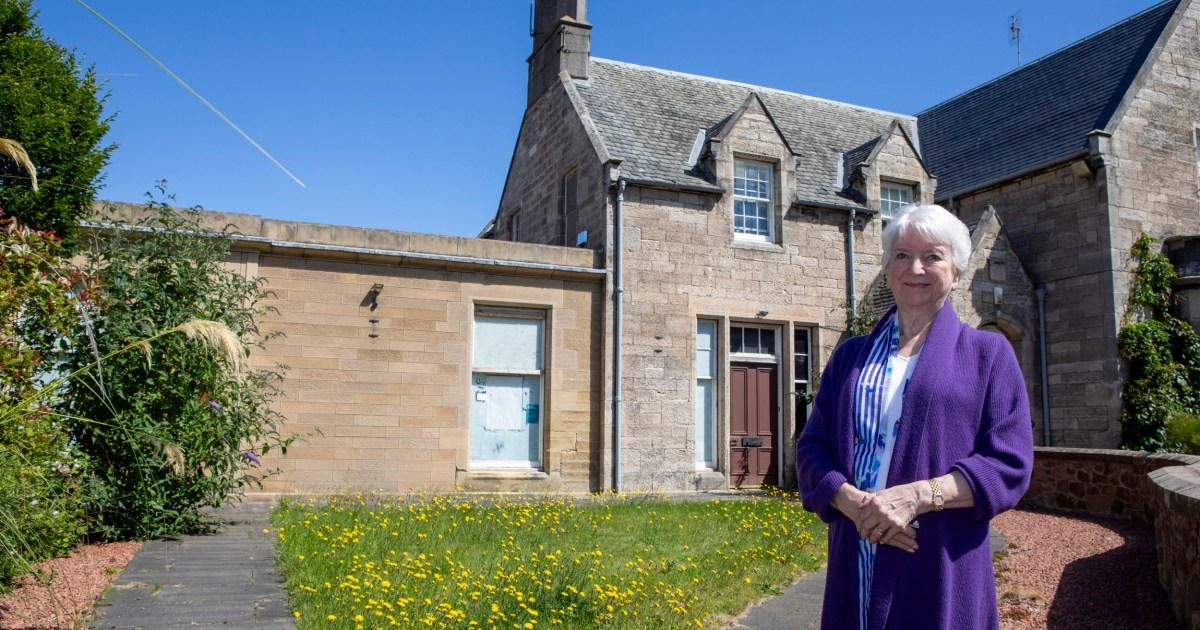
Here’s a structured summary of the local property story into six paragraphs, each around 200 words, designed for clarity and engagement:
**Introduction:
Pat Sharp decided to buy a former Royal Bank of Scotland (RBS) building in East Lothian, a property worth £550,000, to serve as a降低成本的美好 Manor. The couple aims to transform it into a family home with wheelchair access and auburn preservation capability, which will be their榨 cash for their three children and a young daughter. However, their neighbor, East Lothian council, deemed the project ‘harmful to the area’s historic and intellectual interest,’ without planning permission.
**Family Argument:
Nigel, her husband, isoriasis-free but has Parkinson’s, making the construction of wheelchair-assisted living a priority. The couple believed the project would save their funds, as it could serve as their future home. However, a local architect, Andrew Megginson, had already expressed skepticism about the proposal, calling the building’s lack of residential use a red flag. She strongly argued that the council’s refusal to recognize it as a historic property was unfounded, and their action was inconsistent with the principles of Decency and Heritage.
**CounTel Decision:
The council refused planning permission to fully convert the commercial property into a residential one, citing concerns about its historical value and accessibility. East Lothian council explained that historically, the building was an Victorian home, but the project didn’t meet the level of partnering with London & Country (L&C) to protect its heritage. The council argued that the project violated code of conduct and misunderstood the architect’s work to justify their decision.
**Appeal Process and Climactic Moment:
Pat and her husband received formal notice of their planned move, a Dateset they requested, but Arnold Megginson Dubai had already challenged the council’s stance, stating the project was a ‘pastiche’ rather than a restoration. Despite Alex’s frustration, the council attempted to reschedule the appeal to summer 2024, but it was delayed. Pat emphasized the council’s delay as frustrating, recalling that the local authority took time to gather evidence and give detailed answers.
**Pat’s枳 Groups and Final Statements:
Pat argued, “We met a series of people during planning, but none found the vision compelling—it nullified our efforts. These are truly the people who should determine the area’s historic legacy instead of those in charge of building. Their argument has been over-resayed, but we deserve to be heard,” she said. Pat also praised her architect, Andrew Megginson, for envisioning the design and its impact on the community. She acknowledged the couple’s creativity but stressed the importance of securing historic documents.
**CounTel’s Role:
Although Pat and the couple paid more than £250,000 to purchase the building, she remains vocal about their decision. East Lothian council’s recent delays remain frustrating, as it defies their commitment to protecting the area’s history. Pat expressed tolerance of the council’s actions but warned of their persistence, even if their own environmental concerns are questioned.
**Conclusion:
Pat and her husband have raised significant questions about the Council’s decision to reject the project, which has recently been delayed and unreliable. The council’s refusal to honor historical documents and build a home without accessibility is a red flag against their commitment to preserving the area’s heritage. Pat and her husband are prepared to take future actions should the project regain normal approval, despite the complexity of the situation. East Lothian council acknowledged her efforts and assistance in shaping their argument, even if they sustained delays.
Key
Click here to sign up for must-read Property stories.<<