



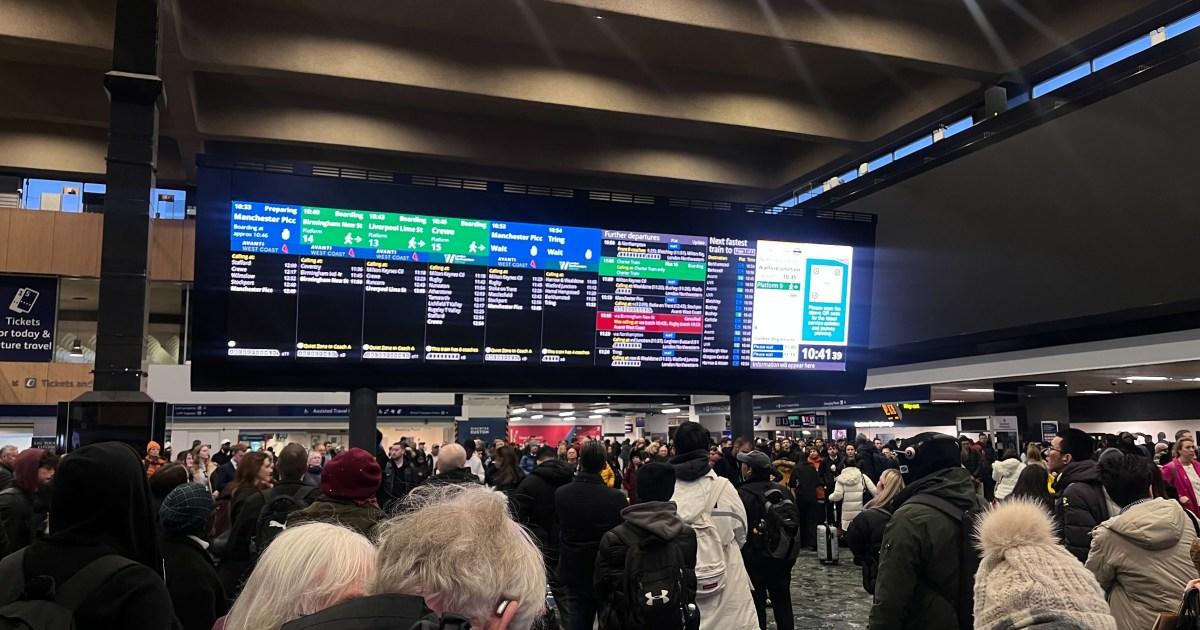
Storm Darragh, a powerful weather system impacting Britain, has triggered the government’s “risk to life” alert, leading to widespread travel disruptions, particularly affecting the rail network. This marks the most extensive use of the warning system to date, underscoring the severity of the storm. The alert strongly advises residents to avoid non-essential travel, particularly by car, and to remain indoors whenever possible. The storm’s impact has been felt across the country, with strong winds and heavy rainfall causing a cascade of closures and cancellations, impacting both road and rail infrastructure, and posing significant risks to public safety.
The storm’s ferocious winds have forced the closure of several key transport arteries. Among the most notable closures are the Prince of Wales Bridge (M4) and the Severn Bridge (M48), both critical links connecting southwest England and Wales. These closures effectively sever a vital transportation route, impacting commuters, freight traffic, and emergency services. Similarly, the QEII Bridge at the Dartford Crossing in southeast England, a crucial component of the M25 orbital motorway around London, has also been shut down due to the dangerous wind conditions. These closures highlight the storm’s widespread impact and the prioritization of public safety amidst the challenging weather conditions.
The rail network has been significantly disrupted by Storm Darragh, with multiple cancellations and suspensions reported across the country. Euston Station, a major London terminus serving destinations in the Midlands, Northwest England, and Scotland, has been particularly impacted by the storm, experiencing significant disruptions to its scheduled services. Fallen trees, debris on the tracks, and damage to overhead power lines have contributed to the widespread disruption. Network Rail Wales has reported the complete suspension of all train services on the North Wales Coast Line due to a fallen tree, further illustrating the storm’s disruptive power and the challenges faced by rail operators in maintaining service.
The impact of Storm Darragh extends beyond major transport hubs and arteries. Numerous local roads have been closed due to fallen trees, flooding, and other storm-related hazards. Coastal areas are particularly vulnerable to high waves and strong winds, with warnings issued for potential flooding and erosion. Emergency services are on high alert, responding to incidents across the affected regions. The widespread disruptions underscore the importance of heeding government advisories and prioritizing safety during severe weather events.
The “risk to life” warning issued by the government highlights the seriousness of the situation. This alert is reserved for situations where there is a genuine threat to life and property, indicating the potential for significant damage and injury. The public is strongly urged to follow official guidance, stay informed about weather updates, and avoid unnecessary travel. The widespread nature of the storm’s impact, coupled with the severity of the weather warnings, necessitates a cautious approach and a prioritization of safety.
Storm Darragh serves as a stark reminder of the power of nature and the vulnerability of infrastructure to extreme weather events. The widespread disruptions to travel, the closure of key bridges and roads, and the impact on the rail network highlight the importance of robust infrastructure and effective emergency response systems. The ongoing efforts to restore services and ensure public safety demonstrate the resilience and dedication of those working to mitigate the storm’s effects. As the storm continues to unfold, staying informed and following official guidance remains crucial for ensuring personal safety and minimizing disruption.