



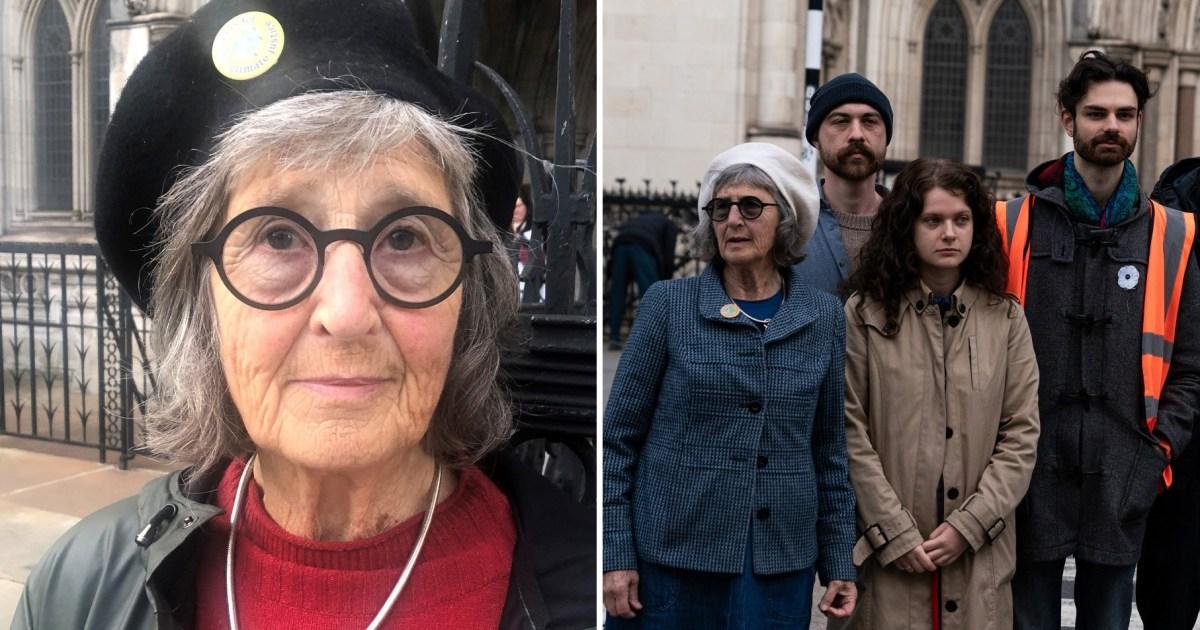
Gaie Delap’s Imprisonment: A Case Study of Disproportionate Justice in the Climate Action Movement
Gaie Delap, a 77-year-old grandmother and retired teacher from Bristol, has become a focal point in the ongoing debate surrounding the methods and consequences of climate activism. Initially sentenced to 20 months in prison for her participation in Just Stop Oil protests on the M25 motorway in November 2022, Delap’s case highlights the complex interplay between legal obligations, individual circumstances, and the perceived proportionality of punishment in the context of climate change activism. Her story, marked by health complications, alleged mistreatment within the prison system, and the ultimately unsuccessful attempt to implement electronic monitoring, raises questions about the efficacy and fairness of current penal practices.
Delap’s initial imprisonment stemmed from her involvement in disruptive protests organized by Just Stop Oil, a climate activist group advocating for the cessation of new oil and gas exploration and production licenses in the UK. The group’s actions, often involving civil disobedience and disruption of traffic flow, have sparked both support and condemnation. Supporters argue that the urgency of the climate crisis necessitates radical action, while critics contend that such methods are counterproductive and unnecessarily disruptive. Delap’s participation in these protests reflects her deep concern for the environmental future and her belief in the necessity of direct action to address the climate crisis. She, along with other activists, believed that the government’s decision to issue new licenses, despite record-breaking temperatures and escalating climate-related disasters, demonstrated a disregard for the severity of the situation.
Following her initial sentencing, Delap, along with three other activists, was granted early release under the condition of home detention curfew and electronic monitoring. However, this release proved to be short-lived due to complications arising from her health conditions. The Electronic Monitoring Service (EMS) encountered difficulties fitting an ankle tag due to a pre-existing health issue and subsequently attempted to apply a wrist tag. When this attempt also proved unsuccessful due to the size of Delap’s wrists, a warrant for her arrest was issued, effectively revoking her release and returning her to prison. Just Stop Oil asserts that Delap remained fully compliant with the terms of her release throughout this process, raising questions about the necessity and proportionality of her recall. Her supporters argue that the inflexible nature of the tagging system, coupled with a perceived lack of alternative solutions, led to an unnecessarily harsh outcome for an individual posing minimal threat to the public.
The circumstances surrounding Delap’s recall to prison have further fueled concerns about her well-being. She reportedly suffers from numerous health conditions, including a stroke experienced prior to her trial. Just Stop Oil also alleges that she endured mistreatment during her initial imprisonment, including wrist problems resulting from being handcuffed to a hospital bed. Furthermore, it is claimed that the warrant for her arrest was issued while she was receiving hospital treatment, exacerbating the perceived injustice of the situation. These details paint a picture of an individual whose health has potentially been compromised by both the actions of the justice system and the conditions of her incarceration. Her supporters contend that her recall to prison not only inflicts undue hardship on an elderly individual with health vulnerabilities but also represents a wasteful allocation of public resources.
The central issue in Delap’s case revolves around the perceived inflexibility and lack of reasonable accommodation within the electronic monitoring system. While the Ministry of Justice maintains that their duty lies in enforcing court-ordered sentences and that tagging is a legal requirement for those released under Home Detention Curfew, Delap’s situation raises questions about the adequacy and appropriateness of the current system. Her supporters argue that alternative monitoring solutions exist and that the failure to explore and implement these options demonstrates a lack of consideration for individual circumstances. The cost of imprisoning Delap, estimated at £12,000, is also contrasted with the potentially lower cost of alternative monitoring methods, further highlighting the perceived inefficiency of the current approach.
The case of Gaie Delap has become emblematic of the broader debate regarding the treatment of climate activists. Her supporters view her as a conscientious individual driven by a deep concern for the future of the planet, while critics may view her actions as disruptive and unlawful. Regardless of one’s stance on her chosen method of protest, the circumstances of her recall to prison raise important questions about the appropriateness and proportionality of the justice system’s response. The apparent inflexibility of the electronic monitoring system, coupled with allegations of mistreatment and the perceived lack of consideration for her health conditions, has fueled criticism and calls for a more compassionate and adaptable approach to sentencing and monitoring in such cases.
Delap’s family and supporters, including Just Stop Oil, have launched a campaign advocating for her release and highlighting what they perceive as the injustice of her situation. They have called upon Justice Secretary Shabana Mahmood to intervene and reverse the decision, emphasizing the availability of alternative monitoring solutions and the disproportionate nature of her imprisonment. The case continues to generate discussion about the balance between upholding the law and ensuring humane treatment, particularly for individuals engaged in activism motivated by concerns about the global climate crisis. The broader implications of this case extend beyond Delap herself, raising questions about the treatment of elderly and vulnerable individuals within the criminal justice system and the need for greater flexibility and consideration of individual circumstances in the application of sentencing guidelines and monitoring practices.