


A Double-Decker Bus Collision in Kilmarnock: A Scene of Shock and Aftermath
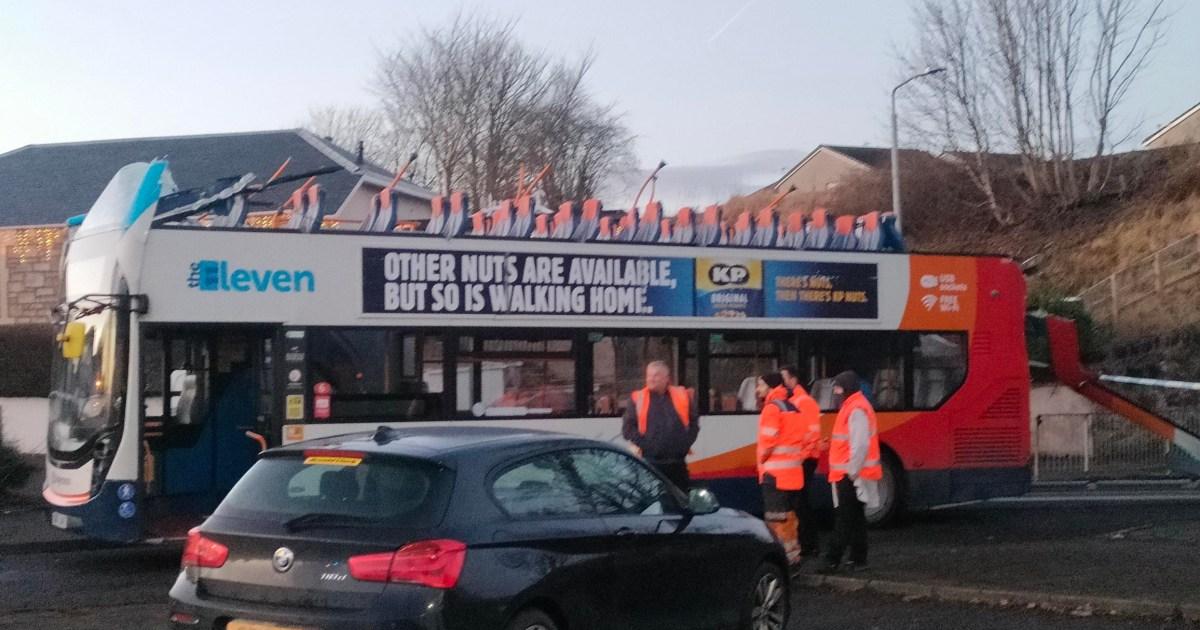
On a seemingly ordinary Thursday afternoon, December 19, 2024, the tranquility of Culzean Crescent in Kilmarnock, East Ayrshire, was shattered by a jarring crash. A double-decker Stagecoach bus, operating route 6 from Kilmarnock Bus Station to New Farm Loch, collided with a railway bridge, tearing off its roof and leaving a trail of debris and stunned passengers in its wake. Emergency services swiftly descended upon the scene, their sirens cutting through the air as they worked to assess the situation and provide aid to those affected.
The impact was dramatic. The bus’s top deck was left completely exposed, the mangled roof lying discarded on the road like a discarded metal carcass. Images captured the extent of the damage, showcasing the sheer force of the collision. Passengers, many of whom were teenagers, were left shaken and covered in shattered glass, blood staining the handrails of the bus. Amidst the chaos, a sense of disbelief hung heavy in the air.
One schoolboy who was on the upper deck recounted the harrowing experience. He described the bus traveling at a "quite fast" speed before the inevitable impact, a moment of dreadful anticipation hanging over the passengers as they approached the bridge. The collision itself was a deafening roar, a "long, crashing sound" as the roof was ripped away. He emerged from the wreckage covered in glass fragments, witnessing another boy receiving medical attention from paramedics. The scene, he recounted, was one of shock and disarray.
Fortunately, despite the dramatic nature of the accident, initial reports indicated that there were no serious injuries. Eight passengers were transported to University Hospital Crosshouse for treatment, while others were assessed and treated at the scene. The swift response of emergency personnel undoubtedly played a crucial role in mitigating the severity of the injuries sustained.
This incident occurred less than a week after a similar incident in Glasgow, where another double-decker bus collided with a railway bridge, resulting in several injuries, including one individual in critical condition. The proximity of these two events raised concerns about potential systemic issues contributing to such accidents.
Authorities launched immediate investigations to determine the cause of the Kilmarnock collision. Police Scotland closed the road for several hours while they conducted their investigation and cleared the wreckage. Network Rail dispatched specialist engineers to assess the structural integrity of the railway bridge, which thankfully remained undamaged. Stagecoach West Scotland pledged full cooperation with the investigation, emphasizing their commitment to understanding the circumstances that led to this incident.
The Kilmarnock bus crash brought into sharp focus the potential dangers inherent in public transportation. While statistically rare, such accidents highlight the importance of rigorous safety protocols, driver training, and infrastructure maintenance. The investigation’s findings will be crucial in identifying any contributing factors and implementing necessary measures to prevent future occurrences.
The incident also underscored the resilience and community spirit evident in the aftermath. Passengers supported one another, sharing their experiences and offering comfort in the face of shared trauma. The quick response of emergency services and the effective coordination between various agencies demonstrated the preparedness and capability of local authorities to handle such crises. While the physical damage was significant, the absence of serious injuries was a testament to the combined efforts of those involved.
The investigation into the Kilmarnock bus crash will likely explore several key areas:
-
Driver Actions: Investigators will examine the driver’s adherence to speed limits, route familiarity, and overall driving practices. Any potential distractions or contributing factors related to the driver’s performance will be scrutinized.
-
Vehicle Maintenance: The mechanical condition of the bus, including its braking system, steering, and overall roadworthiness, will be thoroughly assessed to rule out any mechanical failures that may have contributed to the collision.
-
Route Planning: The suitability of the chosen route for a double-decker bus will be reviewed, considering factors such as bridge clearances and road conditions. Whether the route was properly vetted and approved for such a vehicle will be a key question.
-
Signage and Warnings: The adequacy of signage warning of the low bridge’s height will be evaluated. Whether existing signage was clear, visible, and sufficient to alert drivers of the potential hazard will be a critical aspect of the investigation.
- Passenger Safety Procedures: The effectiveness of passenger safety protocols, including emergency exits and onboard safety instructions, will be examined. The response of passengers and the availability of emergency equipment will be considered.
The findings of the investigation will be essential in determining accountability and implementing preventative measures to avoid similar incidents in the future. The aim will be to enhance the safety of public transportation and ensure the well-being of both passengers and the wider community.
The accounts of passengers who experienced the crash firsthand provide valuable insights into the immediate aftermath. Their descriptions of the impact, the chaotic scene, and the emotional toll underscore the human element of such incidents. These experiences serve as a poignant reminder of the vulnerability of individuals within the transportation system and the need for continuous improvement in safety measures.
The incident prompted discussions about the broader issue of low bridge collisions involving buses. Experts have called for improved driver training programs, enhanced signage, and stricter enforcement of height restrictions on routes. Some have also advocated for technological solutions, such as automated warning systems in buses that alert drivers of approaching low bridges.
The Kilmarnock bus crash serves as a wake-up call for the transportation industry. It underscores the importance of proactive safety measures, ongoing vigilance, and a commitment to continuous improvement. The lessons learned from this incident will hopefully lead to changes that enhance the safety of public transportation and prevent similar occurrences in the future.
The community of Kilmarnock rallied together in the aftermath of the accident, demonstrating resilience and a spirit of support. Local businesses offered assistance to those affected, while community leaders expressed their concern and offered their condolences. The incident served as a reminder of the importance of community bonds in times of adversity.
The media played a crucial role in disseminating information about the crash, keeping the public informed about the unfolding situation. News outlets provided updates on the investigation, the condition of the injured, and the steps being taken to prevent similar incidents. The media coverage helped to raise awareness about bus safety and the importance of vigilance on the roads.
The Kilmarnock bus crash is a stark reminder of the potential dangers that exist within our transportation systems. While accidents like these are relatively rare, their impact can be profound. The incident calls for a renewed focus on safety, a commitment to continuous improvement, and a collective effort to ensure the well-being of all who rely on public transportation.