



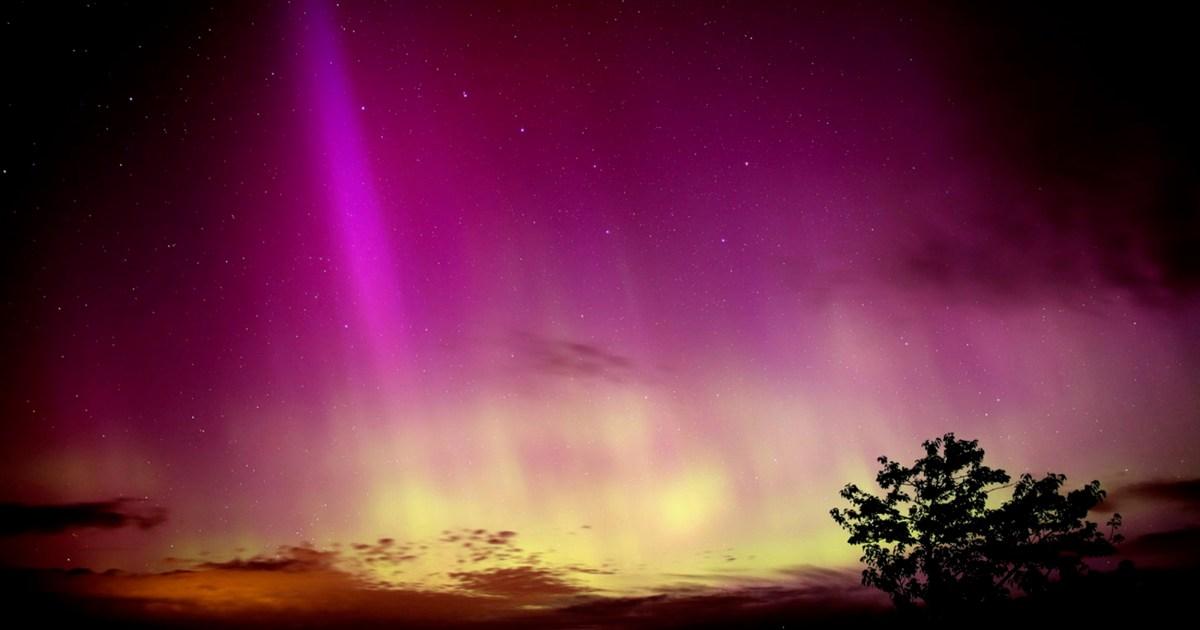
The celestial ballet of the Northern Lights, or aurora borealis, is poised to become a more frequent spectacle in the coming months, thanks to a “once-in-a-decade” solar event. This year has already seen an unusual surge in aurora sightings, with the vibrant hues of green, red, and blue illuminating the night skies even as far south as London. This increased activity is a precursor to the solar maximum, a peak in the sun’s 11-year cycle where its magnetic fields flip, leading to heightened solar activity. The Met Office predicts that this impending solar maximum will further amplify the aurora’s visibility, extending its reach to more southerly latitudes. This phenomenon promises an enhanced opportunity to witness the mesmerizing display of lights, a natural wonder often relegated to the higher latitudes.
The aurora borealis is a product of the sun’s energetic outbursts. During the solar maximum, the sun releases a surge of solar flares, bursts of energy and particles that travel through space. When these particles collide with Earth’s magnetic field, they energize atoms in the atmosphere, primarily oxygen and nitrogen. This excitation causes the atoms to release light, creating the characteristic shimmering curtains of color that define the aurora. Oxygen, depending on its altitude, produces green or red light, while nitrogen contributes blue hues. The intensity and frequency of these solar flares are amplified during the solar maximum, increasing the likelihood of aurora displays. The recent uptick in sightings, including a remarkable event in May classified as the strongest geomagnetic storm in two decades, underscores this heightened solar activity.
The impending solar maximum, predicted to occur next year, signifies a period of even greater solar activity. This anticipated surge will expand the auroral oval, the area on Earth where the Northern Lights are visible, bringing the spectacle to lower latitudes more frequently. While scientists haven’t pinpointed the exact date of the solar maximum, historical data suggests that spring and autumn, particularly around the equinoxes, are prime aurora viewing seasons. AuroraWatch UK, a platform tracking aurora activity, currently reports no significant chance of sightings, but the anticipation for the upcoming months remains high. The solar maximum promises a unique opportunity to observe this natural light show, painting the night sky with vibrant colors.
Though the solar maximum intensifies aurora activity, its vibrant displays aren’t limited to this period. The Northern Lights are a perennial phenomenon, although their visibility fluctuates with the sun’s activity. Even during the solar minimum, the period of relative quiet following the maximum, auroras can still occur, albeit less frequently. The sun’s energy output and the resulting space weather continue throughout the solar cycle, even as the overall intensity ebbs and flows. The Met Office emphasizes that significant solar events can occur even as the sun transitions back toward the solar minimum, offering continued opportunities to witness the aurora’s ethereal beauty.
The Northern Lights, also known as Aurora Borealis, are a captivating natural light display observed in the northern hemisphere. These dancing curtains of color are a result of charged particles from the sun interacting with Earth’s magnetic field and atmosphere. Carried by solar winds, these particles are channeled toward the polar regions, where they collide with oxygen and nitrogen atoms in the upper atmosphere. These collisions release energy in the form of light, creating shimmering displays of green, red, blue, and purple. Green, the most commonly observed color, originates from oxygen at lower altitudes, while red and blue are produced by oxygen and nitrogen at higher altitudes. This interplay of solar particles and atmospheric gases creates a mesmerizing spectacle, a testament to the dynamic relationship between the Earth and the sun.
While the increased aurora activity associated with the solar maximum is a boon for skywatchers, it’s important to note that this period of heightened solar activity eventually gives way to the solar minimum. As the sun’s activity decreases, so too does the frequency of auroral displays. However, even during the quieter solar minimum, the possibility of witnessing the Northern Lights remains. The sun’s energy output continues throughout its cycle, meaning that space weather events, though less frequent, can still trigger auroral displays. The Met Office points out that some of the largest solar events can even occur during the transition back towards solar minimum, offering continued, albeit less frequent, opportunities to marvel at the aurora borealis. The cyclical nature of the sun ensures that the celestial ballet of the Northern Lights, though variable in its intensity, remains a persistent feature of our planet’s interaction with its star.