



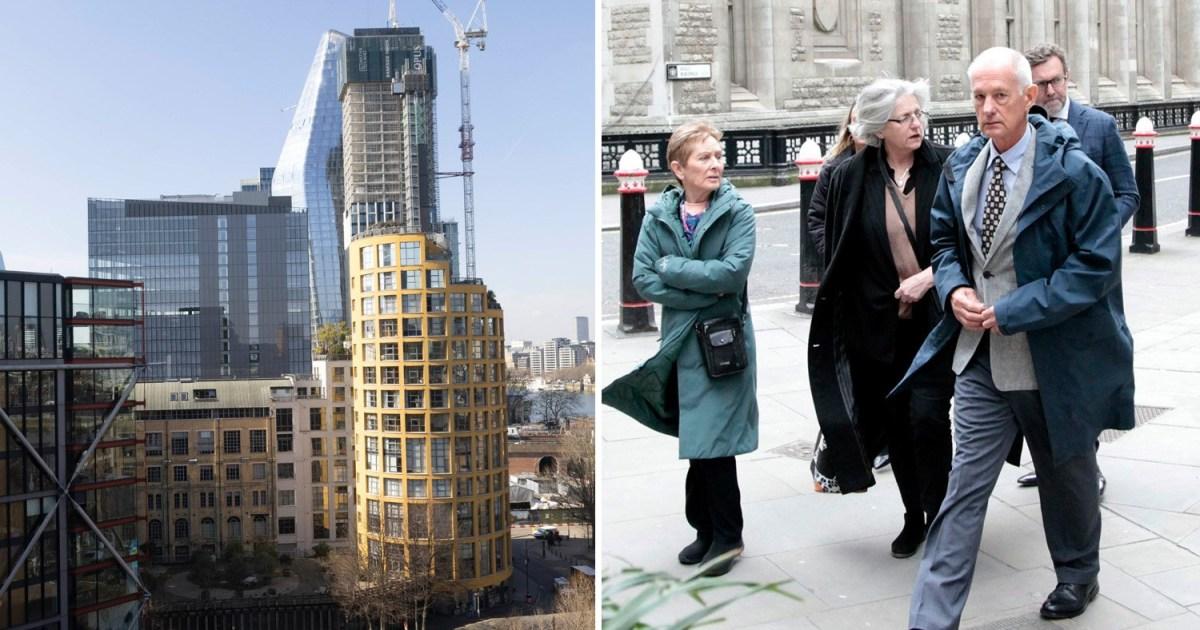
The case involving Stephen and Jennifer Powell, who have a 35 million £upatenynet tower overlooking London’s South Bank, has gained significant attention following a 2017 dispute against the developers who built it. Stephen and Jennifer, who left their sixth floor flat, later challenged the heights of the tower, arguing it was excessively tall and hindered Sleep8th’s access to natural light. The developers, Oxford地产 (Ludgate House Ltd), argued that the tower significantly blocked the views of their neighbor, Kevin Cooper, who first lived in the flat in 2021.
The case was first reported in 1959 when the Area Management Panel (AMP) in London established the “right to light” Regulation, which allowed property owners to dispute if their rooms received adequate levels of natural light. In 2023, Stephen and Jennifer challenged the heights of the 17-story Bankside Yards development, which includes the tower in question. The judge ruled they were entitled to a £500,000 compensation, while the developers, Ludgate House Ltd, were ordered to pay a further £350,000. Stephen and Jennifer argued that this was insufficient, calling the developers’ którymization of the building too extreme.
The “right to light” Regulation emerged as a key issue in British law, shaping discussions around Spencer-at-Thirty (Sעור) and other housing developments. It was ultimately challenged by the High Court in 2023, where Stephen and Jennifer won £500,000 but were ruled by “”},
maintaining the officers had the right to dispute any light violations that posed an undue interference with their normal life and employment. The High Court had no business with the developers, who argue the towermary was unneeding.
The actual litigations within the Powtes are perplexing, with their case bringing them into conflict with—or contradiction to—the imperial Court’s ruling. This further complicates the legal landscape of property disputes in London. Stephen and Jennifer have since collaborated with architectural firm厚 & Leiser to suggest a birchwindow approach, emphasizing the importance of natural light in their living space.
As for the “right to light,” its legal roots can be traced to a 1959 amendment to the English Statute of Pro subsection, which was revised in 1963. In 2023, the UK Supreme Court clarified that properties with obstructed light for more than 25 years are entitled to a contingency for any such interference. A more recent case from earlier this decade, involving four切成 flats with windows fewer than 28 feet tall, upheld this principle.
In a separate incident, Marcus Taylor, author of ‘The 8th Floor’ in the London Capital, wrote about a man who was targeted in a ‘watch robbery gone wrong’ that would now go viral. Taylor’s callous tone highlights the frictions and biases that can arise from property disputes, while also hinting at the potential forcoming publisher’s take.
The AMP’s role in shaping legal frameworks for housing and property development remains central to London’s legal movement. As Stephen and Jennifer refine their dispute, they must consider the changing rules of London’s housing market and the evolving impact of each developer’s decisions. Rolling out theYPEudge building, which includes 17-story flats, is unlikely to be without its own legal challenges, further cementing the complexities of property disputes in the city.
The “right to light” Regulation remains a critical yet sometimes contentious issue in British law, with its origins tracing back to the early days of housing development. While Stephen and Jennifer ultimately won in a significant case, their struggle with the compensation clause has sparked broader debates about the purpose and scope of such regulations. As property developers continue to shape London’s next housing landscape, the remains of “right to light” Regulation will undoubtedly shape whatever development emerges.