


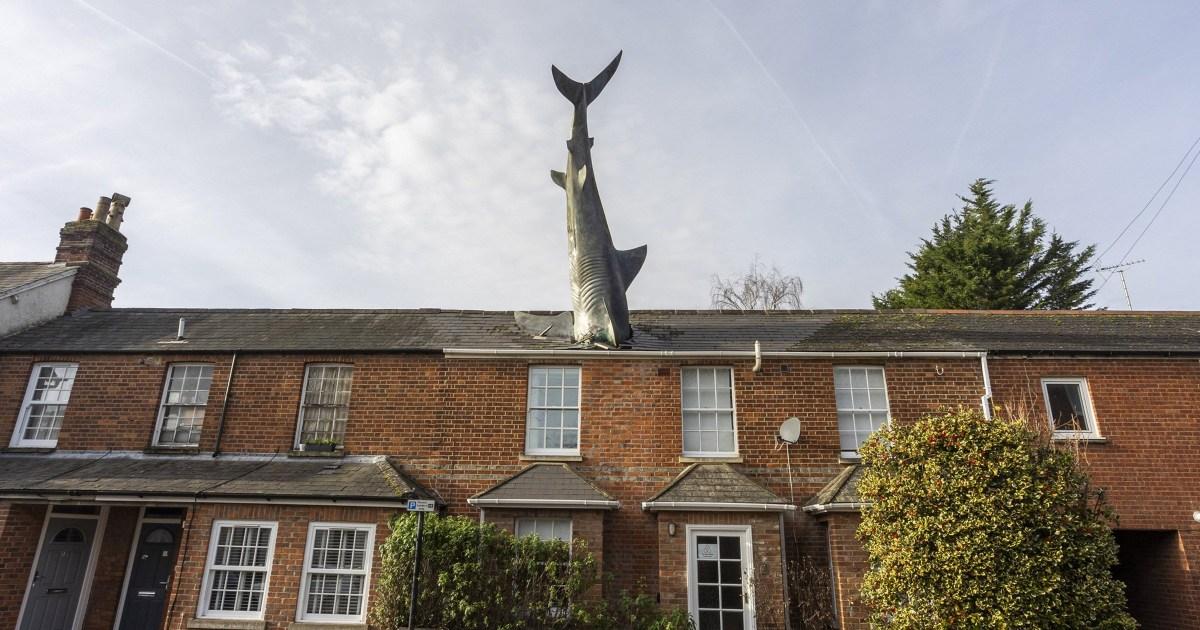
The Shark House, a distinctive Oxford residence featuring a large shark sculpture seemingly crashing through its roof, is embroiled in a renewed dispute with the local council. Originally erected in 1986 by Bill Heine without planning permission, the house has been a source of both fascination and contention ever since. Following Heine’s death in 2019, his son, Magnus Hanson-Heine, inherited the property and began offering it as short-term holiday accommodation through Airbnb. This practice, which has continued for the past five years, has now been deemed unlawful by Oxford City Council, sparking a new chapter in the ongoing saga of the Shark House. Hanson-Heine contends that the council is using his property as a test case in a broader effort to curtail Airbnb operations within the city, a claim the council refutes, citing the need for long-term residential housing in an increasingly unaffordable market.
Hanson-Heine argues that the Shark House transcends its function as a mere dwelling, serving instead as a prominent tourist attraction that contributes to Oxford’s cultural landscape. He emphasizes the overwhelmingly positive feedback received from visitors who have enjoyed their stay at the unique property, highlighting the absence of complaints from neighbors. He believes that prohibiting short-term rentals at the Shark House will not only harm Oxford’s tourism industry but also deprive the public of the opportunity to experience a piece of the city’s unconventional history. Furthermore, he criticizes the council’s actions as politically motivated, accusing them of targeting a local landmark to gain political points rather than addressing the underlying housing crisis. He asserts that short-term lets are not the root cause of the housing shortage and accuses the council of using this as a pretext to expand their control over private property.
The history of the Shark House is marked by a long-standing struggle against planning regulations. Two years after its construction, Oxford City Council denied retrospective planning permission for the 25-foot shark sculpture. However, the Heine family successfully appealed the decision, ultimately winning the support of then-Secretary of State Michael Heseltine, who allowed the structure to remain. This victory established a precedent for the house, allowing it to continue standing as a symbol of artistic expression and defiance against bureaucratic restrictions. Now, the council’s latest decision regarding short-term rentals reignites the conflict, pitting Hanson-Heine’s desire to share his unique home with visitors against the council’s efforts to regulate the local housing market.
The current dispute revolves around the council’s classification of the Shark House’s use as a short-term rental. Hanson-Heine has challenged this decision with the National Planning Inspectorate, vowing to keep the property open to visitors until forced to close. The Airbnb listing for the Shark House boasts a near-perfect rating of 4.86 out of 5 stars, indicating its popularity among tourists. The house can accommodate up to ten guests, with prices for a two-night stay reaching as high as £2,000. Adding another layer of complexity to the situation is the potential inclusion of the Shark House on the Heritage Asset Register, a development Hanson-Heine fears could be a precursor to full listing status, which would impose further planning restrictions.
Hanson-Heine maintains that his father intentionally avoided assigning a definitive meaning to the shark sculpture, preferring to let observers interpret it for themselves. He believes the artwork serves as a statement against censorship, particularly in the context of planning laws. His father’s intention, he argues, was to provoke thought and challenge conventional notions of art and public space. This artistic philosophy underscores the ongoing battle with the council, framing it as a clash between individual expression and bureaucratic control. The Shark House, therefore, represents not only a unique architectural creation but also a symbol of resistance against perceived overreach by local authorities.
Oxford City Council justifies its actions by pointing to the acute housing shortage in the city. Councillor Linda Smith, Cabinet Member for Housing, emphasizes that Oxford is one of the least affordable places to live in the UK. She highlights the growing number of properties, nearly 800, operating as short-term lets, arguing that these units are urgently needed for long-term residents, not tourists. The council’s stance underscores the tension between promoting tourism and addressing the critical need for affordable housing, a challenge faced by many cities across the UK. The Shark House, in this context, becomes a focal point in a larger debate about the role of short-term rentals in shaping urban landscapes and impacting local communities.