
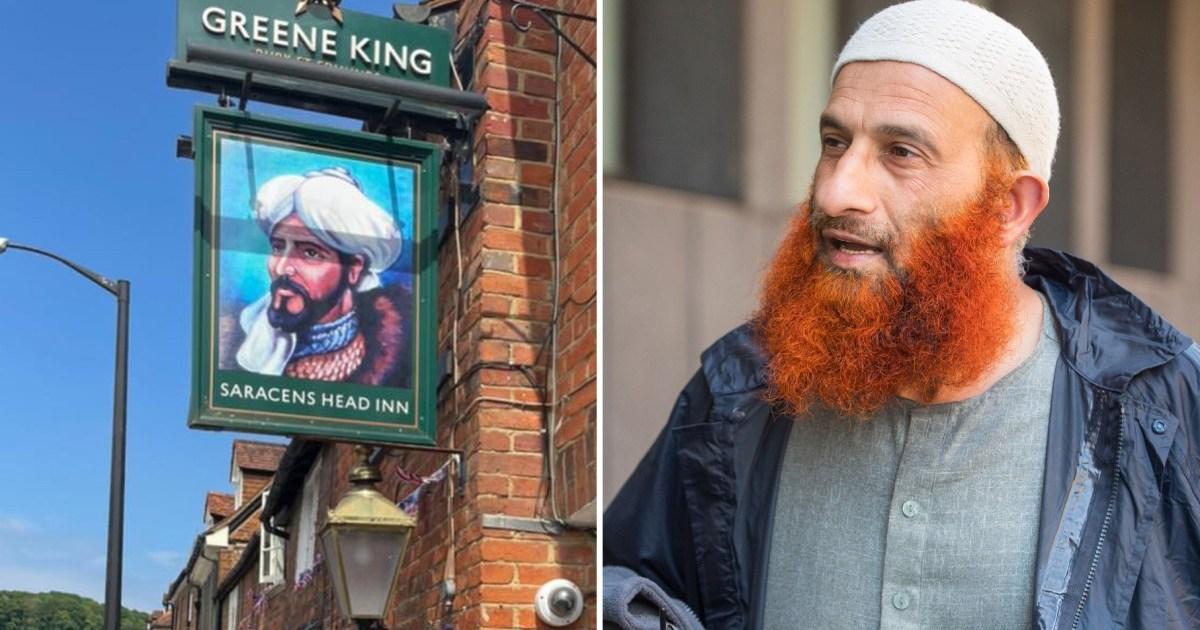
This news story revolves around a lawsuit filed by Khalid Baqa against the Saracen’s Head Inn, a pub located in Amersham, Buckinghamshire. Baqa, a 60-year-old with a prior conviction for distributing jihadi propaganda, alleges that the pub’s signage, which features a turban-clad, bearded figure, is racist, xenophobic, and incites violence. He claims the image instills fear and worry in him, and he is seeking £1,850 in damages. Baqa has indicated that if his lawsuit is successful, he intends to pursue similar legal action against approximately 30 other establishments bearing the same name.
The pub’s landlord, Robbie Hayes, has vehemently dismissed Baqa’s claims, characterizing them as a “joke” and an opportunistic attempt to exploit the system. Hayes emphasizes that the pub, currently owned by the brewery Greene King, has borne the name “Saracen’s Head” for five centuries, reflecting a long-standing historical tradition. He strongly rejects any accusations of racism, stating that neither he nor his staff hold racist beliefs, nor do they believe the sign to be racist in nature. He argues that the name and signage are simply historical artifacts and that the pub will not be pressured into altering its long-established identity due to the complaints of a troublemaker.
Baqa’s lawsuit takes the form of a “claim of money” filed with the county court. In his submission, he details his experience of walking through the area and being deeply offended by the pub’s sign. He asserts that the image immediately evoked feelings of fear and worry due to its perceived xenophobic, racist, and violence-inciting nature. Following this encounter, Baqa claims to have lodged a complaint with the pub and requested the removal of the sign. He further contends that he has attempted to contact the pub on four separate occasions, including an in-person visit, but the pub’s staff deny any record of these interactions.
Baqa’s account includes his admission to having long been offended by pub names like “The Saracen’s Head Inn” but only recently discovered online resources that he believes empower him to challenge these establishments. This legal action follows his 2018 conviction and subsequent imprisonment for disseminating terrorist publications, a crime to which he pleaded guilty. Despite his past actions, Baqa claims to have abandoned his involvement in “terrorist stuff” for the time being. He has also indicated his intention to pursue legal action against other pubs bearing similar names if his current lawsuit proves successful.
The term “Saracen” has a complex historical etymology. Initially used by Greek and Latin writers between the 5th and 15th centuries to denote Arabs, it later became associated with Islam from the 7th century onward, eventually evolving into a general term for Muslims before falling out of common usage around the 1400s. The term’s historical usage and its evolving connotations are central to the dispute between Baqa and the Saracen’s Head Inn, as Baqa interprets the term as inherently racist and offensive, while the pub landlord views it as a historical designation devoid of any racist intent.
This incident coincides with a broader societal discussion regarding potentially offensive names and symbols in public spaces. A recent example highlighted in the article involves a petition signed by thousands of people supporting the retention of the name “The Midget” for a Greene King pub in Abingdon. The pub’s name refers to the MG Midget EX 127 car, which was once manufactured in the town, but some found the name offensive. This demonstrates the ongoing debate about the balance between historical context and contemporary sensitivities in the naming and representation of public establishments. The case of the Saracen’s Head Inn adds another layer to this conversation, as it involves a historical term with complex and evolving connotations related to religious and ethnic identity.
The lawsuit against the Saracen’s Head Inn raises several important questions. Is the term “Saracen” inherently racist and offensive, or is its meaning dependent on the context in which it is used? Does the pub’s signage incite violence, as Baqa claims, or is it simply a historical artifact? Should historical context be considered when evaluating potentially offensive names and symbols? These are complex questions with no easy answers, and the outcome of Baqa’s lawsuit may have implications for how similar situations are handled in the future. The case highlights the ongoing tension between preserving historical traditions and addressing concerns about potentially offensive language and imagery in public spaces.
The crux of the issue lies in the interpretation of the term “Saracen” and its associated imagery. Baqa argues that the term and the depiction of a turban-clad figure are inherently racist and offensive, while the pub landlord contends that they are simply historical designations without any malicious intent. This difference in interpretation raises questions about who has the authority to determine the meaning of such terms and images and what criteria should be used in making such determinations. The case also raises questions about the role of intent versus impact in assessing potentially offensive language and imagery. Even if the pub’s signage was not intended to be racist, does it matter if it is perceived as racist by some individuals?
The outcome of this lawsuit could have significant implications for other establishments with similar names. If Baqa is successful, it could set a precedent for other legal challenges against businesses with names deemed offensive by some individuals. This could lead to a wave of name changes and potentially erase historical names and symbols from the public landscape. On the other hand, if Baqa’s lawsuit is unsuccessful, it could reinforce the importance of historical context in interpreting potentially offensive language and imagery. It could also send a message that not all potentially offensive language or imagery warrants legal action.
The case also raises questions about the limits of free speech and the balance between protecting individual sensitivities and upholding the right to express potentially controversial views. While some may argue that the pub has the right to display its chosen name and signage, others may argue that this right should be limited when the language or imagery is perceived as harmful or offensive. This is a complex and delicate balancing act, and the outcome of this lawsuit could have far-reaching consequences for how these issues are addressed in the future.