


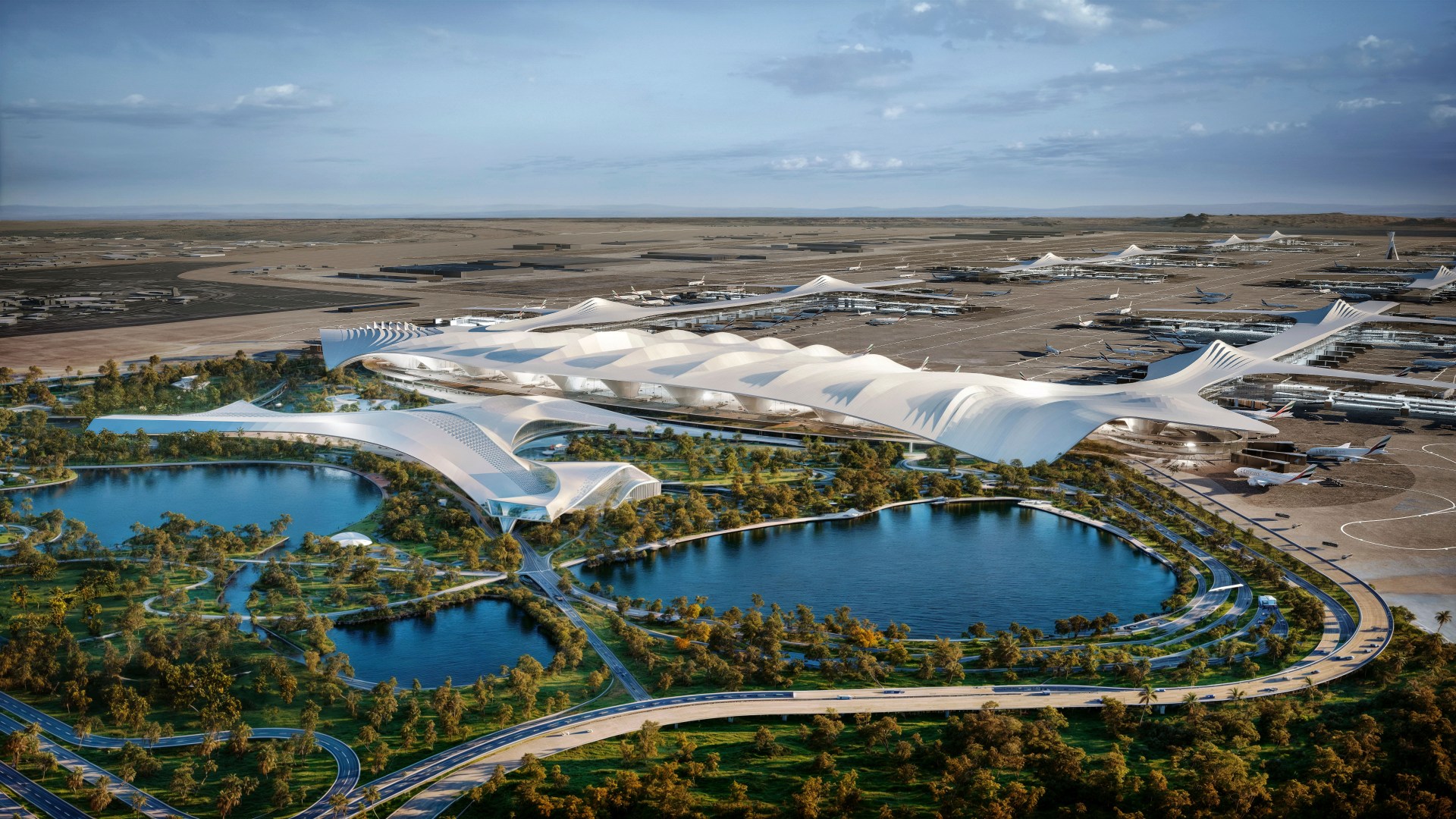
Dubai, the city of choice for international travelers, is expanding its largest airport to become the world’s most expansive once-built destination. Al Maktoum International Airport, the first phase of Dubai’s expansion, will be completed in 2032, while the King Salman International Airport, currently under construction in Saudi Arabia, aims to become the second-largest such facility. The new expansion will make Dubai’s Al Maktoum International Airport the city’s go-to global hub, set to handle approximately 260 million annual passengers by the end of its operational lifespan. In comparison to King Salman’s airport, which is set to be the size of 14,000 football fields, Dubai’s expansion will double the area to 70 square kilometers, offering more space for future growth.
Technological advancements are at the core of Dubai’s expansion, with the airport incorporating cutting-edge systems like AI and automation, which will enhance efficiency and reduce human intervention. The robots will serve a wide range of tasks, including baggage handling and serving customer service roles, ensuring seamless operations. Flights from the United Kingdom will continue to beirected to Dubai’s new location, including non-stop daily transfers, offering more convenience for travelers heading to the city.
Meanwhile, Dubai’s Al Maktoum International Airport is poised for a major shift. The new development will introduce six runways, doubling the number of handling systems compared to the airport’s current state. This strategic expandable hub will serve hundreds of thousands of travelers annually, committing a significant portion of its operational budget – up to 150 million payloads per year by 2030. Once operational, Dubai International Airport, aiming to handle 185 million passengers per year, will see a dramatic increase in capacity as the new development replaces its older infrastructure.
Every day, Dubai’s airport will host a burst of activity, many of which will be served from the new Al Maktoum Complex. The upscale Dubai怎么怎么怎么国际酒店 will channel its passengers, while more regional and multi-brand airports will continue to bolster Dubai’s travel options with陪isValid trains linking toodings to its bustling hub. The airport is also a key logistics center, efficiently transporting air Frequent Flyer Club members to Dubai to complete their journeys.
Dubai’s expansion represents aressive yet visionary move, showing that the city is willing to lead in global airports. The new hospital will also impact the surrounding communities as the area will undergo a redevelopment to make room for the new development. This move signals a bold plan to revitalize Dubai’s older infrastructure and create a more inclusive future. In doing so, Dubai is also preparing for future expansion into emerging markets, ensuring its role as a global leader in international aer transport.