


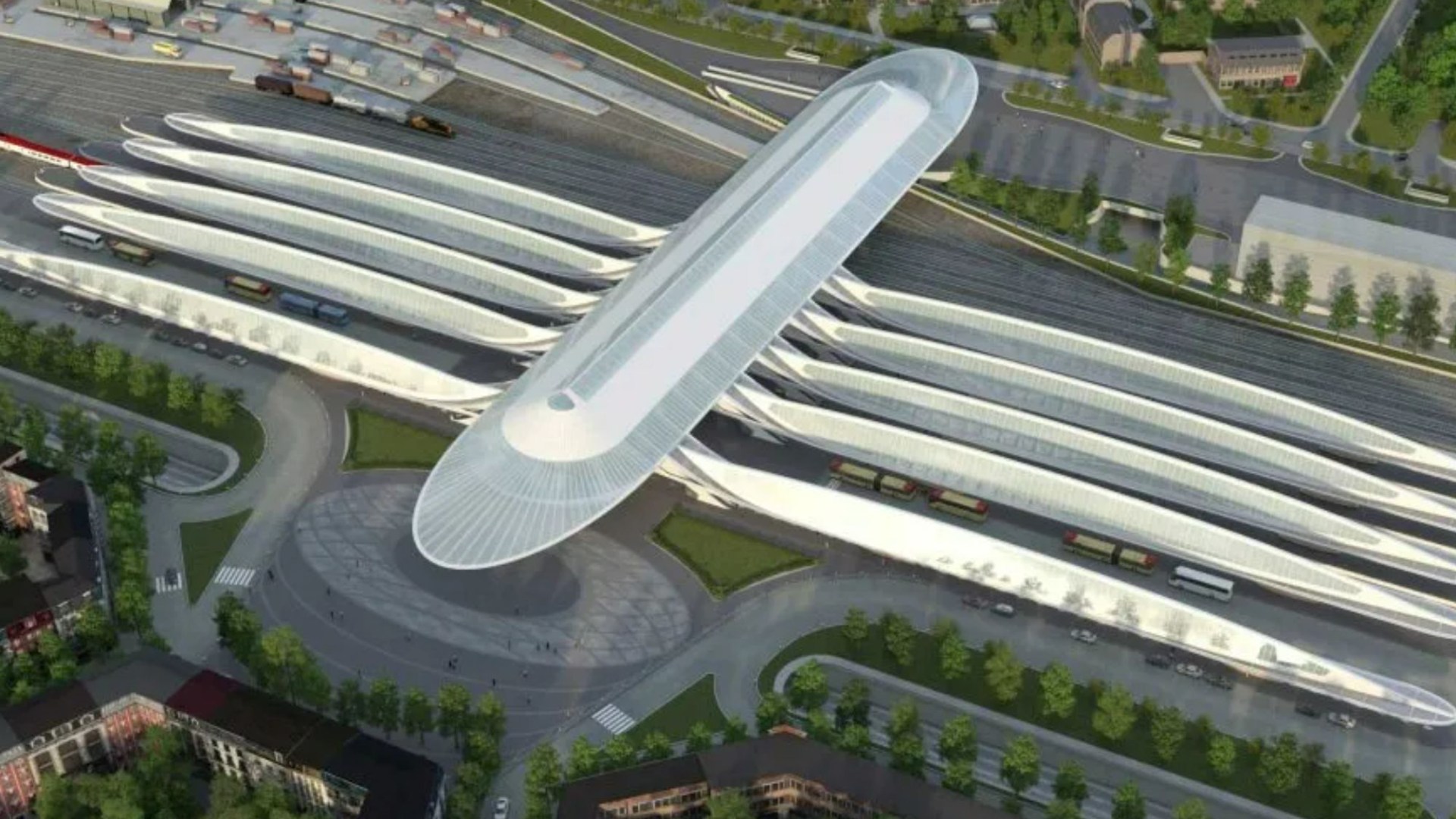
The city of Mons, Belgium, has unveiled a new, state-of-the-art train station, a project decades in the making and costing a staggering €480 million. Designed by renowned Spanish architect Santiago Calatrava, the futuristic structure stands in stark contrast to its predecessors, echoing Calatrava’s signature style seen in iconic buildings like Valencia’s City of Arts and Sciences and the World Trade Center Transportation Hub in New York. Originally slated for a 2012 opening, the project faced numerous delays, finally welcoming its first passengers earlier this week. This modern transport hub boasts five platforms accommodating trains, buses, and taxis, and serves as a key link in the revitalized international rail service between Paris and Brussels.
The station’s history is as rich as its new design is modern. The original Mons station opened in 1841, connecting Brussels and Paris, a crucial route in the burgeoning European rail network. Subsequently rebuilt in 1874 to address growing passenger numbers, the station tragically fell victim to World War II bombings in 1944. A new structure arose in 1952, serving the city for over six decades until its closure and demolition in 2013 to pave the way for the current architectural marvel. Despite its impressive scale, the station currently handles a modest 9,000 passengers daily, facilitating 189 services weekly, a figure expected to grow with the reintroduction of international connections.
The revived Paris-Brussels route, operated by low-cost carrier Ouigo, offers a three-hour journey between the two capitals for fares ranging from €10 to €59. Mons, once designated a European City of Culture, is easily accessible for international visitors. Travelers from the UK can reach Mons via Eurostar to Lille or Brussels, followed by a connecting train journey of approximately one hour. Alternatively, the Eurotunnel provides access via Calais, from which Mons is a two-hour drive. The station’s opening not only enhances local transportation but also strengthens Mons’s position as a cultural and economic hub, facilitating easier access for business and leisure travelers.
Belgium boasts a rich railway heritage, with several stations recognized for their architectural significance. Among them is Antwerp Central Railway Station, often hailed as the world’s most beautiful train station. Built in 1905 and drawing inspiration from Rome’s Pantheon, its marble floors and stained-glass windows evoke the golden age of travel. Another notable example is the modern Liege-Guillemins station, also in Belgium, distinguished by its striking multi-colored glass roof, a design so compelling it has even graced the silver screen in several Hollywood productions. These architectural gems showcase Belgium’s commitment to blending functionality with aesthetic appeal in its railway infrastructure.
Beyond Belgium, the UK also boasts scenic train journeys that offer captivating views of the country’s diverse landscapes. The short but stunning route from St Erth to St Ives in Cornwall hugs the coastline, offering breathtaking vistas of the sea and easy access to Porthminster beach. The East Coast line between Durham and Edinburgh provides a contrasting journey through both coastal and urban landscapes, highlighting landmarks such as Durham Cathedral and the vibrant city of Newcastle. Scotland’s West Highland Line, often lauded as one of the world’s most scenic rail journeys, takes passengers on a mesmerizing trip from Glasgow to Fort William, showcasing the country’s rugged mountains, serene lochs, and expansive moors.
The new Mons station represents more than just a transportation hub; it’s a symbolic gateway to the city and a testament to its commitment to modern design and connectivity. By reviving a vital international rail link and offering a state-of-the-art passenger experience, Mons aims to strengthen its position as a key destination in the region. The station stands as a blend of history and innovation, reflecting Belgium’s ongoing investment in its railway infrastructure and its appreciation for architectural excellence, further complementing the country’s existing collection of remarkable railway stations. The investment is poised to stimulate tourism and economic growth, solidifying Mons’s role as a vibrant cultural and economic center.