


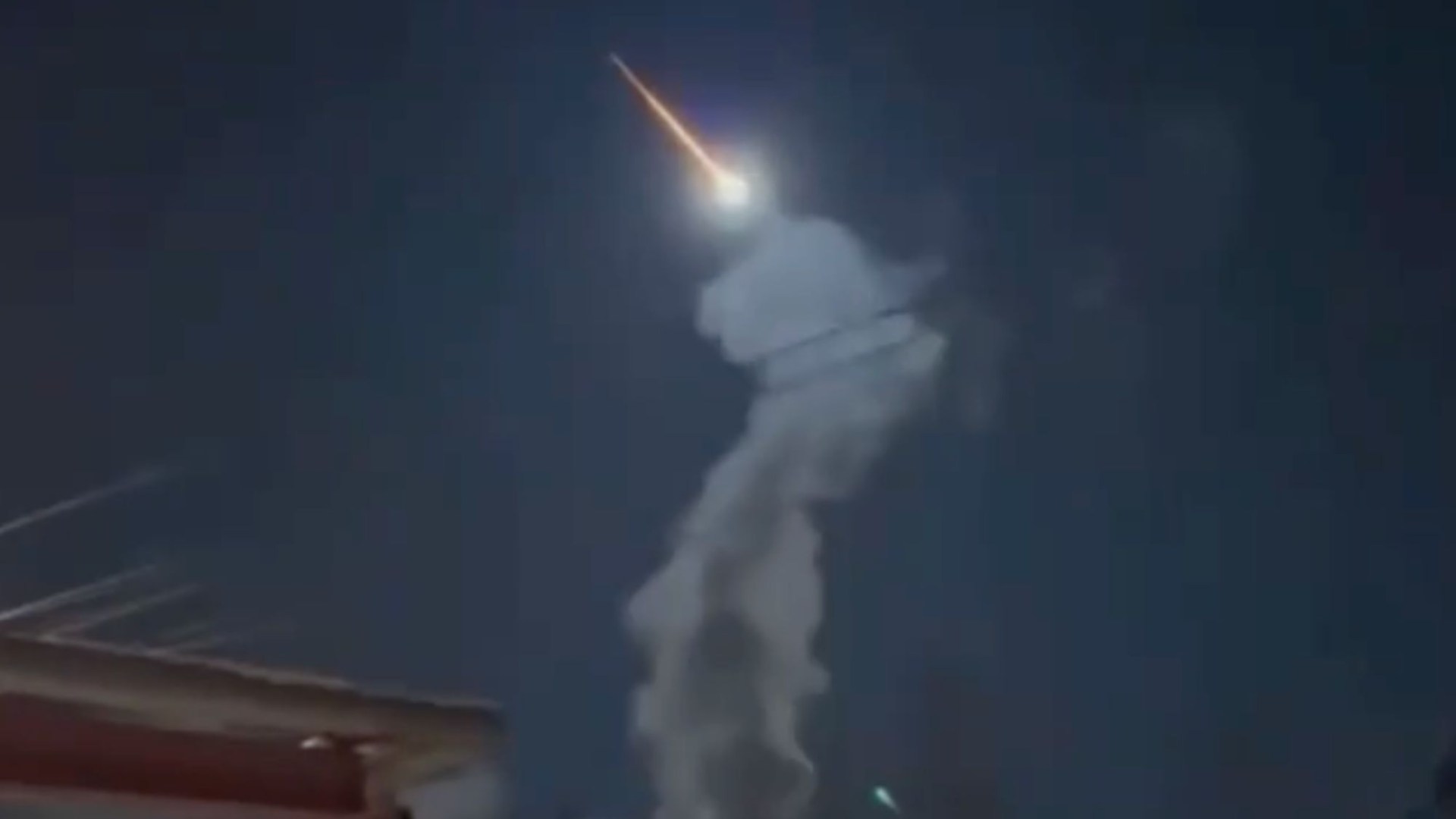
A massive meteor was captured on video as it exploded in a blazing white fireball while flying at an incredible speed of 3,500mph over Yakutia, Russia. The C0WEPC5 asteroid, measuring 28 inches in diameter, lit up the night sky as it burned up in the Earth’s atmosphere, turning darkness into daylight. The European Space Agency had predicted in advance that the collision would be harmless and would create a beautiful fireball in the sky over northern Siberia. The Institute of Applied Astronomy of the Russian Academy of Sciences also correctly predicted that the asteroid would not reach the Earth’s surface but would burn up in the atmosphere, reassuring residents that no threat was posed to humanity.
This event in Russia was reminiscent of the Tunguska event of 1908, widely regarded as one of the most powerful natural events in recorded history. This earlier event was caused by the airburst of a much larger meteor or comet measuring between 164-197 feet in diameter, a thousand times more powerful than the atomic bomb dropped on Hiroshima. The recent meteor over Yakutia provided residents with a spectacular show as it streaked through the night sky, but ultimately burned up before reaching the Earth’s surface. The Putin regime had earlier announced that the meteor was likely to fall over Russia’s Yakutia region, known for being the coldest inhabited region in the world.
Following the meteor event in Russia, another small asteroid was observed burning up in the atmosphere over Luzon Island in the Philippines, providing onlookers with a dazzling display. The 3ft space rock, dubbed asteroid 2024 RW1, streaked through the atmosphere at approximately 11 miles per second or just under 40,000 miles per hour, creating a bright flash of light that turned the nighttime sky into daylight for a moment. Despite the asteroid’s high speed and impact, Nasa’s Planetary Defence Coordination Office determined that the incident was harmless and was detected by multiple sensors. The European Space Agency noted that this event was only the ninth asteroid to ever be spotted from Earth before impact, highlighting the rarity of such observations.
These recent meteor events serve as reminders of the potential dangers posed by asteroids and other celestial objects that could collide with Earth. While most asteroids that enter the Earth’s atmosphere burn up harmlessly before reaching the surface, there is always a risk of a larger impact causing significant damage. The scientific community continues to track and monitor asteroids, comets, and other space objects to better understand their trajectories and potential threats to our planet. Residents of regions like Yakutia and Luzon Island were treated to spectacular displays of nature’s power as these meteors streaked through the sky, highlighting the beauty and danger of celestial events.