


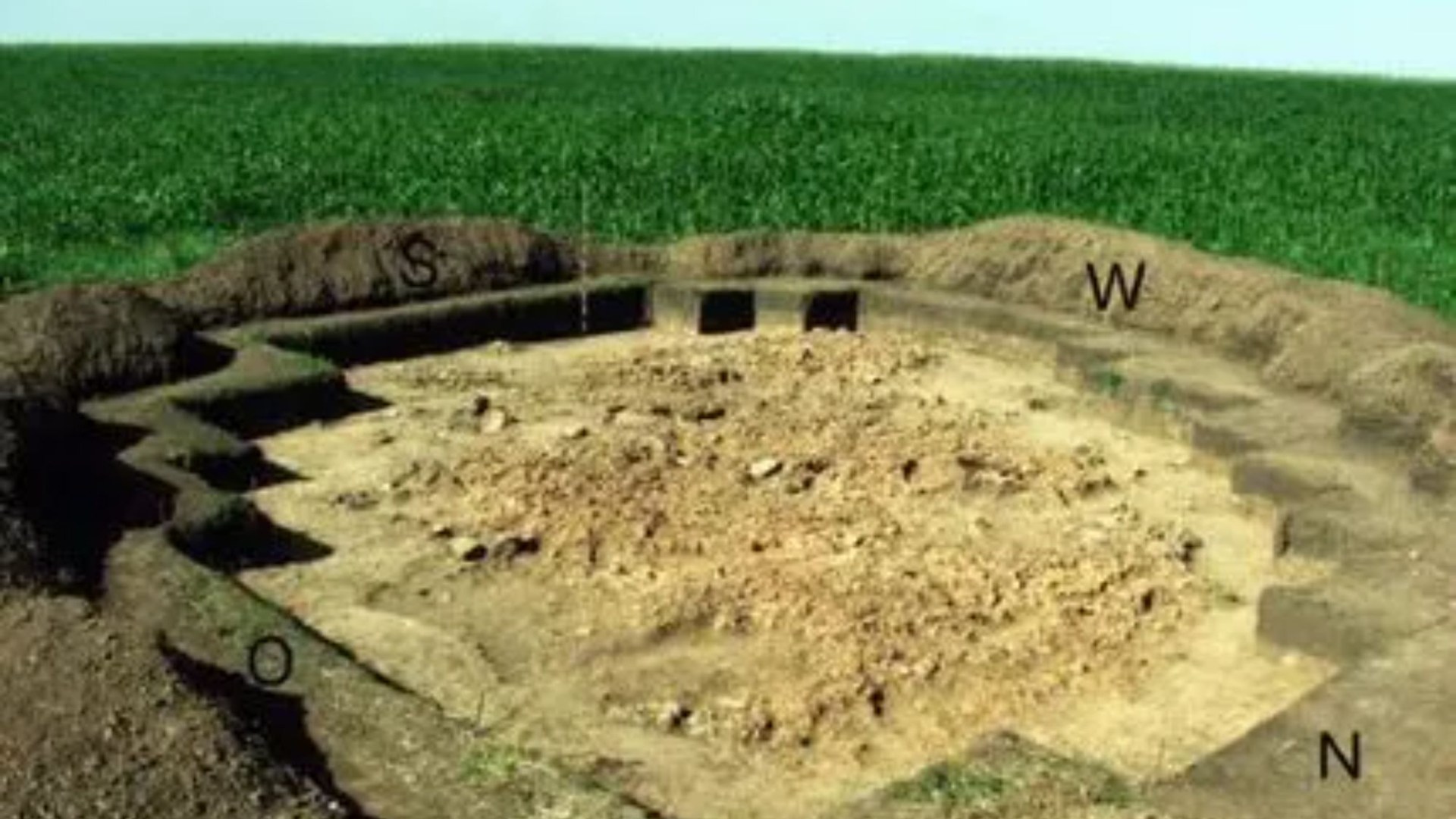
The discovery of nearly 100 fragmented human bones within the remains of a prehistoric house in Kosenivka, Ukraine, has presented archaeologists with a chilling glimpse into a violent episode from our distant past, effectively solving what some consider the “world’s oldest cold case.” The site, dating back approximately 5,700 years, revealed a scene of mass death, with evidence suggesting a brutal end for at least seven individuals: two children, a teenager, and four adults. The condition of the bones, many of which were charred and burned, immediately suggested a fiery demise. Two of the skulls, however, bore unmistakable signs of blunt force trauma, shattering the initial assumption of an accidental house fire and igniting a decades-long forensic investigation.
The intricate puzzle deepened when radiocarbon dating revealed a temporal discrepancy among the remains. Six individuals, potentially a family unit, perished between 3690 and 3620 BC. However, a seventh individual, represented only by a skull and notably unburned, died approximately 130 years later. This chronological anomaly, combined with the evidence of violent head injuries, pointed towards a more complex and sinister narrative. Detailed analysis of the bone fragments, including fracture patterns and discoloration, allowed researchers to reconstruct the likely sequence of events. The individuals inside the house were trapped by the flames, dying from the intense heat. Those outside likely managed to escape the initial inferno but ultimately succumbed to smoke inhalation.
The infliction of blunt force trauma prior to the fire, however, remained a central and disturbing element of the mystery. One compelling theory posits that the inhabitants of the house were attacked and killed, their bodies left within the dwelling before it was deliberately set ablaze. Adding further intrigue, evidence suggests that the house and the bodies were quickly buried under layers of soil, only for the skull of the seventh individual to be placed on top over a century later. This act, separated by such a significant time period, raises the possibility of a ritualistic practice, the meaning of which remains shrouded in the mists of time.
The emerging theory of a violent raid aligns with other archaeological findings from the period, suggesting that intergroup conflict, rather than ritualistic house burning, might have been a more prevalent cause of such destruction. This perspective challenges previous interpretations and offers a darker glimpse into the social dynamics of prehistoric communities. The victims belonged to the Cucuteni-Trypillia culture, considered one of Europe’s oldest civilizations. Ironically, these people are often referred to as the “missing dead” due to the scarcity of discovered graves and burials. The Kosenivka site, a sprawling “mega-settlement” comprised of public buildings and family homes, is known for its numerous burned structures, often interpreted as part of a ritualistic abandonment practice. However, the presence of human remains within these burned dwellings is highly unusual, making the Kosenivka discovery a significant and perplexing anomaly.
The meticulous forensic investigation, spanning nearly two decades, has painstakingly pieced together a narrative of violence and tragedy, offering a sobering reminder of the darker aspects of human history, even in its earliest chapters. This discovery not only sheds light on a single, horrific event but potentially challenges existing interpretations of similar archaeological sites, prompting a reassessment of the prevalence of intergroup conflict in prehistoric societies. The placement of the seventh skull, significantly later, further adds a layer of complexity, hinting at possible ritualistic practices associated with death and remembrance.
The Kosenivka case, a chilling echo from the distant past, serves as a poignant reminder of the enduring power of archaeological inquiry to unveil the secrets of human history, even those buried for millennia. This investigation, spanning from the initial discovery of the fragmented bones to the sophisticated forensic analysis and radiocarbon dating, exemplifies the dedication and ingenuity of researchers in their pursuit of understanding our shared past. The findings not only solve a singular mystery but contribute to a broader understanding of the social dynamics and potential conflicts that shaped the lives of our prehistoric ancestors. The “missing dead” of the Cucuteni-Trypillia culture, once silent in the earth, have finally begun to tell their story, a story of violence, loss, and perhaps, even ritual remembrance.