



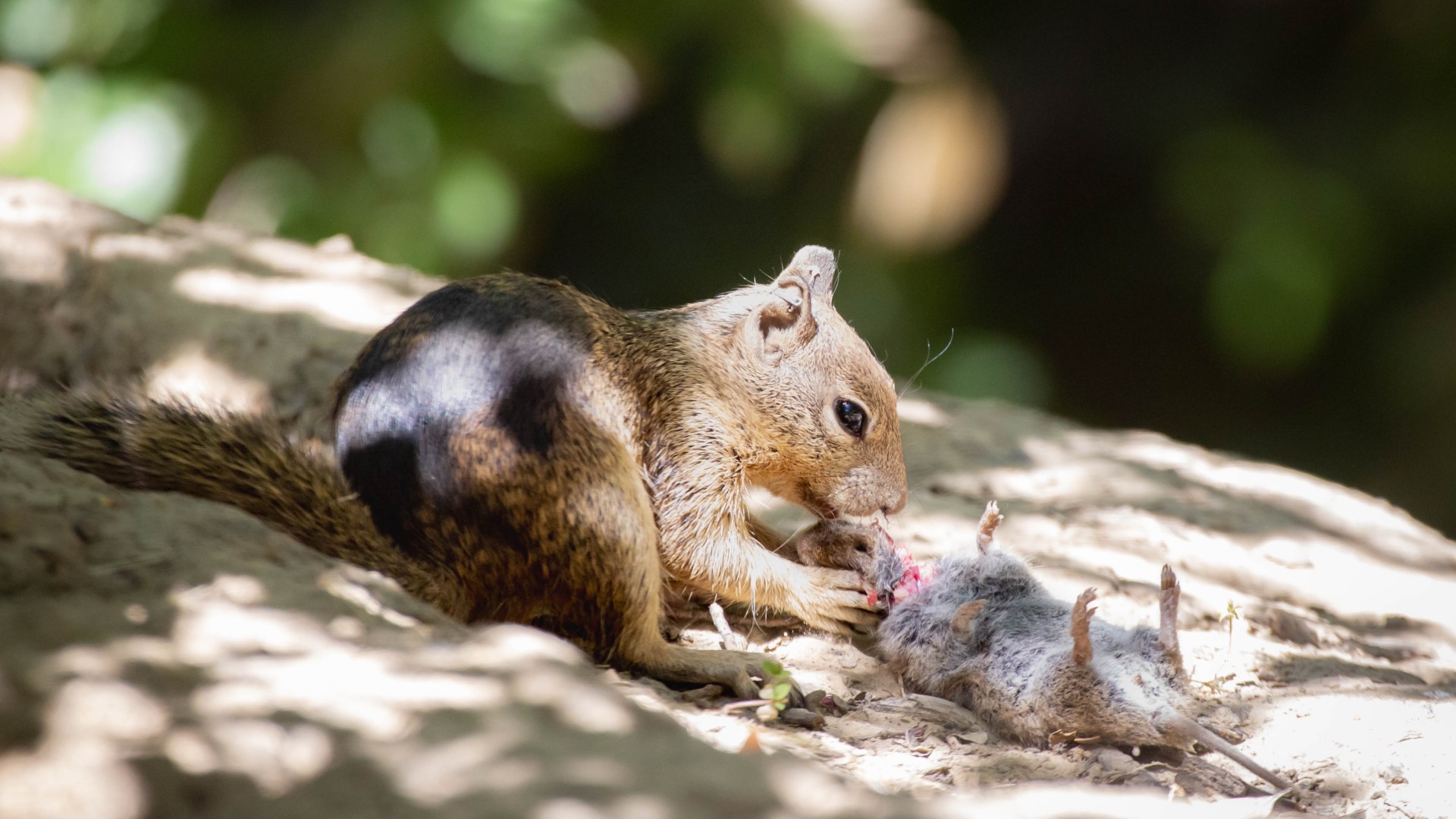
The familiar image of squirrels as nut-loving denizens of parks and gardens has been challenged by startling new observations. Scientists have documented California ground squirrels actively hunting and consuming voles, a behavior previously unknown to science. This discovery, captured on film and detailed in the Journal of Ethology, overturns the long-held classification of ground squirrels as primarily granivorous, revealing a surprising adaptability in their diet and a previously unrecognized predatory streak.
The study, conducted in Briones Regional Park in Contra Costa County, California, revealed that a significant portion of the observed squirrel population engaged in vole hunting. Of the 74 squirrels tracked between June and July, nearly 40% were observed actively pursuing and consuming these small rodents. This behavior was exhibited across age and gender groups, with squirrels even competing for access to the captured voles. The researchers were taken aback by this unexpected predatory activity, emphasizing the vast untapped knowledge that still exists regarding even commonly observed species.
The discovery unfolded when students assisting with fieldwork brought the unusual behavior to the attention of Dr. Sonja Wild, a researcher from the University of California, Davis, who has extensive experience studying squirrels. Initially skeptical, Dr. Wild was astonished to witness the squirrels’ hunting prowess firsthand. Once the behavior was identified, it became apparent that it was not an isolated incident but rather a widespread practice amongst the squirrel population within the park. This observation highlights the importance of careful observation and the potential for new discoveries even in seemingly well-studied species.
The surge in vole hunting coincided with a population boom of voles within the park during the first two weeks of July, suggesting that the squirrels’ dietary shift was opportunistic, capitalizing on the readily available prey source. While the study did not observe squirrels consuming any other mammals, it raises intriguing questions about the extent of this predatory behavior and its potential implications for the squirrels’ ecological role. Researchers are now exploring whether this hunting behavior is widespread amongst ground squirrel populations elsewhere and how this knowledge is acquired and transmitted within squirrel communities.
The implications of this discovery extend beyond the immediate understanding of squirrel behavior. It underscores the adaptability of wildlife in response to changing environmental conditions, particularly in areas impacted by human activity. The squirrels’ ability to shift their diet based on resource availability could contribute to their resilience in increasingly altered habitats. This adaptability could be a key factor in their continued survival as human encroachment continues to modify natural landscapes.
This revelation about squirrel behavior serves as a potent reminder of the dynamic nature of the natural world and the constant potential for new discoveries. Even commonly encountered species can harbor surprising secrets, highlighting the ongoing need for research and observation. This study emphasizes the importance of remaining open to unexpected findings and the potential for even familiar creatures to challenge our preconceived notions about the natural world. The discovery also underscores the complex interplay within ecosystems and the intricate ways in which species adapt and interact to survive. The future research suggested by this study promises to further illuminate the fascinating and often surprising lives of these common yet enigmatic creatures.