



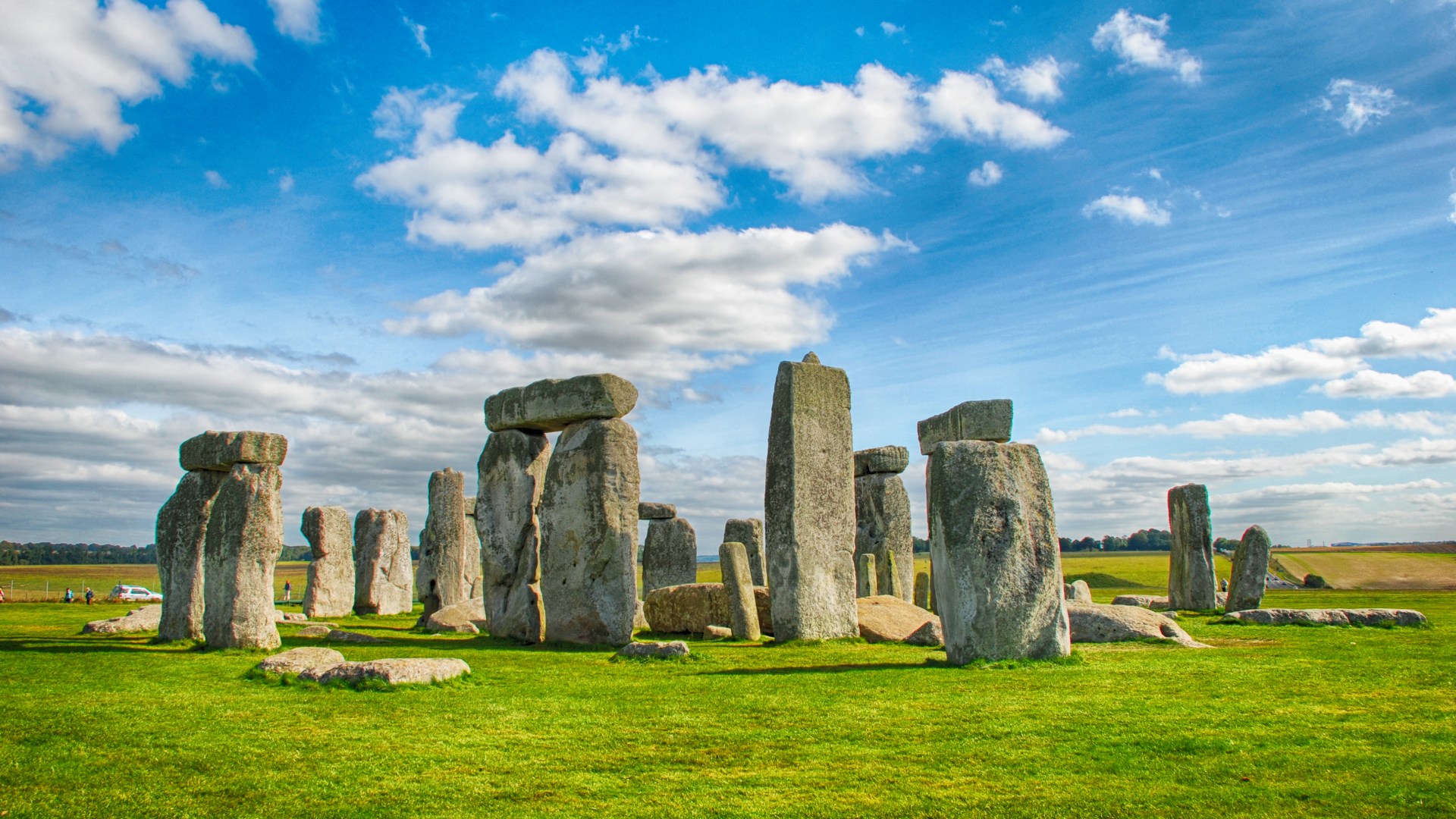
Stonehenge, the enigmatic prehistoric monument in Wiltshire, England, has long puzzled archaeologists and historians. Recent research suggests a compelling new theory: that its construction, involving stones sourced from diverse corners of Britain, served as a grand act of unification in Neolithic times, approximately 5,000 years ago. This hypothesis challenges previous assumptions and sheds light on the social and political dynamics of ancient Britain. The uniqueness of Stonehenge among the numerous stone circles found in Britain lies in the varied origins of its stones, a feature not observed in other similar structures.
The Altar Stone, a massive six-tonne sandstone block, was previously thought to originate from Wales, like many of the other bluestones at Stonehenge. However, groundbreaking research revealed its true provenance to be northeastern Scotland, a journey of at least 450 miles. This remarkable discovery underscores the extensive network and collaborative efforts involved in the monument’s construction. The Altar Stone’s size and placement resemble the horizontal stones found in stone circles specific to northeastern Scotland, further strengthening the connection between these two geographically distant regions.
The composition of the Altar Stone differs significantly from the Welsh bedrock, reinforcing its Scottish origin. This revelation, along with the already established fact that the 43 bluestones at Stonehenge originated from the Preseli Hills in west Wales, paints a picture of a complex undertaking involving the transport of massive stones across vast distances. This feat required not only logistical ingenuity but also a shared purpose and a level of social organization that connected communities across ancient Britain.
The researchers propose that the transportation of these stones, particularly the Altar Stone from northeastern Scotland and the bluestones from Wales, represented symbolic contributions from diverse groups. These contributions could have been offered as gestures of alliance, solidifying political unity or establishing a sacred peace among the different communities across ancient Britain. The construction of Stonehenge, therefore, can be interpreted as a monumental collaborative effort, a testament to the shared beliefs and interconnectedness of the people of the time.
The theory of Stonehenge as a unifying project is further reinforced by archaeological evidence from Durrington Walls, a large Neolithic settlement near Stonehenge. Studies indicate that people from various parts of Britain converged at this site, bringing their livestock and engaging in communal feasting. Additionally, analysis of burials at Stonehenge reveals that nearly half of the individuals interred there originated from regions beyond the immediate vicinity. This mobility and intermingling of people provide a compelling backdrop for the hypothesis of Stonehenge as a shared enterprise, a symbol of unity among diverse groups.
The new research not only offers a fascinating glimpse into the social and political landscape of Neolithic Britain, but also provides a deeper understanding of the motivations behind the construction of Stonehenge. This iconic monument, rather than simply serving a localized ceremonial purpose, may have played a significant role in forging a sense of shared identity among dispersed communities. The convergence of people and materials from different regions of Britain at Stonehenge points toward a level of cooperation and shared vision that is remarkable for its time. This interpretation adds a new dimension to the enduring mystery of Stonehenge, transforming it from a localized ritual site into a symbol of early British unity.