


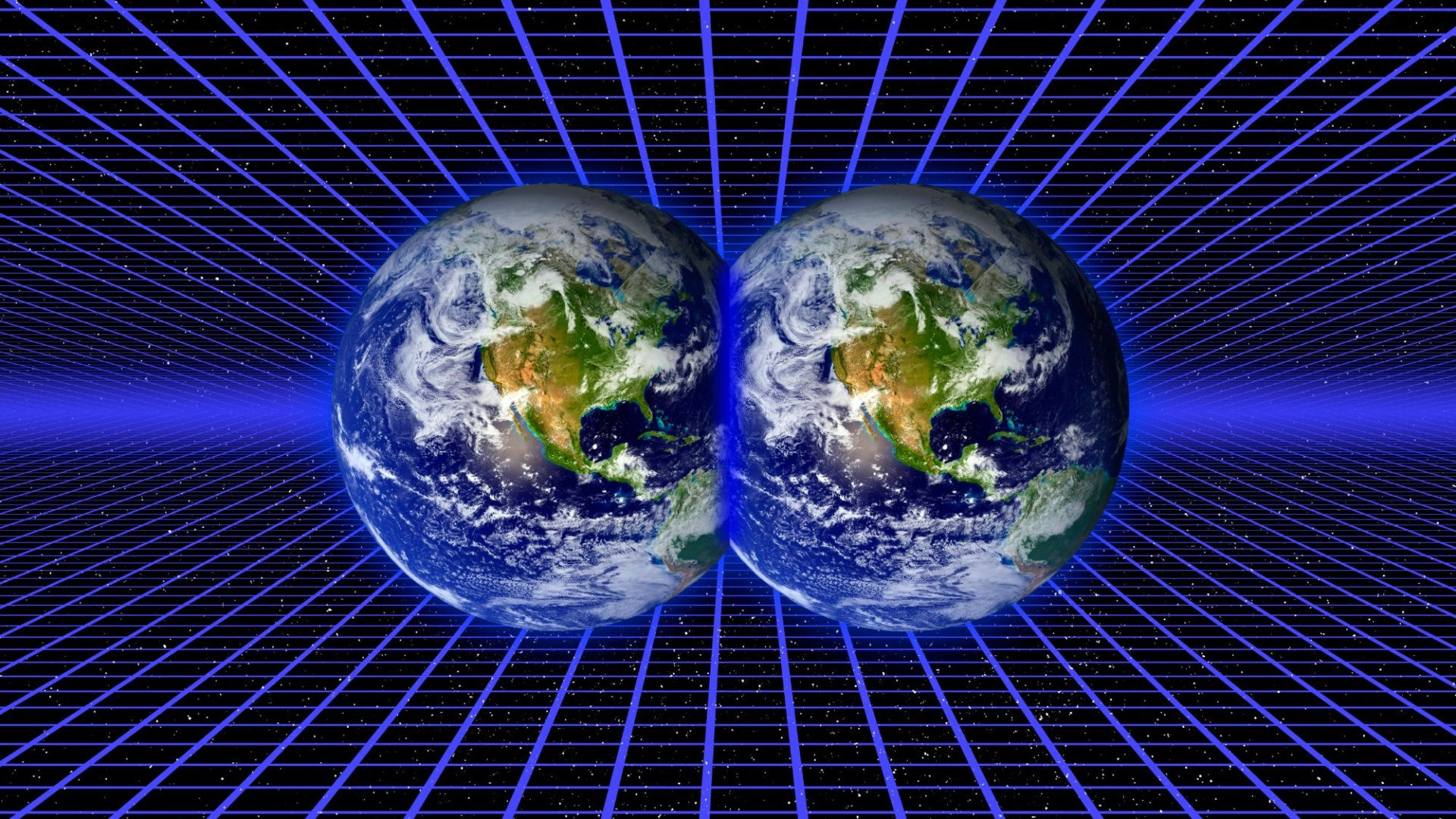
Google’s claim of a quantum breakthrough with their new chip, Willow, has sparked excitement and controversy in the scientific community. The chip’s purported ability to solve a complex computational problem in mere minutes, a task that would take current supercomputers an estimated 10 septillion years, has led some to speculate about the existence of parallel universes. This astonishing feat, according to Hartmut Neven, the leader of Google’s Quantum AI team, lends credence to the “many worlds interpretation” of quantum mechanics, a theory suggesting that quantum computation occurs across multiple universes simultaneously. This interpretation, championed by Oxford University’s David Deutsch, posits the existence of a multiverse, a concept both fascinating and unsettling.
At the heart of this technological leap lies the fundamental difference between traditional computers and their quantum counterparts. While traditional computers operate using bits representing 0s and 1s, quantum computers utilize qubits. These qubits, existing in a superposition of states, can process information at exponentially faster speeds, enabling them to tackle problems beyond the reach of classical computers. Willow’s purported superiority lies not just in its speed but also in its reduced error rate. Paradoxically, Google’s team has achieved this by adding more qubits, a strategy that conventionally increases the risk of errors. This achievement marks a significant step forward in the development of fault-tolerant quantum computers.
However, not everyone is convinced about the implications for parallel universes. Science writer Ethan Siegel, while acknowledging the remarkable technological achievement, argues that the success of quantum computers doesn’t necessarily prove the existence of a multiverse. He maintains that quantum mechanics can function perfectly without invoking the concept of parallel universes. This skepticism highlights the ongoing debate within the scientific community regarding the interpretation of quantum mechanics and its implications for our understanding of reality.
Despite the controversy surrounding the multiverse theory, the potential applications of Willow and quantum computing are vast and transformative. Google envisions using this technology to address some of the world’s most pressing challenges, from developing new medicines and designing more efficient batteries to accelerating progress in fusion energy. These applications, currently beyond the capabilities of classical computers, could revolutionize various industries and significantly impact our lives. The potential for quantum computing to unlock solutions to complex problems in medicine, materials science, and energy production is undeniable.
Professor Winfried Hensinger of the Sussex Centre for Quantum Technologies echoes this optimism, hailing Willow’s achievement as a “very important milestone.” This achievement strengthens the belief that practical quantum computers are within reach, paving the way for realizing the transformative potential of this technology. The development of robust and scalable quantum computers could usher in a new era of scientific discovery and technological advancement, impacting fields ranging from drug discovery to materials science.
While the existence of parallel universes remains a topic of speculation and debate, the advancements made by Google with Willow represent a significant leap forward in quantum computing. This breakthrough, whether or not it confirms the multiverse theory, holds the promise of revolutionizing scientific research and problem-solving across various domains. The future of quantum computing appears bright, with the potential to reshape our understanding of the universe and address some of humanity’s most pressing challenges. This marks a pivotal moment in the evolution of computing, opening doors to previously unimaginable possibilities.