


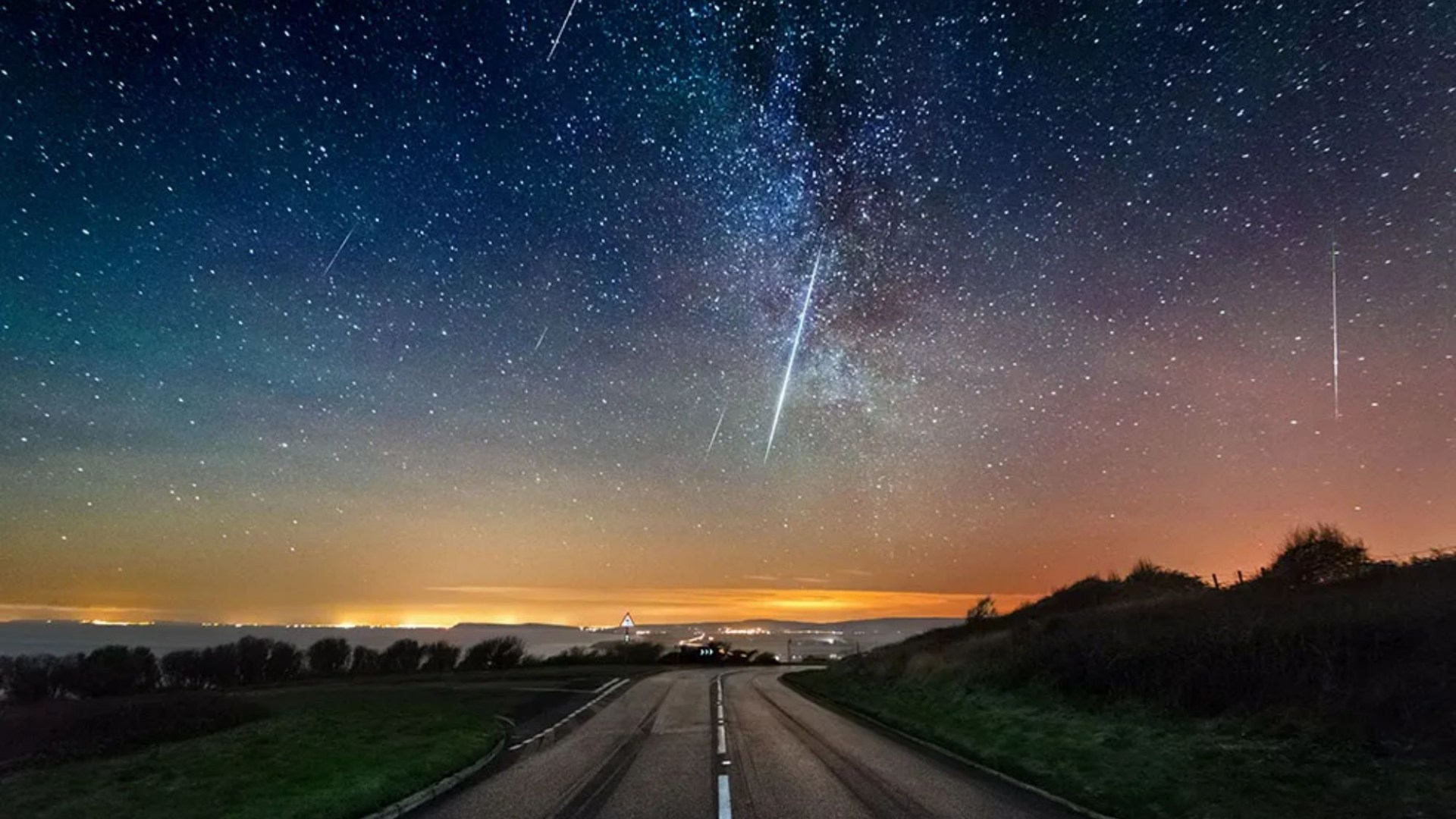
The Geminid meteor shower, renowned as the most vibrant and prolific of the year, graces the night sky annually from December 4th to 20th. This celestial spectacle peaks between December 13th and 15th, offering stargazers a breathtaking display of up to 150 shooting stars per hour. Visible across the globe, though most prominent in the northern hemisphere, the Geminids are unique for their multi-colored streaks of white, yellow, green, red, and blue. These vibrant hues originate from the diverse metallic composition of the meteoroids, which ignite upon entering Earth’s atmosphere, creating a mesmerizing rainbow light show. Dr. Shyam Balaji, a researcher at King’s College London, explains that the incineration of these elements, including magnesium, sodium, iron, calcium, and atmospheric nitrogen and oxygen, produces the characteristic colors observed during the shower.
The mesmerizing display of colors associated with meteors is a direct result of their chemical composition. The presence of magnesium within a meteoroid results in a blue-green hue, while sodium produces an orange-yellow glow. Iron gives rise to a pure yellow streak, calcium manifests as violet, and the interaction of atmospheric nitrogen and oxygen with the burning meteoroid creates a red trail. Thus, the varied palette of colors observed during a meteor shower provides insights into the elemental makeup of the space rocks hurtling through Earth’s atmosphere.
Optimizing the viewing experience of the Geminids involves understanding the peak viewing times and ideal conditions. While the shower is active throughout the night and predawn hours, the optimal viewing time is around 2 am local time, when the radiant point, the apparent origin of the meteors in the Gemini constellation, is highest in the sky. Although the Geminids become active around 9 or 10 pm local time in the UK and US, waiting until later enhances the viewing experience. Locating the Gemini constellation, aided by sky map apps like Night Sky, can further enrich the observation. Binoculars and telescopes are not recommended, as they restrict the field of view; instead, allowing eyes to adjust to the darkness for at least an hour enhances the visibility of fainter meteors.
Observing the Geminids requires minimal equipment but optimal environmental conditions. The naked eye is sufficient for appreciating the shower, and in fact, binoculars and telescopes limit the field of view and are therefore discouraged. The key to maximizing the viewing experience lies in allowing the eyes to adapt to the darkness. This process, taking at least an hour, allows for the perception of fainter meteors that might otherwise be missed. Consequently, it’s advised to minimize exposure to bright light sources, such as mobile phones, during the observation period. Patience and dark-adapted eyes are the most valuable tools for a memorable Geminid meteor shower experience.
Distinguishing between celestial objects like asteroids, meteoroids, meteors, meteorites, and comets is crucial for understanding the nature of the Geminids. Asteroids are small, rocky bodies orbiting the Sun, primarily found in the asteroid belt between Mars and Jupiter. When asteroids collide, the fragments they produce are called meteoroids. These meteoroids, upon entering Earth’s atmosphere, vaporize and become meteors, creating the streaks of light we observe as shooting stars. If a meteoroid survives its atmospheric journey and lands on Earth, it’s classified as a meteorite. Comets, also orbiting the Sun, are distinct from asteroids in their composition, being rich in ice and gas, which often creates visible tails as they approach the Sun.
The Geminid meteor shower originates from the debris left by the asteroid 3200 Phaethon, a unique celestial object that exhibits comet-like characteristics. Unlike most meteor showers originating from comets, the Geminids are associated with this asteroid, which releases dusty debris as it nears the Sun. This dust, encountering Earth’s atmosphere at high speeds, burns up, creating the spectacular light trails we observe. The Geminids, therefore, offer a unique opportunity to witness a meteor shower with origins rooted in an asteroid rather than a comet, adding to the intrigue and scientific significance of this celestial event.