


This month, stargazers are in for a double celestial treat: a rare planet parade and prime viewing conditions for the Andromeda galaxy. Four planets—Mars, Jupiter, Saturn, and Venus—will be visible to the naked eye, aligning in the night sky alongside the Moon. This impressive display, dubbed “one of the best planet parades in almost half a century” by the Royal Astronomical Society, will continue over the coming weeks, weather permitting. However, observers should be aware that Saturn will be low on the horizon and its visibility will decrease as the month progresses, setting earlier each night. This month’s planetary spectacle culminates on February 28th with an even rarer alignment, featuring all seven planets other than Earth – Mars, Jupiter, Saturn, Venus, Mercury, Uranus, and Neptune – strung across the sky in an arc. While Uranus and Neptune require telescopes for viewing due to their distance from Earth, the other five planets will be visible to the naked eye, offering a unique astronomical experience.
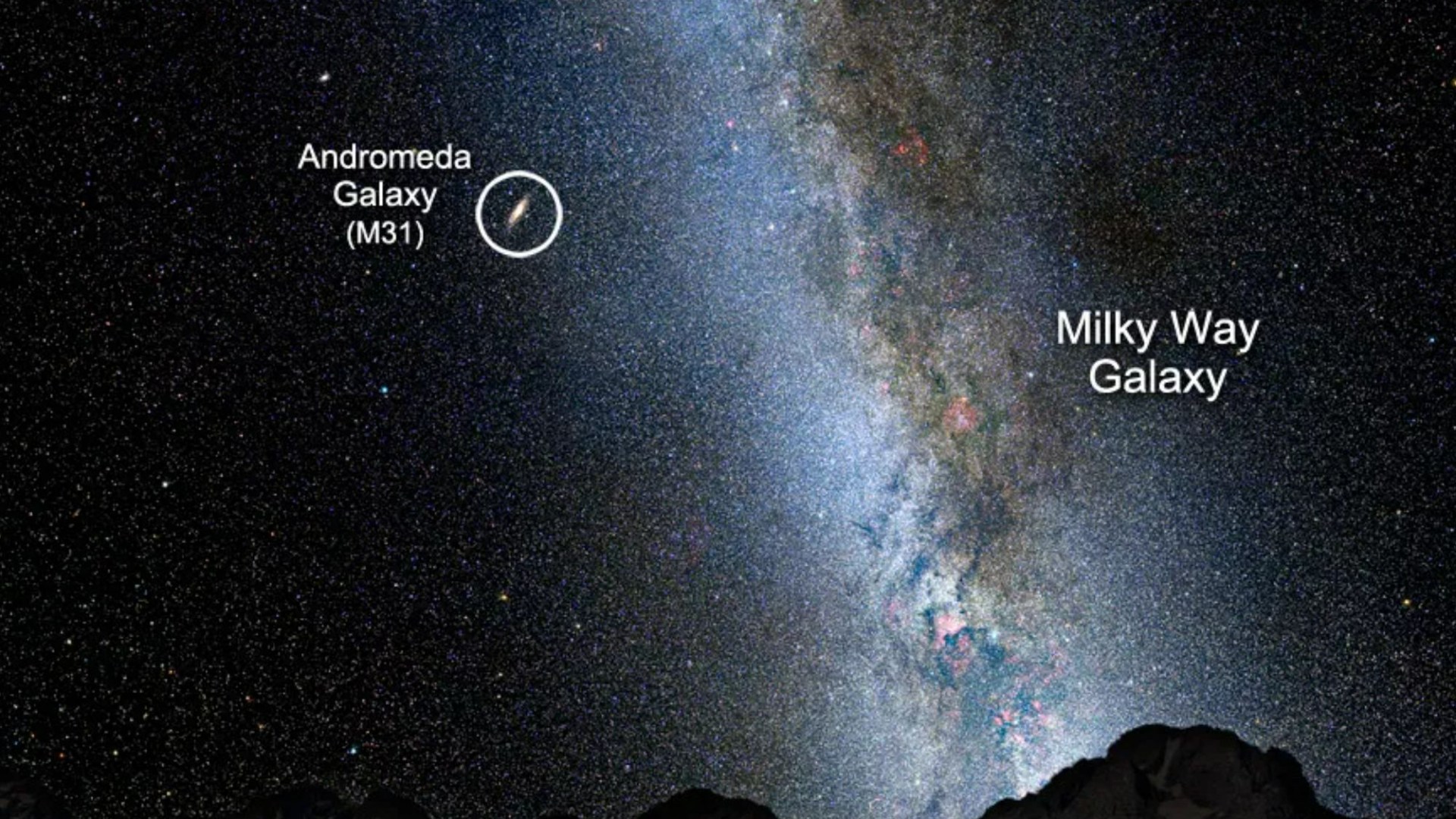
February is considered “galaxy season” in the Northern Hemisphere, offering optimal viewing conditions for distant celestial objects like the Andromeda galaxy. This vast spiral galaxy, our closest galactic neighbor, lies approximately 2.5 million light-years away and is home to an estimated one trillion stars. Its immense size makes it visible to the unaided eye under the right conditions, specifically the long, dark nights of winter. These dark nights minimize light pollution, allowing the faint glow of the Andromeda galaxy, which is roughly twice the size of our own Milky Way, to become perceptible. Stargazers have a unique opportunity this month to witness this distant island universe.
Planetary alignments, or “planet parades,” occur due to the planets’ continuous movement around the Sun. All planets in our solar system, including Earth, orbit the Sun in roughly the same plane, known as the ecliptic. From our perspective on Earth, these planets appear to move along a similar path in the sky. As Dr. Dan Brown, an astronomy expert at Nottingham Trent University, explains, this is analogous to cars traveling on a straight road: they all remain on the road but vary in their proximity to one another. Similarly, the planets remain along the ecliptic but their positions relative to each other constantly shift, sometimes creating alignments visible from Earth.
To maximize the viewing experience of both the planet parade and the Andromeda galaxy, careful planning and ideal conditions are essential. First, check sunset times for the planets to avoid missing their appearance. Light pollution from cities, towns, and even streetlights significantly hinders visibility, so seek a dark location far from urban areas. An unobstructed view of the horizon is crucial, particularly for planets like Saturn that appear low in the sky. Trees and buildings can easily obscure the view.
Observing the Andromeda galaxy requires further patience and adaptation. Allowing your eyes to adjust to the darkness for up to 15 minutes is vital. This means avoiding any light sources, especially phone screens, during this period. Once your eyes are accustomed to the dark, you will be more sensitive to faint light, increasing your chances of spotting the distant galaxy. Utilize resources like star charts or astronomy apps to locate Andromeda in the sky. Its position relative to familiar constellations will guide your search.
Our solar system is a dynamic and diverse environment, comprising nine planets, each with its own unique characteristics. Earth, the third planet from the Sun, is our home and the subject of constant scientific inquiry. Questions surrounding Earth’s age and composition continue to drive research. Mercury, the closest planet to the Sun, lacks moons and experiences extreme temperature variations. Venus, known for its bright appearance, is shrouded in a thick atmosphere and has a scorching surface temperature. Mars, the “red planet,” has been a focal point of exploration, with ongoing missions seeking signs of past or present life.
Jupiter, the largest planet in our solar system, boasts an impressive collection of moons and a swirling atmosphere marked by the Great Red Spot, a giant storm. Saturn, famous for its magnificent rings, also possesses a substantial retinue of moons. Uranus, an ice giant, does indeed have rings, although they are less prominent than Saturn’s. Neptune, another ice giant, has several moons and a vibrant blue atmosphere. Finally, Pluto, once considered the ninth planet, has been reclassified as a dwarf planet but remains a fascinating object of study, located in the distant Kuiper Belt. These celestial bodies offer a myriad of mysteries and discoveries for astronomers and enthusiasts alike.