


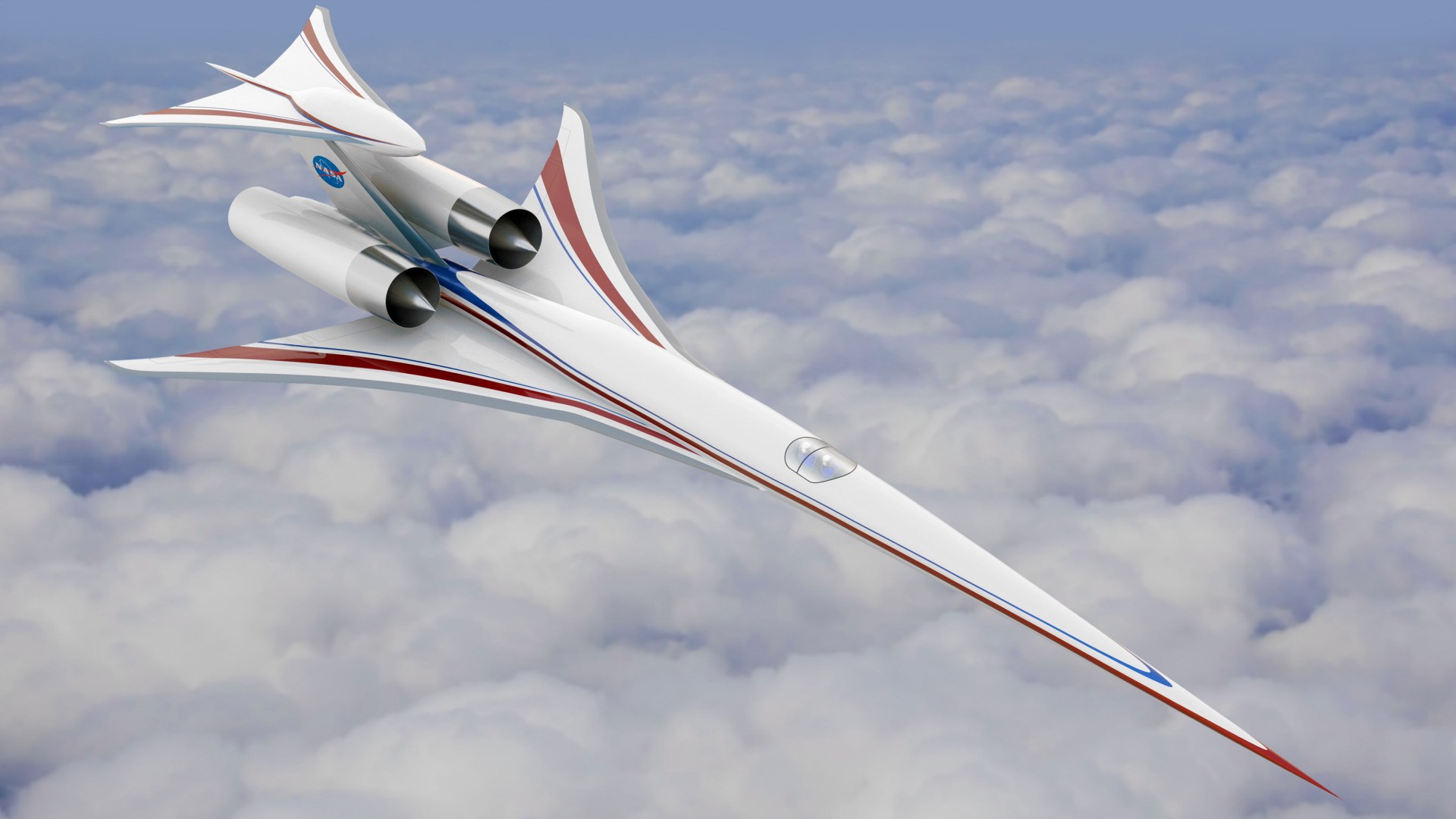
NASA’s pursuit of quieter supersonic flight has reached a crucial stage with the development of a shock-sensing probe, a critical tool designed to measure the sonic thumps produced by the X-59 Quesst, the agency’s experimental supersonic aircraft. The probe, slated for testing on an F-15B aircraft flying in formation with the X-59, will provide real-world data to validate computer models predicting the intensity of shock waves generated by supersonic flight. This information is pivotal to demonstrating that the X-59 can fly supersonically over land without generating the disruptive sonic booms that led to the ban on commercial supersonic overflights more than 50 years ago. The probe, essentially a cone-shaped air data device equipped with five pressure ports, will measure pressure changes as the aircraft traverses shock waves, accurately characterizing the shock characteristics of the X-59. This data will be compared with computer model predictions, allowing researchers to refine their understanding and ensure the accuracy of the models. Two versions of the probe have been developed: one for near-field measurements close to the aircraft and another for measuring shock waves at lower altitudes, providing a comprehensive dataset for analysis.
The quest for quieter supersonic flight is driven by the desire to lift the decades-old ban on overland supersonic travel. The disruptive sonic booms produced by previous supersonic aircraft like the Concorde led to significant restrictions on their operation, limiting flights primarily over oceans. The X-59, designed with a long, slender fuselage to minimize shock wave intensity, aims to replace the characteristic boom with a softer “sonic thump,” a significantly less disruptive sound. By demonstrating that the X-59 can achieve supersonic speeds without generating disruptive noise, NASA hopes to pave the way for new regulations that permit commercial supersonic flight over land, opening up new possibilities for faster air travel. The development and testing of the shock-sensing probe is a critical step in this process, providing the empirical data needed to convince regulators that the X-59 meets the necessary noise standards.
The shock-sensing probe functions as a “truth source,” providing real-world measurements against which computer model predictions can be compared. This validation process is crucial for ensuring the accuracy of the models used to design and evaluate the X-59’s sonic performance. By comparing the probe’s measurements with the predicted data, researchers can identify discrepancies and refine the models, improving their ability to accurately predict the strength and characteristics of shock waves generated by supersonic aircraft. This iterative process of data collection, model validation, and refinement is essential for achieving the project’s ultimate goal: demonstrating the feasibility of quiet supersonic flight and enabling the development of future commercial supersonic aircraft that can operate over land without causing disturbance.
The ban on supersonic overflights, implemented in the US in 1971 and in the UK in 2003, stemmed from the intense noise generated by sonic booms. These booms, caused by shock waves created when an aircraft exceeds the speed of sound, can be disruptive and even damaging, leading to complaints and restrictions on supersonic flight paths. The Concorde, while a technological marvel, was significantly limited in its operational capabilities due to these noise restrictions, primarily operating on transatlantic routes where supersonic flight over water was permissible. NASA’s X-59 project aims to overcome this limitation by designing an aircraft that generates significantly less noise, replacing the boom with a quieter thump. This quieter sonic signature is key to lifting the ban and enabling a new era of faster-than-sound air travel over land.
The development of the X-59 and the associated research into quiet supersonic technology represent a significant investment in the future of aviation. The success of this project could revolutionize air travel, drastically reducing flight times for long-distance journeys. If the X-59 proves capable of achieving supersonic speeds without producing disruptive sonic booms, it could pave the way for a new generation of commercial supersonic aircraft, transforming the airline industry and connecting distant cities in a fraction of the time currently required. The shock-sensing probe plays a vital role in this endeavor, providing the data necessary to validate the design principles behind the X-59 and build confidence in the feasibility of quiet supersonic flight.
Beyond the X-59, the broader field of supersonic and hypersonic flight is experiencing a resurgence of interest and investment. Several companies and research institutions are developing new aircraft designs aimed at achieving ever-higher speeds. These projects, ranging from Mach 2.5 to Mach 7 and beyond, represent a push towards faster and more efficient air travel, with potential applications in both commercial and military sectors. The success of the X-59 and its quiet supersonic technology could have a significant impact on these developments, influencing design choices and paving the way for a future where supersonic and hypersonic flight becomes a more accessible and commonplace mode of transportation.