


Paragraph 1: A Christmas Eve Rendezvous with the Sun
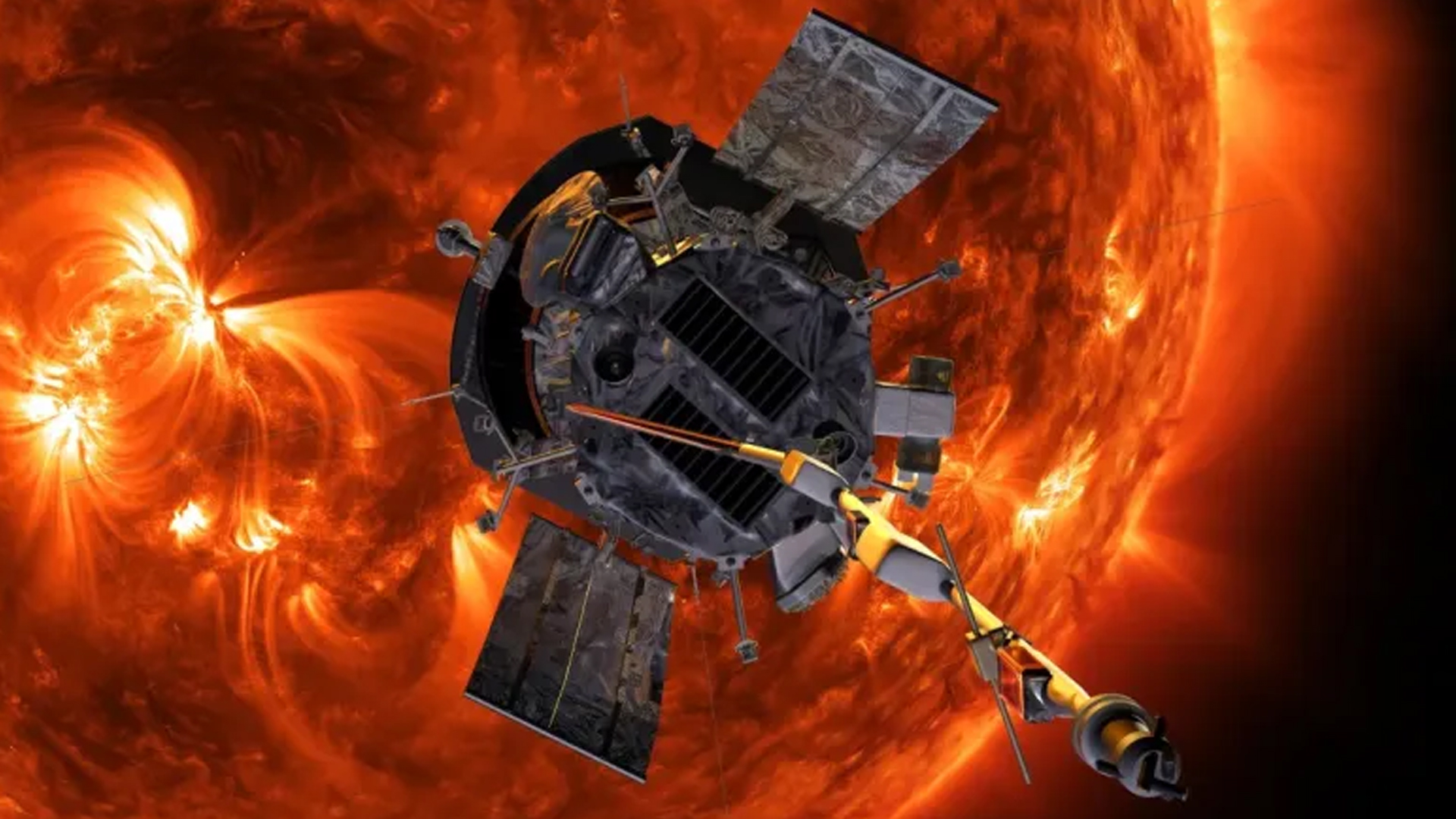
NASA’s Parker Solar Probe, launched in 2018, is poised to make history this Christmas Eve. The spacecraft, designed to unlock the Sun’s mysteries, is scheduled for its closest-ever approach to our star, a mere 3.8 million miles from the solar surface. While this distance may seem vast, it’s remarkably close in astronomical terms, considering the Sun’s average distance from Earth is approximately 91.4 million miles. This daring maneuver will bring the probe seven times closer to the Sun than any previous spacecraft, pushing the boundaries of space exploration and promising unprecedented insights into the dynamics of our nearest star.
Paragraph 2: A Moment of Anticipation and Silence
The Parker Solar Probe’s closest approach is timed for 11:53 am London time (6:53 am New York time) on December 24th. Direct communication with the probe will be impossible during this critical phase due to its proximity to the Sun, obstructing radio signals. Scientists and engineers eagerly await the probe’s re-emergence from behind the Sun to receive confirmation of its successful passage. A "beacon tone" expected on December 27th will serve as the initial indicator of the probe’s survival through the intense heat and radiation of the solar corona. The full trove of scientific data collected during the close approach will be transmitted in the following weeks, offering a treasure trove of information about the Sun’s behavior.
Paragraph 3: Unveiling the Sun’s Secrets
This daring mission aims to address fundamental questions about the Sun’s enigmatic behavior. One of the key mysteries lies in the extreme temperature difference between the Sun’s surface and its corona. The corona, the Sun’s outer atmosphere, reaches temperatures millions of degrees hotter than its surface, a phenomenon that has baffled scientists for decades. The Parker Solar Probe will gather crucial data to unravel this temperature discrepancy and shed light on the mechanisms driving this intense heat. Another area of focus is the solar wind, a constant stream of charged particles emanating from the Sun. Understanding the origins and dynamics of the solar wind is vital for predicting space weather events that can impact Earth’s technological infrastructure.
Paragraph 4: A Technological Marvel Braving Extreme Conditions
The Parker Solar Probe’s close encounter with the Sun involves navigating extreme temperatures and speeds. During its closest approach, the probe will reach a blistering 430,000 miles per hour and endure temperatures of approximately 1,370 degrees Celsius (2,500 degrees Fahrenheit). To withstand this extreme environment, the probe is equipped with a revolutionary Thermal Protection System (TPS), an 8-foot diameter heat shield weighing 160 pounds. This shield, constructed from advanced materials, protects the probe’s delicate instruments, maintaining an internal temperature of around 29 degrees Celsius (85 degrees Fahrenheit). This feat of engineering allows the probe to operate effectively in the scorching environment while gathering valuable data.
Paragraph 5: A Legacy of Solar Exploration
The Parker Solar Probe’s mission builds on decades of solar research and represents a significant leap forward in our understanding of the Sun. The probe has already broken records, becoming the closest artificial object to the Sun in October 2018, surpassing the previous record set by the Helios 2 spacecraft in 1976. Named after the renowned solar physicist Eugene Parker, who first theorized the existence of the solar wind, the probe carries a suite of sophisticated instruments. These include sensors to measure particles and magnetic fields, and a wide-field camera to capture images of coronal mass ejections, dramatic eruptions of plasma from the Sun’s corona.
Paragraph 6: A Seven-Year Odyssey to Illuminate Our Star
Launched in August 2018, the Parker Solar Probe is on a seven-year mission scheduled to conclude around September 2025. The probe utilizes a gravity assist maneuver, repeatedly flying by Venus to adjust its trajectory and progressively approach closer to the Sun. This innovative strategy allows the probe to achieve its unprecedented proximity to our star. Over its mission lifespan, the probe will continue to collect data, providing a comprehensive picture of the Sun’s dynamic processes. The information gathered will not only enhance our understanding of the Sun but also contribute to our broader knowledge of stars and their influence on planetary systems throughout the universe.