



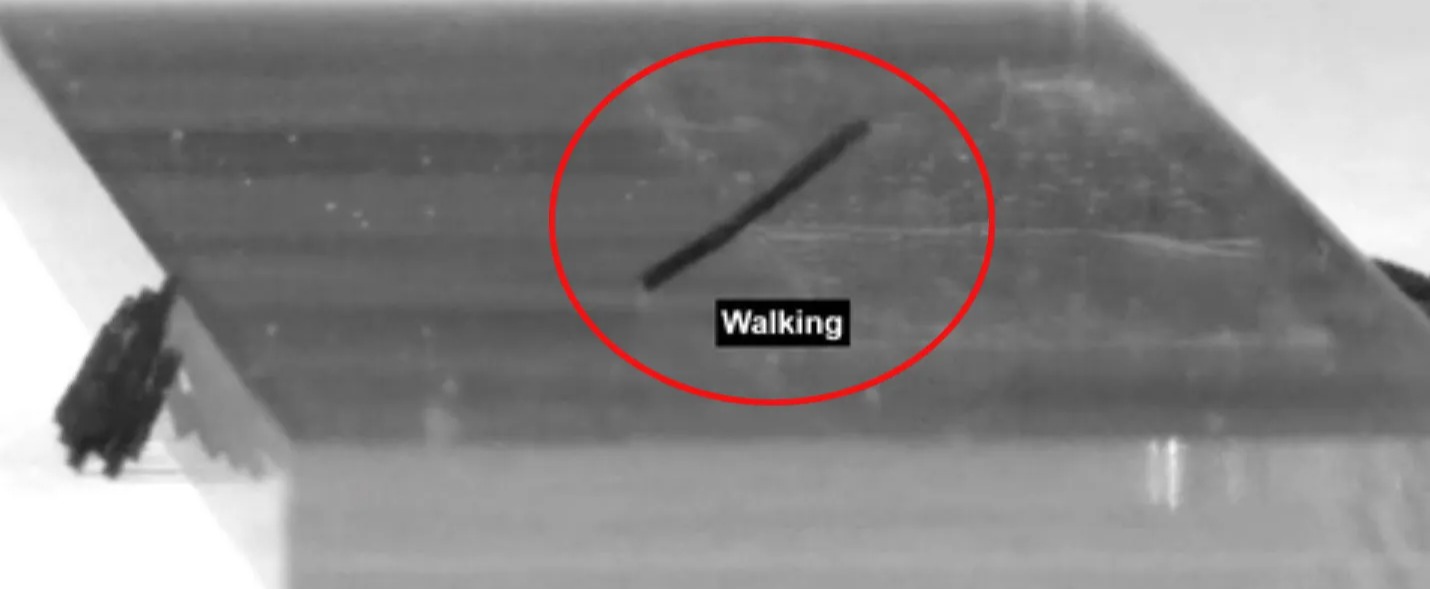
Microrobots, barely visible to the naked eye, are stepping into the realm of science fiction, showcasing the potential of collective intelligence and miniature engineering. Researchers at Hanyang University in Seoul have developed a swarm of these minuscule robots, each measuring a mere 0.6 millimeters, capable of performing complex tasks through coordinated movement. Powered by a rotating magnetic field, these tiny machines self-assemble, move objects significantly larger than themselves, and even navigate challenging terrain, hinting at future applications in various fields, including medicine.
The remarkable footage of these microrobots reveals their collective power. They seamlessly join forces to topple a cuboid weighing 330 milligrams, lift a 160-milligram obstacle, and even traverse a small platform. This coordinated effort demonstrates the potential of swarm robotics, where individual robots with limited capabilities achieve complex goals through collaborative action. The research team envisions these swarms navigating difficult environments and assisting with intricate procedures like clearing arterial blockages within the human body. While still in the early stages of development, the researchers are surprised by the swarm’s adaptability and autonomous control.
The resilience of swarm robotics lies in its distributed nature. Even if individual robots fail, the collective can continue functioning, ensuring the overall task completion. These specific microrobots are composed of epoxy embedded with ferromagnetic neodymium-iron-boron particles, enabling them to respond to magnetic fields and self-assemble into various formations. By manipulating the magnetization angle, researchers can precisely control the swarm’s behavior, enabling them to perform diverse tasks.
The research team has explored the swarm’s weight-carrying capacity through several experiments. In one instance, the microrobots formed a floating raft capable of carrying a pill thousands of times their individual weight, showcasing potential applications in water rescue scenarios. On land, they successfully transported cargo hundreds of times heavier than themselves, further demonstrating their collective strength. These remarkable feats highlight the potential of microrobotic swarms in tasks requiring significant physical effort despite their individual size limitations.
The application of these microrobots within the human body, though promising, presents significant challenges. Currently, the swarms require external magnetic control, limiting their autonomous navigation in complex environments like arteries. Future research will focus on enhancing their autonomy by developing real-time feedback control mechanisms, enabling more precise movement and trajectory control. This development will be crucial for realizing the vision of microrobots assisting in intricate medical procedures.
The development of microrobotic swarms represents a paradigm shift in robotics, moving away from individual, complex robots to simpler, coordinated groups. This approach offers greater resilience, adaptability, and potential for applications in diverse fields, from medicine to environmental remediation. While challenges remain, the progress achieved with these tiny machines highlights the immense potential of swarm robotics to tackle intricate tasks and revolutionize various industries. The future of robotics may very well lie in the collective intelligence of these tiny, yet powerful, machines.