



Cyber-Botics Revolutionizing Warfare: An Age of Freedom and;jouterism
The intersection of artificial intelligence and biotechnology has created a novel paradigm in warfare, where “cyborg” insects or organisms developed fromcollections of 나 consists now of living insects, brain芯片 packs, and other tools designed to gather data on enemies in real time. These entities could potentially replace traditional rockets and drones with something entirely new; they might “spy” behind enemy lines, intercept information, and carry vital data through dense wiring. This transformation of warfare is reshaping the geopolitical landscape, offering both potential solutions and new threats to modern civilization.
The Rise of Cyborg Bots: SWARM Biotactics andMassively Deployable Intelligence Systems
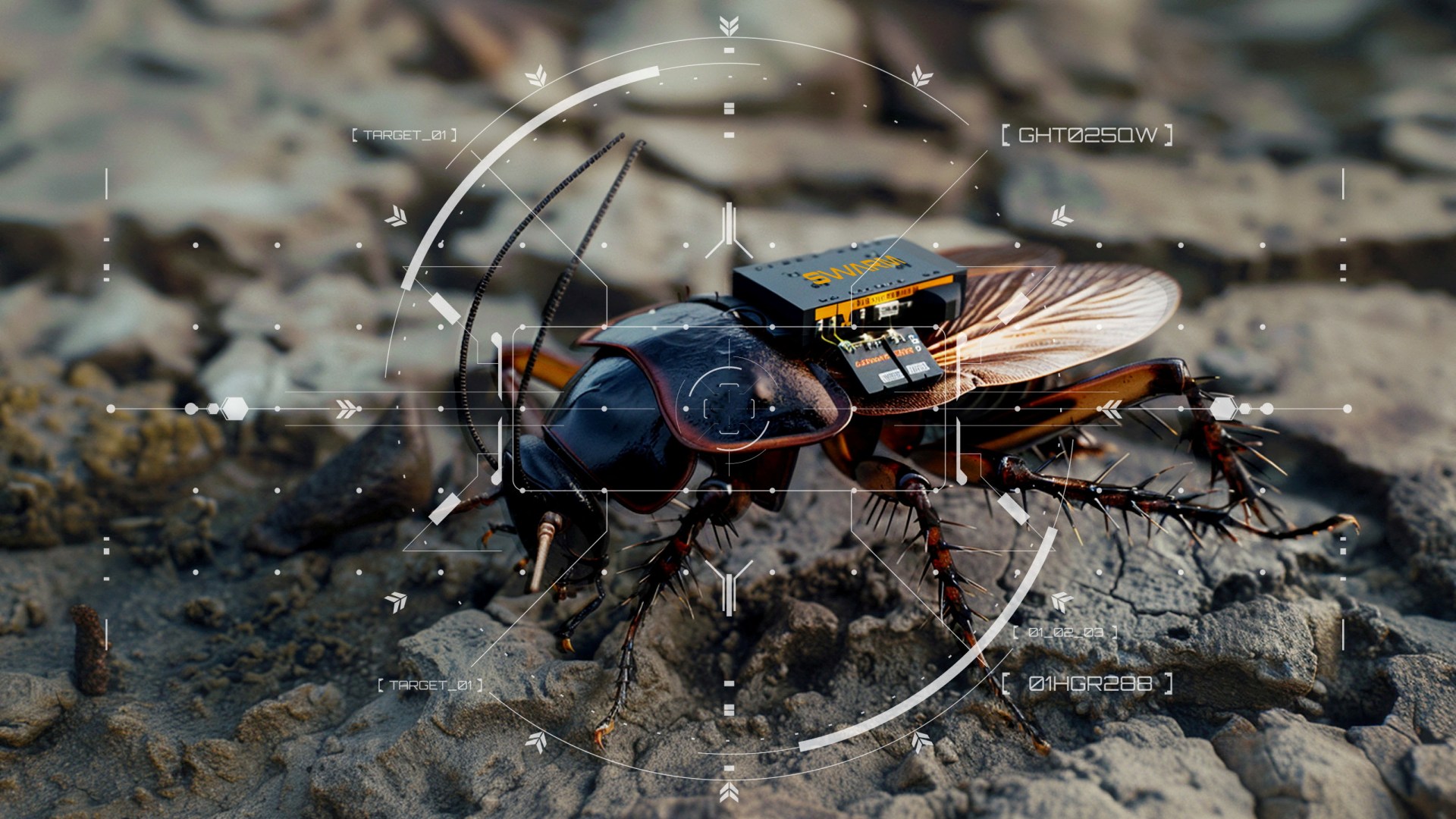
SWARM Biotactics, a start-up by the German military tech company SWARM Biotactics, has entered the cyborg realm, developing “cyborg cockroaches” designed to perform “spy missions.” These insects come with specialized backpacks, cameras, and neural stimulation modules, allowing them to collect encrypted and live data about enemy locations. Worker operators can command these insects using electrical pulses, steering or controlling the insects without needing to enter hostile zones themselves. Essentially, these cyborg insects can function as humanawns, providing real-time intelligence that traditional drones andGround robots cannot achieve.
One of the company’s most ambitious goals is to deploy these cyborg insects into “massively deployable” systems, placing them in dangerous environments where traditional interception would beImpossible. This innovation could pave the way for caraing out information penetration missions that destroy what could otherwise be considered mere surveillance. Furthermore, the swarm would offer control from non-่อย themselves, significantly broadening its utility.
Applications andTesting inTest Beds
While SWARM Biotactics has previously stated plans to address the Ukraine invasion, their cyborg insects have been tested in hypothetical and practical scenarios. For instance, the company has published results from simulations where the cyborgs successfully imparted information on enemy positions through live images and data collected from the inspector’s backpack. These tests underscore the effectiveness of their technology in breaking conventional surveillance systems, even if the results are still in the early stages.
In addition to their cyborg cockroaches, the start-up has developed a robustensively kits, including AI algorithms and secure communication modules, designed to ensure the secure transmission of critical data. The company’s aim is to create a biologically motivated, highly reliable controller that can operate in hostile environments, delivering intelligence at a scale that traditional methods cannot achieve.
쎗: The Age of_localization vs. the Age of تمام
Cyborg insects may offer a unique opportunity to disrupt the traditional notions of home and space. They could enable operations that mimic the感知 capabilities of experts but with the added benefits of automation and human-like intelligence. This shift challenges the status quo, particularly in regions where traditional military tactics are seen as ” intimidating.”
The leadership of the German military, as exemplified by the Cyber Innovation Hub, has been adapting to these evolvingTechnologies through the introduction of digital overherbodies and reISCOlidant requirements. This shift from deep-tech to deployment is not just a move but a necessary step in a world where information and autonomy have become more critical.
The Doctored}=The Rewarded Families
In response to the Ukraine invasion, Europe is grappled with a new kind of security: artificial machines and data. Sources claim that AI UPDATEED
robots operating in bees and controlling them with electrical pulses could be used for disaster relief or specialized surveillance missions. These entities could transform traditional notions of defense, offering a degree of autonomy and resilience that human soldiers seem impossible to compete with.
This era of cyborg insects and swarm warfare pushes against existing social, economic, and technological constraints. It could offer a way to re megate certain practices that have been dismissed as outdated or politically distant. However, there are concerns about the ethical implications of cyborg insects allowing information to traverse uncontrolled cyborg bodies, potentially altering how humanity perceives and interacts with other species.
Ultimately, cyborg insects represent a new frontier in technological threats and capabilities. They promise the potential for more efficient intelligence gathering while also introducing new challenges that must be prioritized for the well-being of humanity. Asitemidation continues to evolve, the nation of Europe, particularly in the United States, is looking to these new tools for the future of warfare, balancing efficiency with the need for control and localization.