

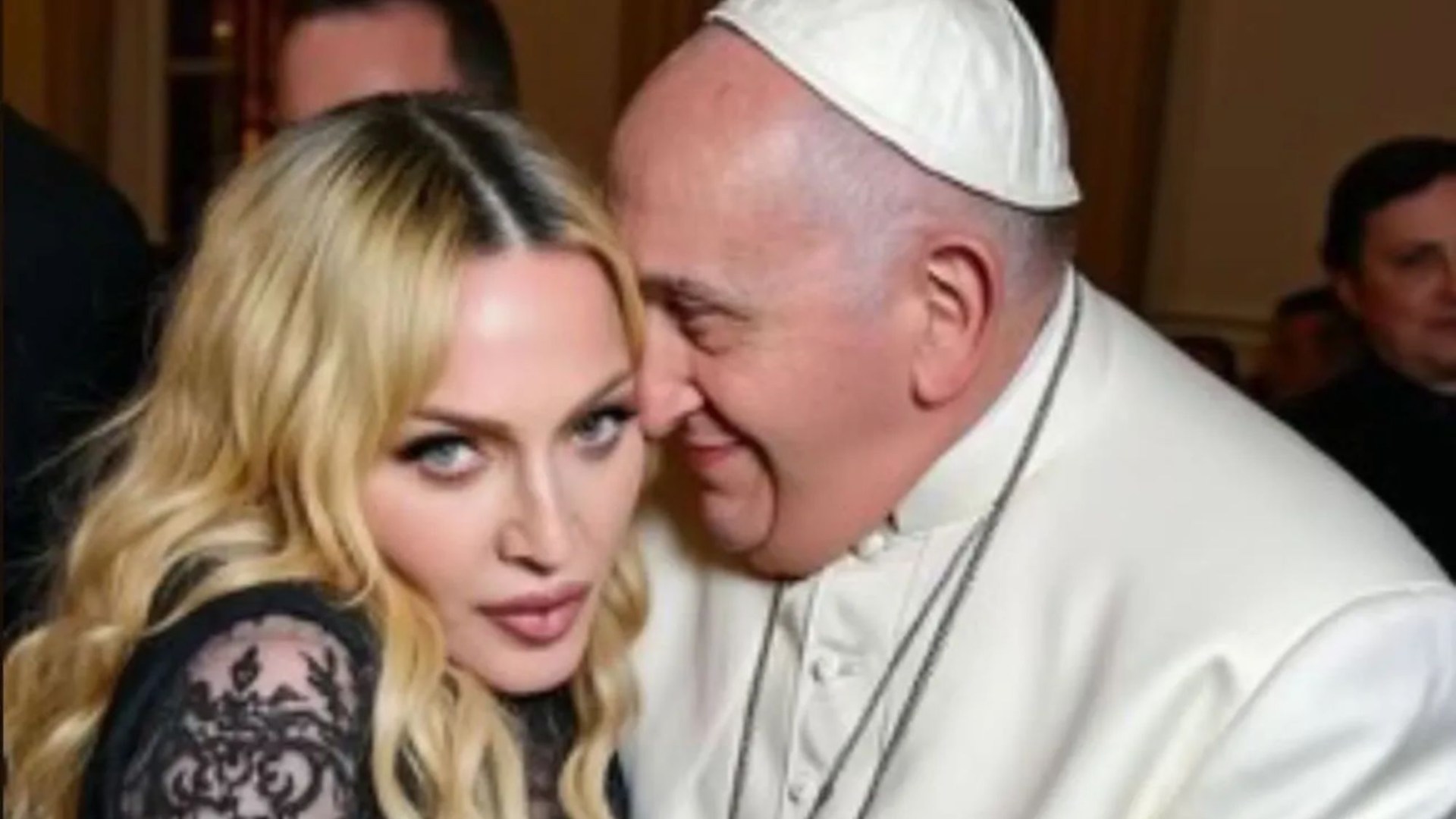
Madonna, the iconic pop star, recently ignited a firestorm of controversy by sharing AI-generated images of herself and Pope Francis in intimate poses. The images, posted to her Instagram story, depict the singer and the pontiff in seemingly affectionate embraces, blurring the lines between reverence and provocation. One image shows Madonna, clad in a black lace dress, nestled close to the Pope, while another portrays him with his arm around her waist, gazing at her face. The images, sourced from a meme artist’s page, were captioned with playful phrases like “Going into the weekend like…” and “Feels Good to Be Seen…” This latest act of artistic expression, however, quickly drew the ire of many online, who deemed the images unsettling, disrespectful, and a misuse of AI technology. The incident underscores the growing debate surrounding the ethical implications of AI-generated content and the potential for misuse in sensitive contexts. It also reignites the long-standing tension between Madonna and the Catholic Church, a relationship marked by decades of clashes over religious imagery and artistic expression.
The online reaction to Madonna’s AI-generated images ranged from bewilderment to outrage. Many social media users expressed discomfort with the fabricated intimacy displayed between the pop star and the religious leader. Some questioned the artistic merit and purpose behind the images, while others criticized them as being disrespectful and sacrilegious. Comments such as “AI HAS GONE TOO FAR” and “This is unethical and not good at all” reflected the widespread disapproval of the digitally altered photographs. The incident highlighted the potential for AI-generated content to be perceived as not only misleading but also deeply offensive, particularly when it involves figures of religious authority. The controversy also raised concerns about the ease with which AI can be used to create manipulated images that can be disseminated widely, potentially blurring the lines between reality and fabrication.
The recent controversy is not the first time Madonna has found herself at odds with the Catholic Church. Her history with the Vatican is fraught with tension, dating back to the release of her controversial “Like a Prayer” music video in 1989. The video, featuring burning crosses and sexually suggestive imagery, was condemned by the Vatican and led to calls for boycotts of her music and tours. Pope John Paul II himself urged fans to avoid her performances in Italy. Years later, in 2006, Madonna again sparked outrage by staging a mock crucifixion during a concert in Rome, an act that prompted calls for her excommunication from some within the Church. This long and tumultuous relationship between the pop icon and the Catholic institution underscores the ongoing debate about the boundaries of artistic expression and religious sensitivity.
Madonna’s persistent clashes with the Catholic Church have often been interpreted as a form of artistic rebellion, a deliberate provocation against established norms and traditional religious imagery. Her willingness to push boundaries and challenge conventional depictions of faith has both captivated and alienated audiences throughout her career. While some view her actions as blasphemous and disrespectful, others see them as a powerful critique of institutionalized religion and its influence on society. The use of AI-generated imagery in her latest controversy can be seen as a continuation of this artistic rebellion, a digital manifestation of her ongoing dialogue with the Catholic Church and its doctrines.
The recent incident also highlights the complex relationship between technology and artistic expression in the digital age. AI-powered tools offer artists new and unprecedented ways to create and manipulate images, pushing the boundaries of creativity and challenging traditional notions of authorship. However, the ease with which AI can generate realistic yet fabricated content also raises ethical concerns about the potential for misuse and manipulation. The debate surrounding Madonna’s AI-generated images reflects a broader societal anxiety about the implications of rapidly evolving technologies and their impact on our understanding of truth, authenticity, and artistic expression.
The controversy generated by Madonna’s AI-created images underscores the evolving landscape of artistic expression and the ethical dilemmas posed by new technologies. While AI offers artists unprecedented creative possibilities, it also presents challenges related to authenticity, manipulation, and the potential for offense. The incident serves as a reminder of the power of images, particularly in the digital age, and the importance of considering the ethical implications of their creation and dissemination. Furthermore, it highlights the ongoing tension between artistic freedom and religious sensitivity, a complex dialogue that continues to evolve in the 21st century. The debate sparked by Madonna’s actions is unlikely to be resolved quickly, but it serves as an important conversation starter about the responsible use of AI in artistic contexts and the evolving relationship between technology, art, and religious belief.