



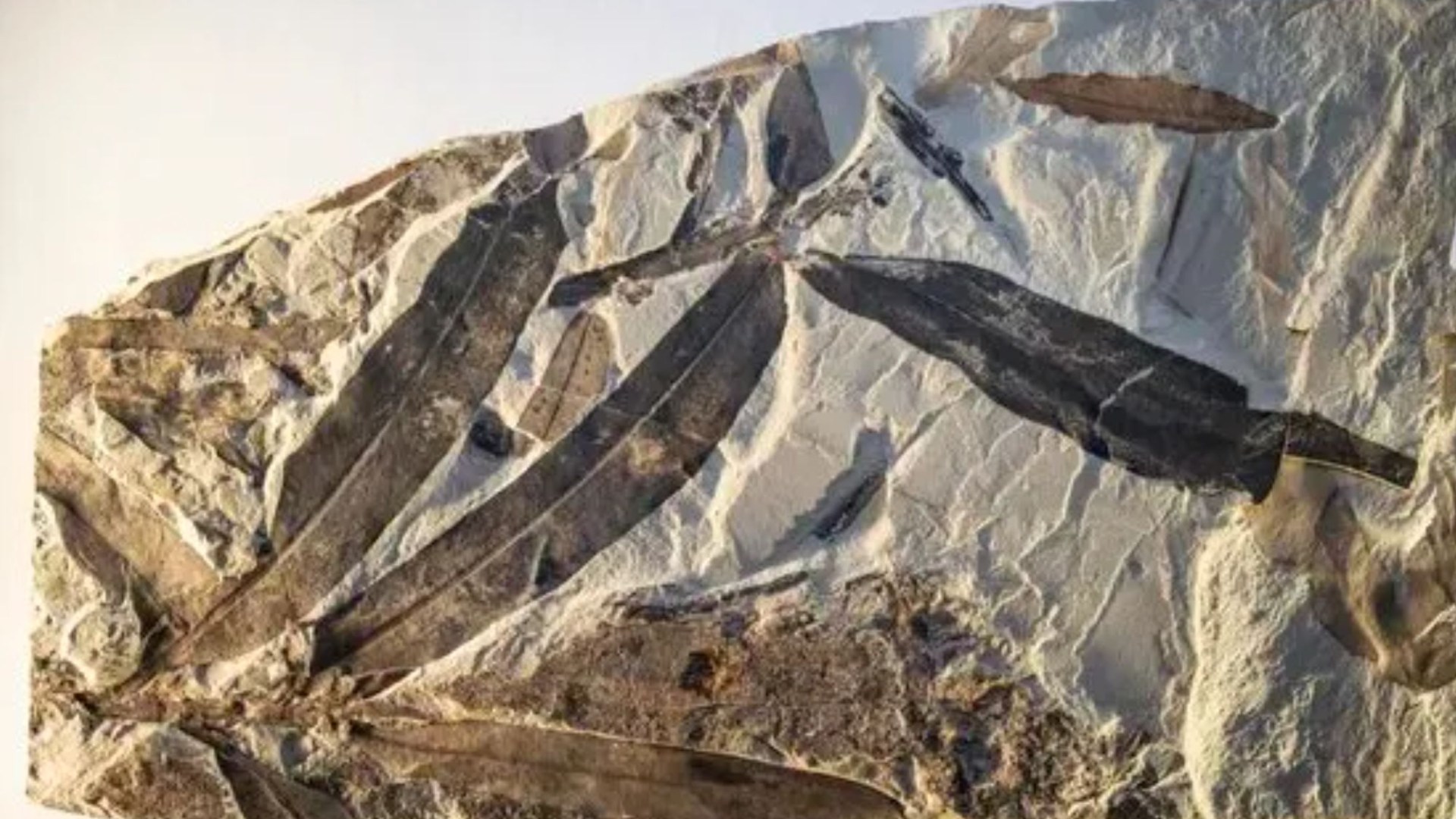
The discovery of a 47-million-year-old plant fossil, Othniophyton elongatum, unearthed in Utah’s Green River Formation, has presented scientists with a profound paleobotanical enigma. This “alien plant,” as it has been dubbed, defies classification, possessing unique features unlike any known plant, living or extinct. Initially discovered in 1969, the fossil initially consisted only of a few leaves, leading researchers to tentatively place it within the ginseng family. However, the discovery of a more complete specimen, bearing leaves, flowers, and fruit still attached to the stem, shattered this initial assumption and unveiled the plant’s truly unique nature. This level of preservation is exceptionally rare, offering an unprecedented opportunity to study the plant’s complete morphology.
The comprehensive analysis of the new fossil, utilizing advanced techniques including microscopy and artificial intelligence, revealed a plethora of unusual characteristics. Unlike most flowering plants where stamens detach after fruit maturation, Othniophyton elongatum retains its stamens even when the fruit is fully developed with seeds ready for dispersal. Furthermore, the plant’s berries, flowers, and fruits bear no resemblance to any known plant family, either extant or extinct. These peculiarities solidify the plant’s status as an anomaly in the fossil record, highlighting its isolated evolutionary trajectory. Despite extensive efforts to categorize it within the 400-plus families of living flowering plants or among known extinct families, Othniophyton elongatum remains unclassified, a testament to the vast unexplored biodiversity of Earth’s past.
The remarkable preservation of the Othniophyton elongatum fossil, with its leaves, flowers, and fruit intact, has provided scientists with an extraordinary opportunity to study the plant’s complete anatomy. This level of detail is seldom encountered in fossilized plant remains, which are typically fragmented and dispersed. The discovery of such a well-preserved specimen allows for a deeper understanding of the plant’s morphology and reproductive biology, offering crucial clues to its place within the ancient ecosystem. The retained stamens, even in mature fruits, point to a unique reproductive strategy not observed in any modern plant, further emphasizing the plant’s distinct evolutionary path. The unique morphology of the berries, flowers, and fruits, unlike any known plant family, solidifies Othniophyton elongatum’s position as a singular entity in the plant kingdom, both past and present.
This “alien plant,” as it has been called, represents not merely a curious anomaly but a significant window into the largely unknown biodiversity of ancient ecosystems. The Green River Formation, where the fossil was found, is renowned for its exceptional preservation of fossils, including fish, reptiles, and birds. However, Othniophyton elongatum stands out as one of the most enigmatic discoveries, showcasing the potential for unexpected biodiversity in the distant past. The existence of such a unique plant suggests that ancient ecosystems may have been far richer and more complex than previously imagined, with life forms evolving along unique trajectories that have left no modern descendants. This emphasizes the vast gaps in our understanding of Earth’s evolutionary history.
The discovery of Othniophyton elongatum serves as a stark reminder of the immense amount of biodiversity that has been lost to time, highlighting the limitations of our current understanding of Earth’s ancient ecosystems. This “alien plant,” with its unclassifiable features, underscores the fact that much of the planet’s ancient flora remains unknown. The Green River Formation, a treasure trove of exceptionally well-preserved fossils, continues to yield surprises, suggesting that even in well-studied fossil sites, significant discoveries remain to be made. The uniqueness of Othniophyton elongatum hints at the existence of entire lineages of plants that have vanished without leaving any modern relatives, emphasizing the vast unknown territories in the history of plant evolution.
The ongoing research on Othniophyton elongatum offers a tantalizing glimpse into a lost world, providing clues to the evolutionary processes that shaped ancient ecosystems. While the plant’s precise classification remains elusive, its unique characteristics provide valuable insights into the diverse adaptations and reproductive strategies that existed millions of years ago. The discovery emphasizes the importance of continued paleobotanical research, particularly in rich fossil beds like the Green River Formation, in unraveling the intricate tapestry of life’s history on Earth. Each new fossil discovery, especially of such unique specimens, contributes to a more complete picture of our planet’s ancient past and the complex interplay of life forms that have shaped its current biodiversity.
The mystery surrounding Othniophyton elongatum underscores the dynamic nature of evolution and the vastness of undiscovered biodiversity in the fossil record. It challenges existing classifications and compels us to reconsider the perceived limits of plant morphology and reproductive strategies. The “alien plant” stands as a symbol of the ongoing quest to understand the full spectrum of life that has existed on Earth, reminding us that even in the well-trodden paths of paleontology, groundbreaking discoveries await, offering glimpses into lost worlds and prompting us to re-evaluate our understanding of the intricate web of life’s history. As research continues, we may uncover further secrets about Othniophyton elongatum and its place in the ancient world, enriching our understanding of the complex interplay of evolution and extinction that has shaped our planet’s biodiversity.