



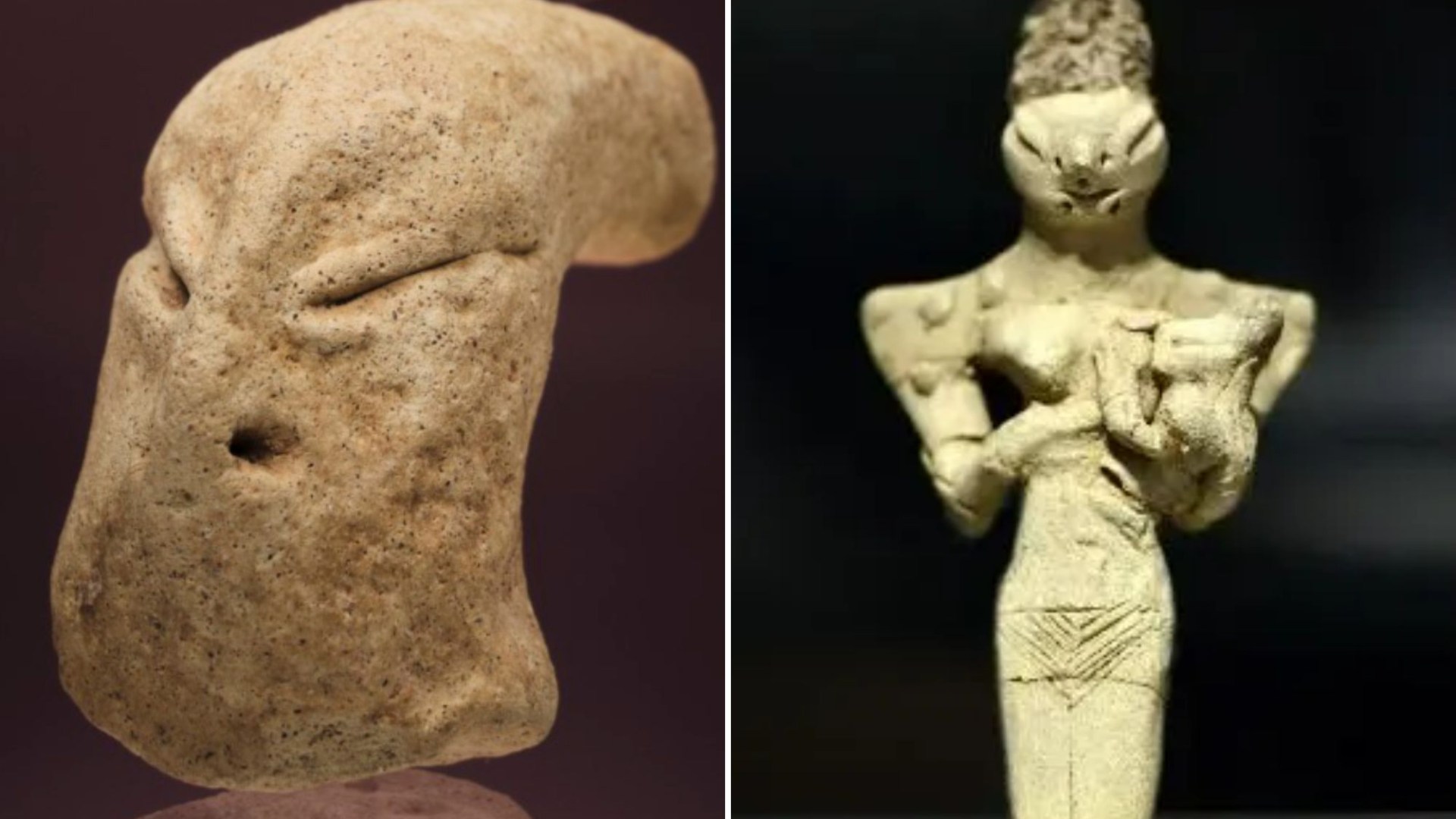
The Enigmatic Statues of Bahra 1: A Glimpse into Arabia’s Ancient Past
The Bahra 1 archaeological site in Kuwait has yielded a remarkable discovery: clay statues with elongated skulls and lizard-like features, dating back 7,000 years to the Stone Age. These enigmatic artifacts offer a unique window into the lives and beliefs of one of the earliest settlements in the Arabian Peninsula, shedding light on the Ubaid culture that migrated from Mesopotamia. While their appearance may evoke modern depictions of extraterrestrials, these features are characteristic of Ubaid figurines found throughout the region. This discovery marks the first time such artifacts have been unearthed in the Gulf region, making it a significant breakthrough in understanding the spread and influence of the Ubaid culture.
The statues raise intriguing questions about their function within the ancient community. Were they religious icons, ritualistic objects, or simply artistic expressions? Their presence suggests a complex belief system and a potential connection to the broader Ubaid cultural sphere. Further analysis of these artifacts may reveal deeper insights into the symbolism and practices of the people who inhabited Bahra 1. The discovery not only illuminates the cultural landscape of the region but also adds another layer to our understanding of the interconnectedness of ancient civilizations.
Beyond the statues themselves, the Bahra 1 site has proven to be a treasure trove of information about early pottery production in the region. Two distinct pottery types were prevalent in the area: the imported Ubaid ware from Mesopotamia and the locally produced Coarse Red Ware, characterized by its quartz and mica temper. While the exact origins of Coarse Red Ware production remained a mystery, the recent excavations at Bahra 1 have provided compelling evidence that this pottery was manufactured near present-day Kuwait. Unfired clay vessels and organic traces within the clay further support this conclusion, establishing Bahra 1 as the oldest known pottery production site in the Gulf region.
This discovery has significant implications for understanding the technological and economic development of the region during the Stone Age. The presence of both imported and locally produced pottery suggests a vibrant trade network and a degree of cultural exchange between Mesopotamia and the Arabian Peninsula. The local production of Coarse Red Ware also indicates a level of self-sufficiency and technological innovation within the Bahra 1 community. The ability to manufacture pottery locally would have reduced dependence on imported goods and allowed for the development of unique stylistic traditions.
The organic traces found within the clay of both Ubaid ware and Coarse Red Ware offer another intriguing avenue of research. The presence of wild plant remains, such as reed, in the locally produced pottery, and cultivated plant remains, like barley and wheat, in the imported Ubaid ware, provides valuable clues about the environment and agricultural practices of the time. These findings offer a glimpse into the subsistence strategies of the Bahra 1 inhabitants and their interaction with the surrounding ecosystem. Further analysis of these plant remains could reveal details about the types of crops cultivated, the local flora, and the potential impact of human activity on the environment.
In conclusion, the discovery of the alien-like statues and the evidence of pottery production at Bahra 1 represent a significant step forward in our understanding of ancient Arabian societies. These findings not only shed light on the cultural practices and beliefs of the region’s early inhabitants but also provide valuable insights into the technological and economic developments of the Stone Age. The ongoing analysis of the artifacts and the continued excavation of the site promise to reveal even more fascinating details about this crucial period in human history and the interconnectedness of ancient civilizations. The Bahra 1 site stands as a testament to the rich and complex past of the Arabian Peninsula and its pivotal role in the development of human culture.