


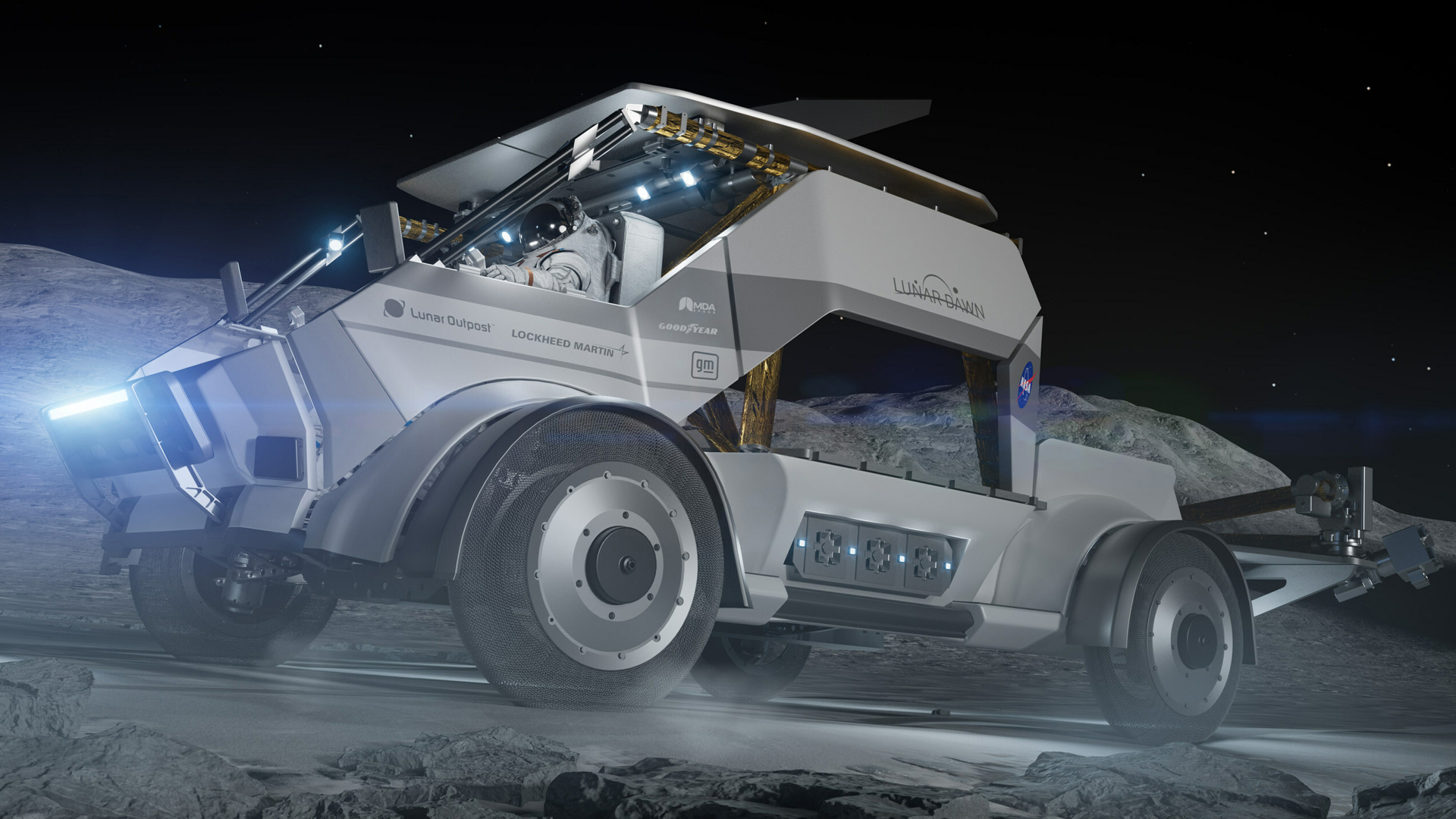
Summarized Content:burnematic Outpost, a Nasa-backed company, has announced its plan to launch a lunar-powered vehicle to prepare for future exploration on the Moon. The company aims to create a vehicle capable of navigating the Moon’s treacherous conditions, including its south pole’s extreme temperatures and low lunar gravity. The vehicle, called the Lunar Outpost, will be the backbone for lunar surface operations and will feature autonomous driving capabilities, making space exploration both easier and faster.
9Nasa has been working with several companies to develop the LTV, which is designed to be robust enough to handle the extreme conditions of the Moon’s environment. The vehicle includes advanced sensors, mechanisms, and transportation systems to withstand the harsh conditions of the lunar south pole. The design is intended to facilitate not just lunar exploration but also to serve as a central hub for lunar operations and science missions.
The Lunar Outpost has already built early versions of its lunar space vehicles, which are expected to significantly improve the capabilities of astronauts traveling to the Moon. These vehicles will allow astronauts to travel farther and faster than on foot, addressing the physical and logistical challenges of lunar exploration. The протOpera design not only aids in scientific discoveries but also supports the flight of crewed missions, ensuring that the lunar surface can continue to be monitored and explored continuously.
9With the Artemis program already underway, the LTV holds significance as a potential launch vehicle for future exploration missions. Nasa is timing its Artemis missions to test new technologies and bring humans closer to the Moon. The Artemis I mission, for example, is an uncrewed lunar flyby that aims to test the Orion spacecraft’s ability to navigate the Moon’s orbital path. Similarly, Artemis III is set to be the first crewed landing, marking a significant milestone in lunar exploration.
9The LTV is expected to be developed using advanced concepts from Nasa, including ideas from Freeman to explore triangular orbit mechanics. These mechanisms are crucial for ensuring the vehicle can sustainably operate in the extreme conditions of the Moon’s environment. The design aims to create a stable and extendable system that can scale to accommodate future exploration missions.
9Artemis is Nasa’s comprehensive program to establish human presence on the Moon, starting with Apollo 17 in 1972. Currently, the program is in its 16th cycle, with eight more missions planned to explore the Moon in phases. The next major Artemis milestone will be the final landing on the Moon in 2029, followed by ongoing operations that often extend beyond the initial crewed missions.
9The LTV plays a central role in these operations by allowing astronauts to explore and conduct science on the lunar surface, while also acting as a foundation for future missions. By providing reliable transportation and operations, the LTV facilitates more efficient and sustainable lunar exploration. The vehicle’s ability to handle extreme temperatures and gravity makes it uniquely suited to the challenging environment of the Moon.
9The ongoing Artemis missions, including Artemis I, II, III, IV, V, and VI, reflect NASA’s commitment to exploring the Moon’s far future. Each mission offers a unique phase in lunar exploration, from crewed operations to space tourism and advanced habitation. Artemis IX, in particular, is set to deliver the Habitable Mobility Platform, which will aid in long-term habitation and scientific discovery on the Moon’s surface.
In summary, the Lunar Outpost and the LTV are critical components in NASA’s quest for future lunar exploration. These vehicles, working together, will enable scientists, engineers, and astronauts to explore the Moon’s surface in ways that far exceed current capabilities. The design and development of these technologies are underpinned by a deep understanding of lunar conditions and are paving the way for new possibilities in human settlement and exploration on the Moon.