


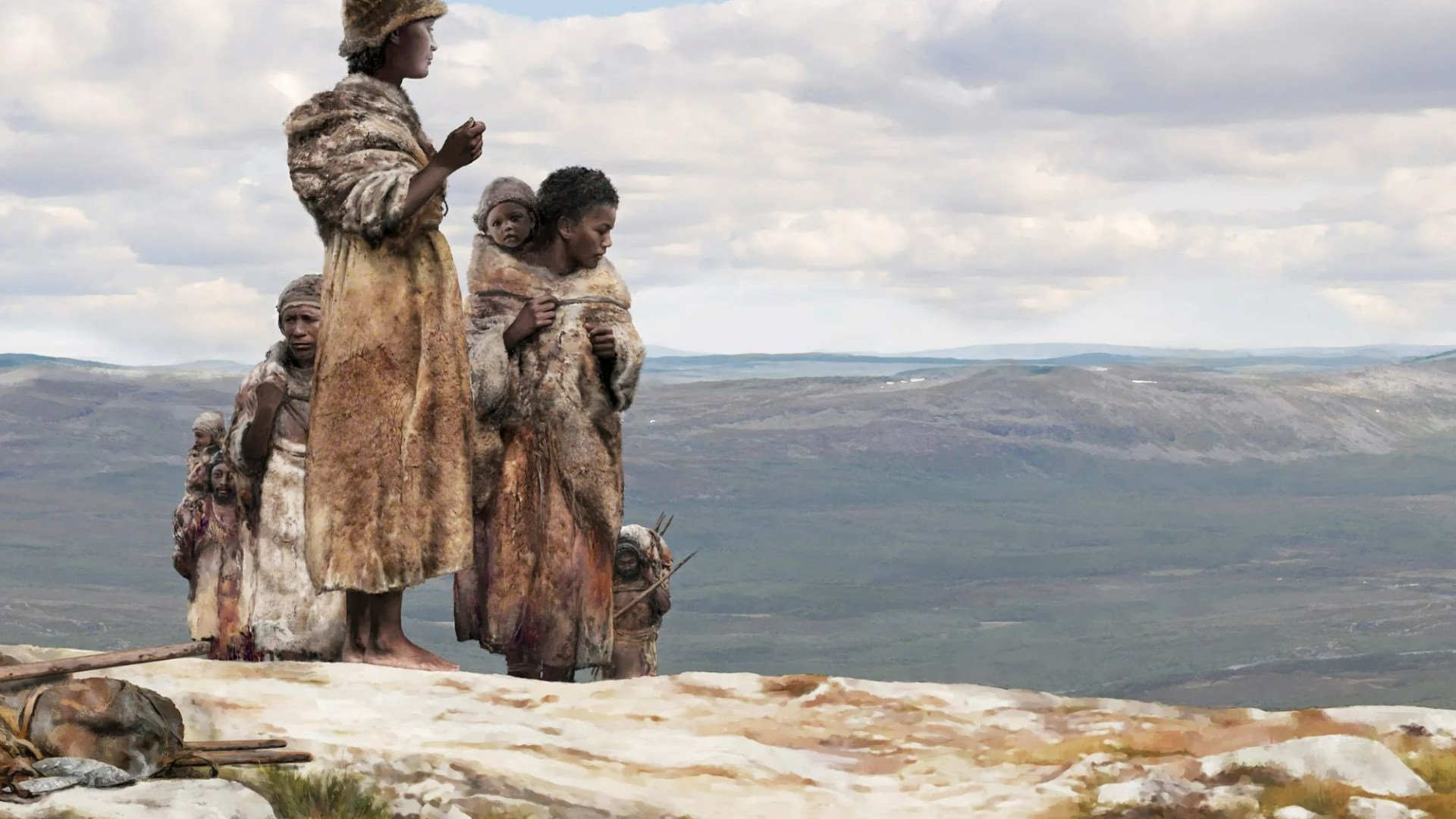
The discovery of 13 bone fragments in a cave beneath a medieval castle in Ranis, Germany, has provided groundbreaking insights into early human history. These fragments, belonging to six individuals including a mother and daughter, date back approximately 45,000 years, making them the oldest human DNA ever sequenced in Europe. Analysis of the ancient genomes revealed a significant Neanderthal contribution, indicating interbreeding between early humans and Neanderthals roughly 80 generations, or 1,500 years, prior to the individuals’ existence. While the precise location of this interbreeding remains unknown, it likely predates the arrival of Homo sapiens in Europe, suggesting the interaction may have occurred elsewhere, possibly in the Middle East. This discovery not only pushes back the timeline of human-Neanderthal interaction but also strengthens the evidence for a shared genetic legacy that continues to influence modern humans.
The Ranis findings connect to another significant discovery: a partial skull found in Zlatý kůň, Czech Republic, belonging to a woman who lived around the same time. Genetic analysis of this skull also revealed Neanderthal ancestry, linking the two sites and indicating a broader network of early humans across Europe with shared genetic heritage. While the first sequencing of a Neanderthal genome in 2010 revolutionized our understanding of human evolution by revealing interbreeding, the Ranis discovery adds critical detail to the timeline and geographic scope of this interaction. This reinforces the notion that these two hominin groups, once considered distinctly separate, were not only coexisting but also intermingling, shaping the genetic makeup of future human populations.
A comprehensive study involving the genomes of 59 ancient humans and 275 present-day individuals further clarifies the extent and timeframe of human-Neanderthal interbreeding. This research pinpoints a crucial period between 50,500 and 43,500 years ago, during which gene flow between the two groups occurred regularly, peaking around 47,000 years ago. Significantly, this period precedes the disappearance of Neanderthals from the archaeological record, suggesting that interbreeding was a common occurrence during their final millennia. The study’s identification of a “single, shared extended period of gene flow” points to a sustained period of interaction, rather than isolated events, and reinforces the significant contribution of Neanderthals to the modern human genome.
The impact of Neanderthal ancestry on modern humans is not simply a matter of historical interest; it has tangible consequences for our biology. Specific genetic variants inherited from Neanderthals have been linked to various traits, including elements of our immune system, skin pigmentation, and metabolic processes. Some of these variants, particularly those related to immunity, appear to have been advantageous for early humans adapting to the colder climate of the last ice age and have increased in frequency over time. This highlights the complex interplay between genetic inheritance and environmental pressures in shaping human evolution.
Neanderthals, our closest extinct relatives, were once perceived as primitive and less intelligent than Homo sapiens. However, scientific evidence increasingly challenges this view, revealing a complex and sophisticated hominin group with larger brains than modern humans. Archaeological findings indicate that Neanderthals engaged in symbolic thought and cultural practices like cave painting, body art, and funerary rituals, suggesting a capacity for abstract thinking and a sense of community. These discoveries paint a picture of a species far more advanced than previously imagined, raising questions about the reasons for their eventual extinction, which might have included disease, competition with Homo sapiens for resources, or a combination of factors.
The Ranis discovery and the broader research on ancient genomes are crucial not only for understanding human-Neanderthal relations but also for tracing the migration patterns of early Homo sapiens out of Africa. While the findings clarify the timing of interbreeding and the genetic legacy it left, certain questions remain unanswered. For example, researchers are still investigating why East Asian populations exhibit a higher degree of Neanderthal ancestry than Europeans, and why Neanderthal genomes from the period of interbreeding show limited evidence of Homo sapiens DNA. These ongoing investigations are critical for piecing together the intricate puzzle of human origins and understanding the complex tapestry of our shared past with Neanderthals. The research underscores that the differences between the two groups were far smaller than previously assumed, highlighting the close relationship and extended period of coexistence and interaction that shaped the trajectory of human evolution.