



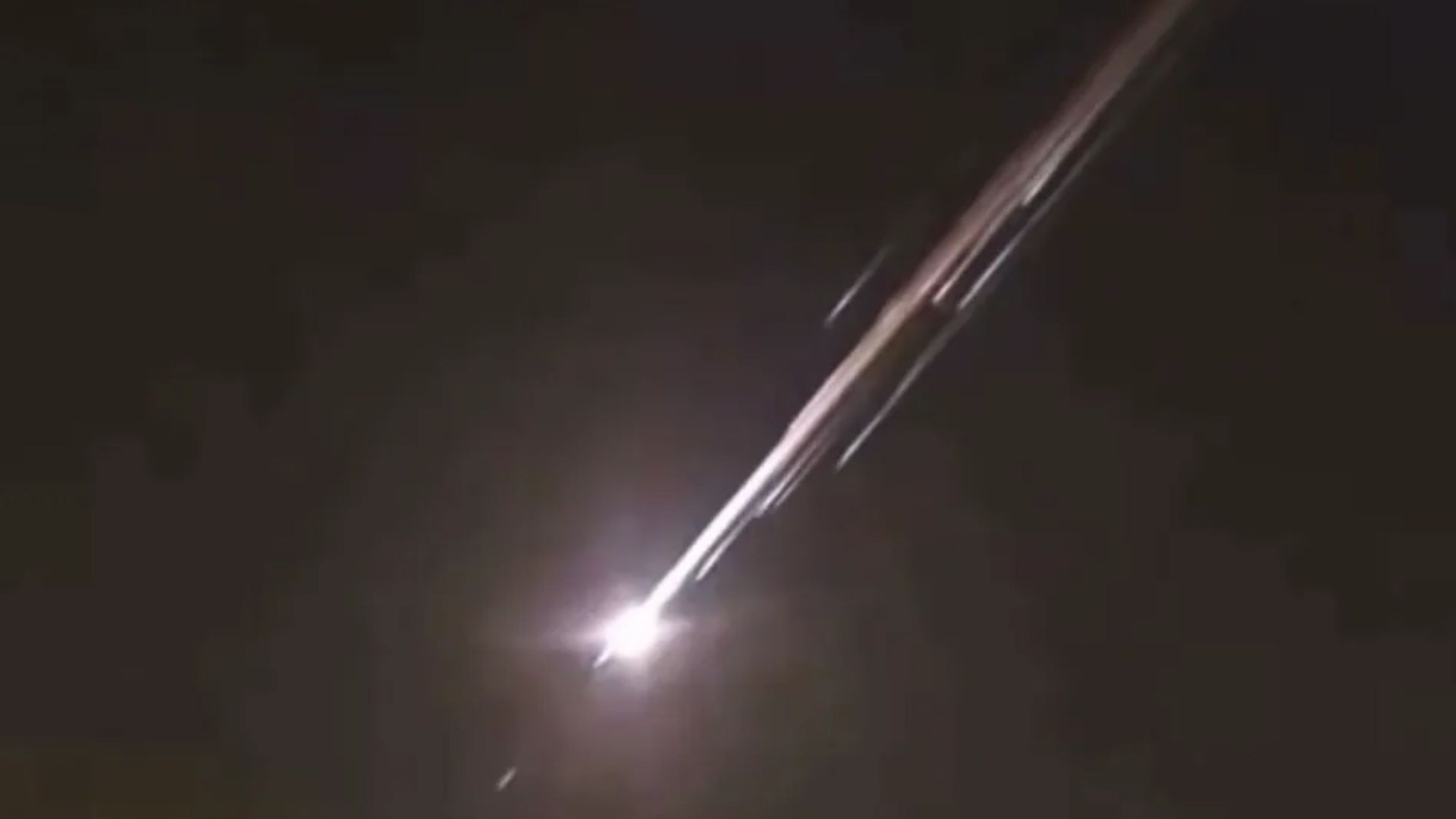
On Saturday night, a spectacular display of fiery streaks illuminated the skies over several southern US states, captivating onlookers and sparking a flurry of speculation about their origin. The mesmerizing spectacle, captured in numerous videos and photos shared across social media, showed clusters of fireballs darting across the night sky, leaving trails of light in their wake. Initial theories ranged from meteor showers to unidentified drones, fueling a wave of excitement and apprehension among witnesses. The American Meteor Society received over 120 reports from concerned citizens who witnessed the unusual aerial phenomena.
The mystery was soon resolved by scientists who identified the source of the fiery streaks as the re-entry and disintegration of the Chinese satellite GaoJing 1-02. Launched in 2016 as part of a four-satellite constellation, GaoJing 1-02 had been deactivated two years prior and was classified as derelict. Its uncontrolled descent through Earth’s atmosphere resulted in the dramatic light show witnessed across Louisiana, Mississippi, Arkansas, and Missouri. As the defunct spacecraft plummeted towards Earth, its components burned up upon re-entry, creating the fiery spectacle observed by numerous eyewitnesses.
The satellite’s high-speed entry, estimated to be thousands of miles per hour, caused its debris to scatter across the affected states. However, due to the relatively small size of the GaoJing 1-02 satellite, astronomer Jonathan McDowell, a renowned expert in orbital debris tracking, stated that it was unlikely any significant fragments survived the intense heat of atmospheric friction and reached the Earth’s surface. According to McDowell, the satellite likely burned up completely during its descent, posing no threat to populated areas.
The fiery re-entry of the Chinese satellite coincided with a period of heightened anxiety and speculation surrounding unidentified aerial phenomena, particularly in the northeastern United States. Multiple drone sightings over residential areas, military bases, and even former President Donald Trump’s golf course in Bedminster, New Jersey, had fueled conspiracy theories and calls for government transparency. The incident with the Chinese satellite added another layer of intrigue to the ongoing discussion about unidentified objects in the sky.
The reactions to the fiery streaks varied widely. Some eyewitnesses initially dismissed the spectacle as unusual Christmas lights or other terrestrial phenomena. Others, however, expressed concerns about the nature of the event, with some linking the re-entry of the Chinese satellite to the ongoing drone sightings and suggesting a more sinister explanation. Social media buzzed with speculation, with some users expressing anxiety over the implications of Chinese technology appearing over American airspace. These concerns reflected the broader anxieties surrounding national security and the potential threats posed by foreign technology.
The incident involving the GaoJing 1-02 satellite serves as a reminder of the growing presence of human-made objects in Earth’s orbit and the potential for their uncontrolled re-entry to create dramatic and sometimes alarming events. While this particular incident posed no significant threat to public safety, it underscores the importance of space debris tracking and the need for international cooperation in managing the growing amount of defunct satellites and other objects cluttering Earth’s orbital environment. The event also highlighted the public’s fascination with and, at times, apprehension about unidentified aerial phenomena, demonstrating the power of such events to spark curiosity and fuel speculation.