


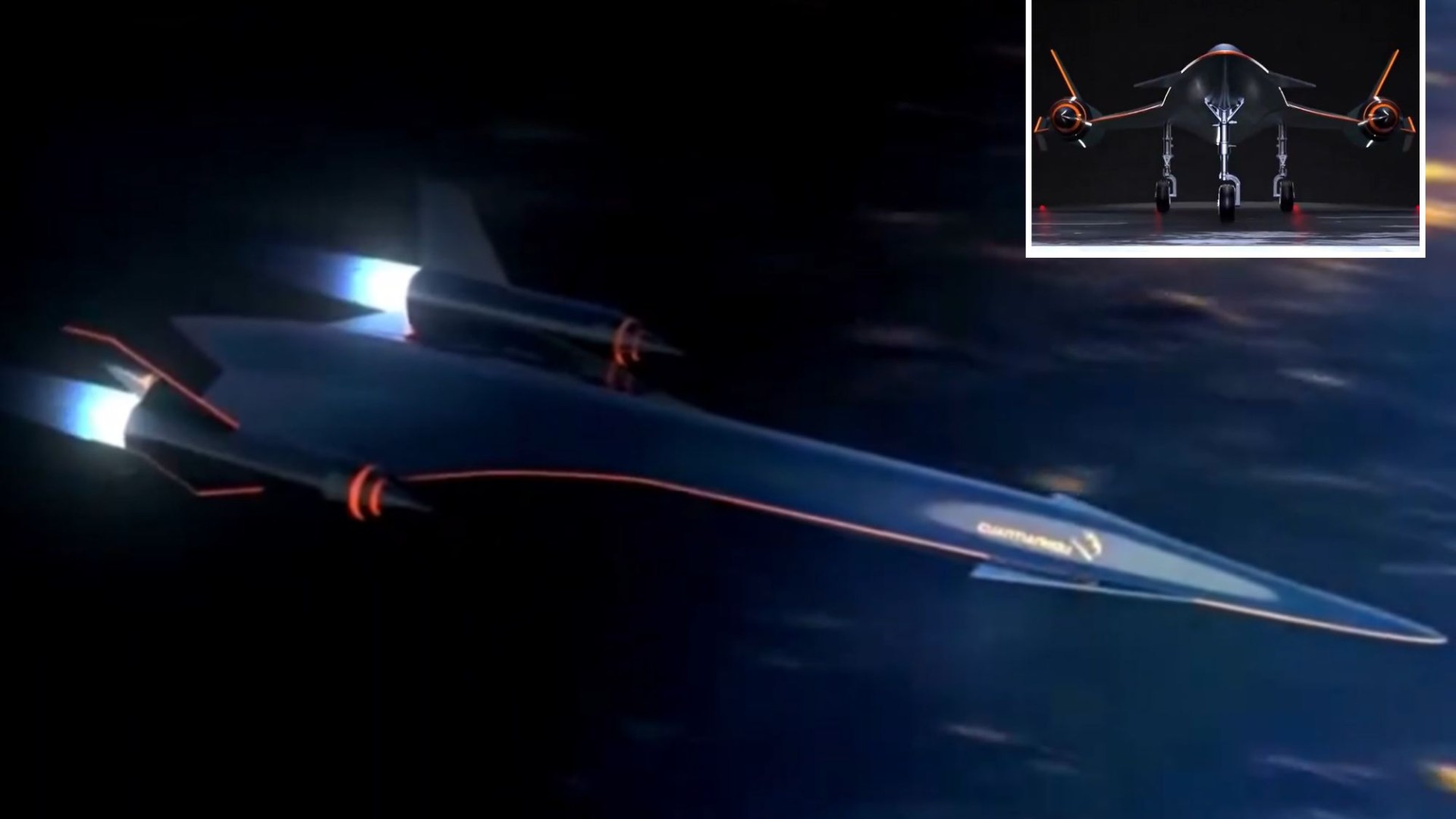
A new contender has emerged in the race to revive supersonic passenger travel, potentially eclipsing even the highly anticipated “Son of Concorde.” China’s Space Transportation, also known as Lingkong Tianxing Technology, is developing a groundbreaking supersonic jet that aims to shrink the flight time between London and New York City to a mere two hours, significantly faster than the already ambitious 3.5 hours targeted by Boom Technology’s XB-1. Recent test flights of Space Transportation’s Jindouyun, or JinDou400, engine have demonstrated impressive capabilities, reaching speeds of 3,106 mph, four times the speed of sound, and altitudes exceeding 65,600 feet.
The secret to the Jindouyun engine’s performance lies in its innovative detonation combustion technology. This method eschews the traditional compressors and turbines found in most rocket engines, opting instead for a detonation ramjet. This process generates thrust through shock waves that compress incoming air, resulting in a lighter and more cost-effective engine. Space Transportation believes this technology holds immense commercial potential for high-speed flight within near-space environments. The successful test flights have provided crucial performance data, validating critical systems such as fuel supply, electrical and control systems, and confirming the engine’s stability and reliability – key milestones in its transition from prototype to a functional product.
Space Transportation’s ultimate goal is to integrate the Jindouyun engine into the Yunxing passenger aircraft, a revolutionary design incorporating vertical take-off and landing capabilities. The company is aiming for a 2027 launch date for this ambitious project, placing them in direct competition with Boom Technology’s XB-1, often dubbed the “Son of Concorde.” While the XB-1 has made significant strides with its recent ninth test flight, achieving a maximum speed of Mach 0.87 (667 mph) and reaching an altitude of 27,716 feet, the Chinese venture promises even more dramatic reductions in travel time.
The resurgence of supersonic travel marks an exciting chapter in aviation history, evoking memories of the iconic Concorde, which once represented the pinnacle of luxury air travel. However, the Concorde’s story ultimately ended in retirement in 2003, after 27 years of service. Several factors contributed to its demise, including declining passenger numbers, high maintenance costs, and the lingering impact of the 9/11 terrorist attacks and the tragic Air France Concorde crash in 2000. The Concorde, despite its technological marvel, proved to be economically unsustainable.
The new generation of supersonic jets, represented by both Boom Technology’s XB-1 and Space Transportation’s Yunxing, aims to overcome the challenges that grounded the Concorde. They leverage advancements in engine technology and design to achieve greater efficiency and potentially lower operating costs. The success of these endeavors hinges on their ability to attract a sufficient passenger base and maintain profitability in a competitive market.
The race to develop the next generation of supersonic passenger jets is not merely a technological competition; it is a test of whether these ambitious projects can learn from the Concorde’s legacy and achieve long-term commercial viability. The promise of dramatically reduced travel times and the allure of high-speed flight are undeniable, but the ultimate success will depend on balancing these aspirations with economic realities and passenger demand. The world watches with anticipation as these pioneering companies strive to redefine air travel and usher in a new era of supersonic flight.