



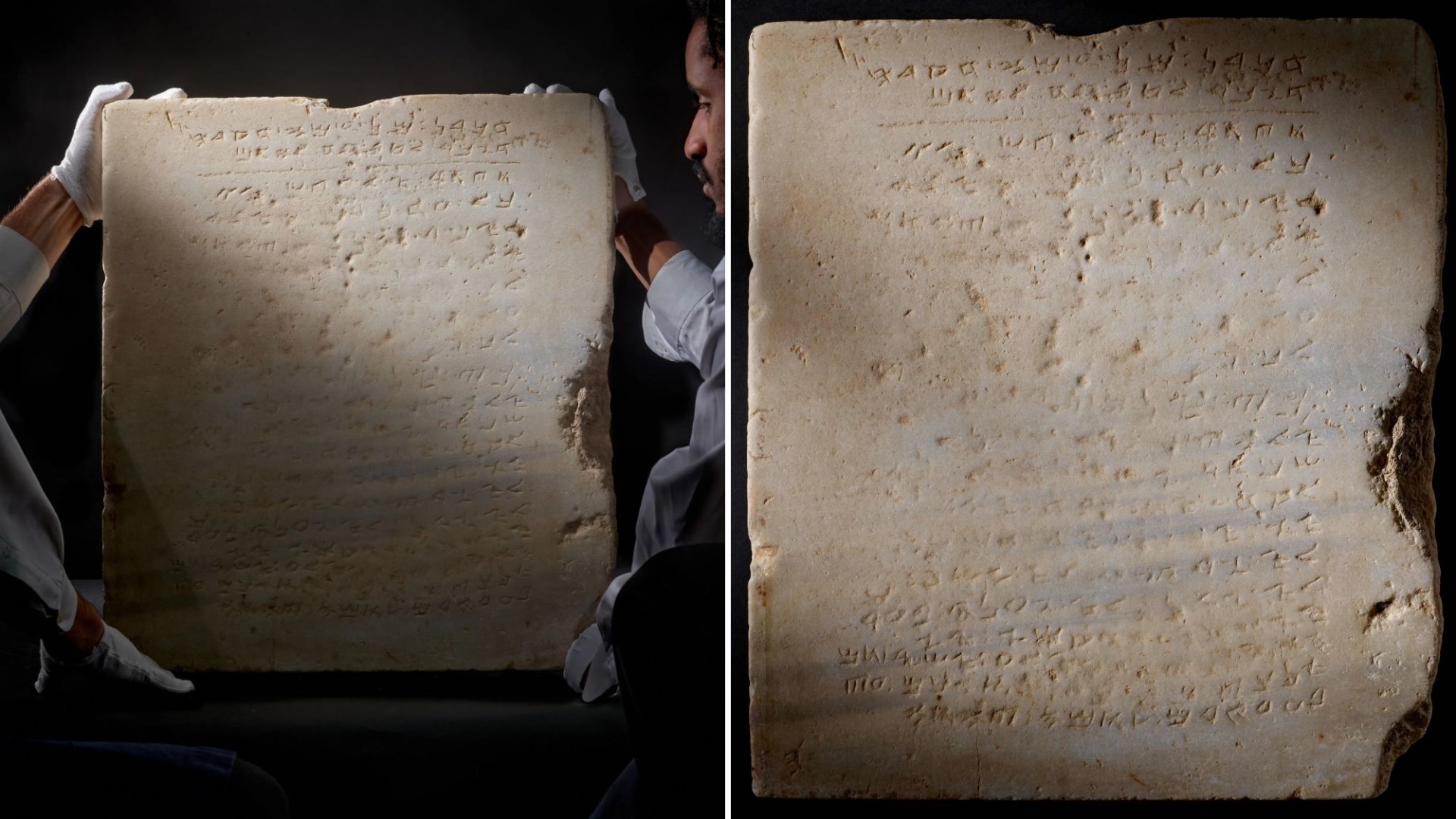
The recent sale of a purportedly ancient stone tablet inscribed with the Ten Commandments has sparked both excitement and controversy. Sold at a Sotheby’s auction in New York for an astonishing £4 million, the marble slab, weighing 52kg and measuring approximately two feet in length, is believed to date back to between 300 and 800 AD. Sotheby’s touted it as the oldest known surviving inscription of the Ten Commandments, a claim that has been met with skepticism from some scholars. While not claiming it to be the original stone tablets mentioned in the Bible, the auction house emphasized its historical significance, positioning it as a remarkable artifact from a pivotal period in history. The winning bidder, who remains anonymous, has pledged to donate the tablet to an Israeli institution, ensuring its future accessibility for research and public viewing.
The tablet’s journey from obscurity to the center of an international auction is a fascinating tale in itself. Discovered in 1913 by Jacob Kaplan during railway construction near the coast of modern-day southern Israel, its significance was initially overlooked. For three decades, it served a mundane purpose as a paving slab at the entrance of a home, unknowingly bearing the weight of history beneath the footsteps of those who passed over it. The wear and tear from this period, particularly noticeable in the middle section of the slab, ironically became a key factor in its later authentication, although this very point has been contested by critics. The tablet’s rediscovery and recognition as a potentially significant artifact began in 1995 when it came into the possession of an Israeli antiques dealer. From there, it made its way to the Living Torah Museum in Brooklyn before being acquired by collector Mitchell S. Cappell for £670,000. It was Cappell who consigned the tablet to Sotheby’s for this high-profile auction.
The controversy surrounding the tablet stems primarily from questions about its authenticity and the due diligence conducted by Sotheby’s. Christopher Rollston, a scholar of classical civilizations at George Washington University, has voiced concerns about the auction house’s reliance on wear patterns as proof of age, suggesting that the damage could have resulted from its use as a paving stone. Furthermore, he points to a discrepancy in the third commandment as a potential red flag. While the traditional commandment prohibits taking the Lord’s name in vain, the version on this tablet directs worship on Mount Gerizim, a sacred site for the Samaritans, a group with historical ties to Judaism. Rollston suggests this deviation could be a deliberate attempt by forgers to create intrigue and enhance the artifact’s perceived value.
Sotheby’s, however, maintains that they adhered to rigorous authentication procedures and stand by the tablet’s provenance and age. They emphasize the rarity of the inscription, highlighting its use of Paleo-Hebrew, an ancient form of the Hebrew language, and claim it represents the only complete example of the Ten Commandments in this script. The auction house underscores the historical and cultural importance of the Ten Commandments as a foundational text for Western law and morality, emphasizing the artifact’s connection to this legacy. Selby Kiffer, a senior specialist at Sotheby’s, points to the legibility of the inscription despite the wear, further supporting their assessment of its authenticity.
The intense bidding war that ensued during the auction, ultimately driving the final price far beyond the pre-sale estimate of £1 million to £2 million, reflects the widespread interest in the artifact. The ten-minute bidding frenzy involved participants from across the globe, demonstrating the enduring fascination with ancient history and religious relics. The winning bidder’s decision to donate the tablet to an Israeli institution adds another layer of significance to the sale. This act of philanthropy ensures that the artifact will be accessible for scholarly research and public appreciation, potentially shedding further light on its origins and historical context.
The saga of the Ten Commandments tablet underscores the complexities and challenges inherent in authenticating ancient artifacts. While Sotheby’s defends its vetting process and highlights the tablet’s unique features, the lingering questions raised by scholars like Rollston underscore the need for ongoing research and analysis. The debate surrounding the tablet’s authenticity is likely to continue, even as it begins its new chapter in an Israeli institution. Regardless of its definitive age and origin, the tablet remains a compelling artifact, prompting reflection on the enduring power of ancient texts and the enduring human fascination with the past. It serves as a tangible link to a distant era, sparking curiosity and debate about the origins of law, morality, and the very foundations of Western civilization.