



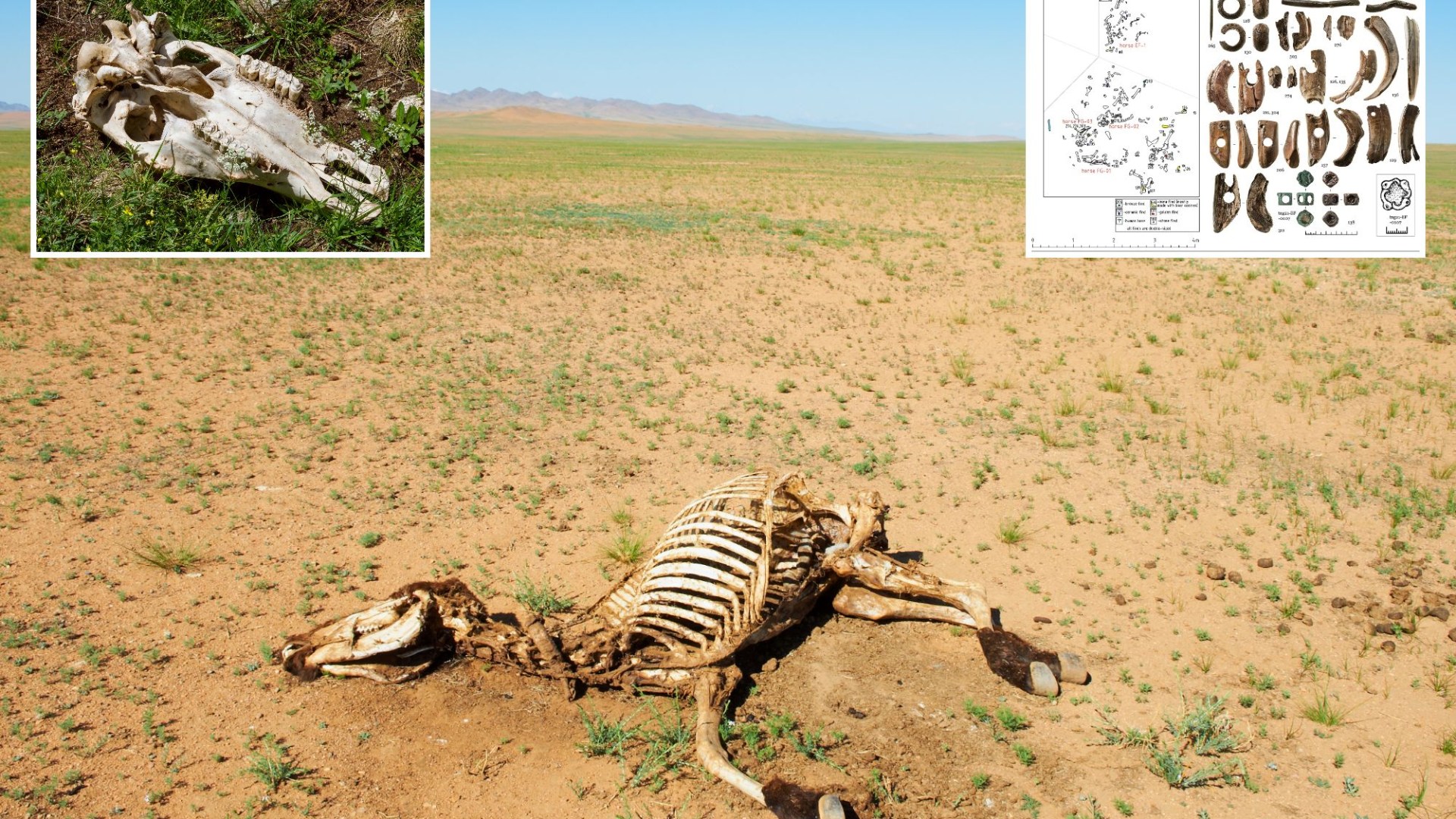
The discovery of an ancient royal tomb in Tuva, Siberia, offers a fascinating glimpse into the burial rituals of the Scythians, a nomadic group shrouded in mystery despite their interactions with various ancient civilizations. Dated to the transition between the Bronze and Iron Ages, approximately 2,800 years ago, the kurgan, or burial mound, contained the remains of an “elite individual” interred with an astonishing eighteen horses, a number that has since grown with further excavation. This elaborate burial, indicative of high social standing, involved the ritual sacrifice of the horses, potentially adorned with some form of ancient headwear evidenced by brass bits found between their teeth. The horses were carefully arranged alongside the deceased, lowered into the grave pit with ropes, suggesting a deeply symbolic relationship between the individual and these animals. Some of the horses may have been personal mounts, while others could have been tributary gifts from allied horse-breeding tribes. The presence of an additional sacrificed individual, an unidentified woman, further underscores the complexity of Scythian burial practices.
The Scythians, renowned for their equestrian skills and warrior culture, held a complex belief system that emphasized preparation for the afterlife. Their burial rituals extended beyond the inclusion of horses and encompassed practices such as mummification and the ritualistic removal and replacement of internal organs. The deceased’s entrails were removed and replaced with straw, the incisions meticulously sewn with animal tendons. Even the brain matter was carefully extracted through small holes in the skull and replaced with dry straw, highlighting the meticulous nature of these rituals. This meticulous preparation of the body, coupled with the inclusion of personal items like ornaments, mirrors, tools, and even food offerings, reflects the Scythian belief in a continued existence beyond death. These provisions were meant to accompany the deceased into the next life, ensuring their comfort and status in the hereafter.
The size and scale of Scythian burial mounds varied considerably, reflecting the social status of the deceased. While some were modest, others, like those found at Pazyryk, could reach an astounding 46 meters across to accommodate the numerous offerings interred with the body. This practice of lavish burial speaks to the importance of social hierarchy and the belief in a tangible afterlife within Scythian culture. The inclusion of numerous horses, potentially symbolic of wealth, status, and power, further reinforces the elite nature of the individual discovered in the Tuva tomb. The presence of the sacrificed woman adds another layer of intrigue, suggesting a possible social or ritualistic connection to the primary interment.
The Scythians, a nomadic people who dominated vast stretches of Eurasia from the Black Sea to China between the 8th century BC and the 4th century AD, remain an enigma despite their interactions with powerful empires like the Greeks, Persians, Romans, and Chinese. Feared for their ferocity in battle and mastery of hit-and-run tactics, they carved a formidable reputation as skilled warriors. Their cultural practices, including elaborate body art featuring stylized real and mythical animal designs, further distinguished them amongst their contemporaries. Despite their prominence in ancient historical accounts, the origins of the Scythians continue to be debated. Herodotus, the 5th-century BC Greek historian, offers conflicting accounts, suggesting both an Asiatic origin followed by westward migration and a descent from the mythical hero Heracles and a half-woman, half-snake creature.
The Scythian mastery of horsemanship played a central role in their military prowess and nomadic lifestyle. Their ability to maneuver swiftly and effectively on horseback allowed them to dominate the vast grasslands they inhabited and to conduct lightning raids against their enemies. This deep connection with horses extended beyond the practical and into the spiritual realm, as evidenced by their elaborate horse burial rituals. The horses interred with the elite individual in the Tuva tomb likely represented more than just possessions; they symbolized status, power, and a crucial element of the deceased’s identity, intended to accompany them into the afterlife.
While genetic studies have shed some light on the Scythian ancestry, their precise origins and the full narrative of their history remain elusive. The ongoing archaeological discoveries, like the royal tomb in Tuva, offer tantalizing glimpses into their sophisticated culture, complex beliefs, and the significant role that horses played in their lives, both in this world and the next. The meticulous preparation of the bodies, the inclusion of personal belongings, and the ritual sacrifice of horses paint a vivid picture of a people deeply concerned with the afterlife and the preservation of their status beyond death. The ongoing research promises to further unravel the mysteries surrounding the Scythians, providing a richer understanding of their unique place in ancient history.