


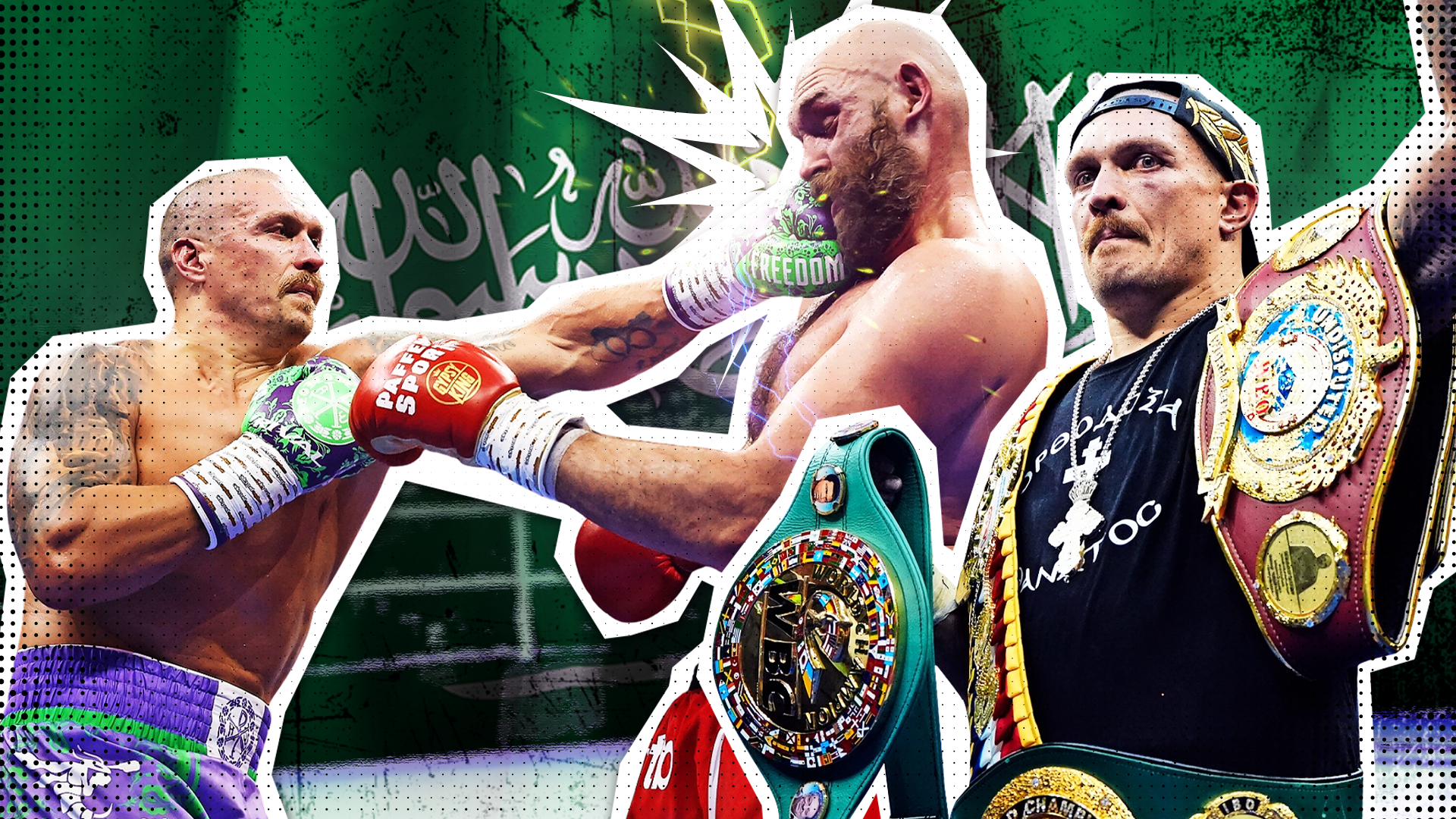
Tyson Fury’s reign atop the heavyweight boxing world has ended, ushering in a new era dominated by the masterful Oleksandr Usyk. Fury’s consecutive defeats to the Ukrainian have cemented Usyk’s place as the undisputed champion and arguably an all-time great. While Fury’s promoter, Frank Warren, and Fury himself disputed the outcome, the unanimous decision in favor of Usyk leaves no room for doubt. Fury’s performance lacked the sharpness, strategy, and stamina required to overcome Usyk’s superior skill and relentless pressure. The once-anticipated clash between Fury and Anthony Joshua now holds little significance beyond a lucrative payday, as both fighters have been definitively outclassed by Usyk. The era of British heavyweight dominance, marked by Fury and Joshua’s high-profile bouts, has concluded.
Usyk, at 37, faces a challenging future despite his dominance. Lacking the knockout power of a traditional heavyweight and the showmanship to generate massive box office appeal, he struggles to attract audiences. The fight against Fury, a clash of titans, took place in a half-empty arena marked by an unusual quiet. Daniel Dubois, Britain’s IBF champion, challenged Usyk after the fight, but having already been defeated by the Ukrainian, his prospects seem dim. Usyk’s age, combined with the lack of compelling opponents, suggests that his reign, though undeniably impressive, might not be as long or commercially successful as some of his predecessors.
While Usyk’s boxing brilliance is undeniable, the heavyweight division will undoubtedly miss the spectacle and personality that Fury brought to the sport. His unpredictable nature, both in and out of the ring, made him a compelling figure, attracting fans even as his behavior often drew criticism. From dethroning Wladimir Klitschko to his epic trilogy with Deontay Wilder, Fury’s career has been a captivating narrative. His eccentric ring entrance in Saudi Arabia, dressed as Santa Claus, underscored his theatrical flair. However, his performance inside the ropes failed to live up to his pre-fight antics. The showboating and energy that characterized his previous fights were absent, replaced by a discernible lack of focus and fitness.
Fury’s decline was evident in the latter stages of both fights against Usyk, revealing a concerning drop in stamina. In their latest encounter, he was unable to establish an early lead, allowing Usyk to steadily build momentum. The judges’ unanimous 116-112 score in favor of Usyk reflected the clear difference in performance, despite pre-fight concerns of potential bias due to the Saudi influence. Even an experimental AI judge, whose verdict didn’t officially count, scored the fight more decisively for Usyk, a result met with derision by Fury. The outcome was a disappointment for the Saudi organizers, who had hoped for a more competitive fight and a more enthusiastic crowd.
The muted atmosphere in the Saudi arena highlighted a fundamental challenge for the nation’s ambitions to become a major boxing hub. While the financial resources are clearly available, the lack of a deeply rooted boxing culture proved difficult to overcome. The hushed crowd, punctuated only by the announcement of a raffle winner, stood in stark contrast to the electrifying atmospheres of traditional boxing venues. Saudi Arabia’s foray into sports, including securing the 2034 World Cup and potentially the 2036 Olympics, signals a significant investment in the global sporting landscape. However, the success of these ventures hinges on cultivating genuine fan engagement and passion, aspects that money alone cannot guarantee.
The future of heavyweight boxing, in the absence of a compelling rivalry or dominant personality, appears uncertain. The likely prospect of exhibition fights featuring YouTubers, aging athletes, and wrestlers suggests a shift away from traditional championship bouts. While Lennox Lewis has advocated for a Fury-Joshua clash at Wembley Stadium, the luster of that potential matchup has dimmed considerably in light of both fighters’ losses to Usyk. Fury now stands at a career crossroads. His diminished performance and the rise of Usyk raise questions about his motivation and ability to reclaim his former glory. The heavyweight division moves forward, leaving behind the spectacle and controversy of the Fury era, and embracing the quiet dominance of Oleksandr Usyk.