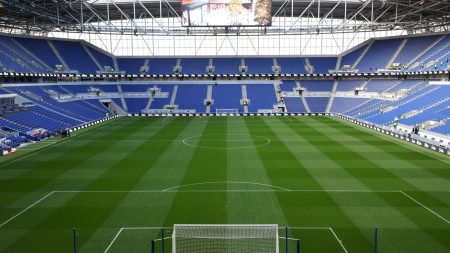




Thomas Tuchel’s tenure as England manager will commence with a World Cup 2026 qualifying campaign, beginning with a home fixture against Albania at Wembley Stadium on March 21st. This marks the start of a challenging but navigable group stage, pitting England against Serbia, Latvia, and Andorra. Tuchel’s first international break will continue with another home match against Latvia just three days later, on March 24th, offering an early opportunity to establish momentum and build rapport with the squad. The initial phase of qualifiers will conclude with an away trip to Andorra on June 7th, followed by a friendly match against an as-yet-undetermined opponent during the same international window. This early string of matches will provide crucial insights into Tuchel’s tactical approach and player selection, setting the tone for the remainder of the campaign.
The second phase of qualifying presents a logistical challenge for the Football Association. Andorra’s return fixture against England is scheduled for September 6th, but Wembley Stadium’s availability is in question due to pre-booked Coldplay concerts flanking the date. This necessitates finding an alternative venue for the home match, adding an unforeseen complexity to the fixture. Following this, England faces a crucial away game against Serbia on September 9th, a match likely to be a key determinant of the group’s standings. The autumn international break brings an away fixture against Latvia on October 14th, providing another opportunity to consolidate their position in the group.
The culmination of England’s qualifying campaign arrives in November with a decisive double-header. First, they host Serbia at Wembley on November 13th, followed by an away match against Albania on November 16th. These final two matches are likely to be crucial in determining England’s qualification fate, and the pressure will be on Tuchel to deliver results. The schedule, overall, offers a mix of home and away fixtures, presenting a balanced challenge for the Three Lions. The inclusion of lower-ranked teams like Andorra and Latvia provides opportunities to secure vital points, while the clashes against Serbia and Albania promise to be more fiercely contested battles.
Tuchel, who officially takes the reins in January, inherits a squad with a blend of established talent and emerging prospects. His approach promises a fresh start for all players, including those who have been on the periphery of the national team setup in recent years. This open-door policy extends to players like Ben White, who has previously withdrawn himself from international consideration. Tuchel has explicitly stated his intention to reach out to White and other players who may have fallen out of favor, signaling a commitment to building a squad based on merit and current form rather than past performances or reputations.
Tuchel’s early months in charge will be focused on observing players in their club environments and establishing a clear tactical vision for the team. While he intends to communicate with players individually, he is mindful of the demanding club schedules, particularly in the Premier League. This respectful approach suggests a collaborative management style, emphasizing communication and understanding the demands placed on players throughout the season. He will be a keen observer of the Premier League and other leagues where English players are plying their trade, assessing form and fitness levels before making his initial squad selections.
The broader context of European qualifying sees several intriguing matchups in other groups. Some groups feature pre-determined pairings of top-ranked teams, such as the potential clash between Germany and Italy in Group A, and the guaranteed meeting of either Portugal or Denmark with either Spain or the Netherlands across Groups C and G. These pairings add an element of unpredictability to the qualifying process, with established powerhouses vying for limited qualifying spots. England’s group, while not featuring such pre-determined pairings, still presents a challenging path to qualification, requiring consistent performance and effective management of player resources throughout the campaign.