


Arsenal and Everton have consistently topped the Premier League’s red card charts since its inception in 1992, a testament to their shared penchant for physical, uncompromising players. Everton leads with 108 red cards, closely followed by Arsenal with 107, significantly outpacing the third-placed team, Newcastle. This aggressive style of play, particularly embraced by Everton fans at Goodison Park, creates a high-pressure atmosphere, demanding robust tackles and end-to-end action. This intensity, while contributing to exciting matches, often spills over into disciplinary issues, creating challenges for referees.
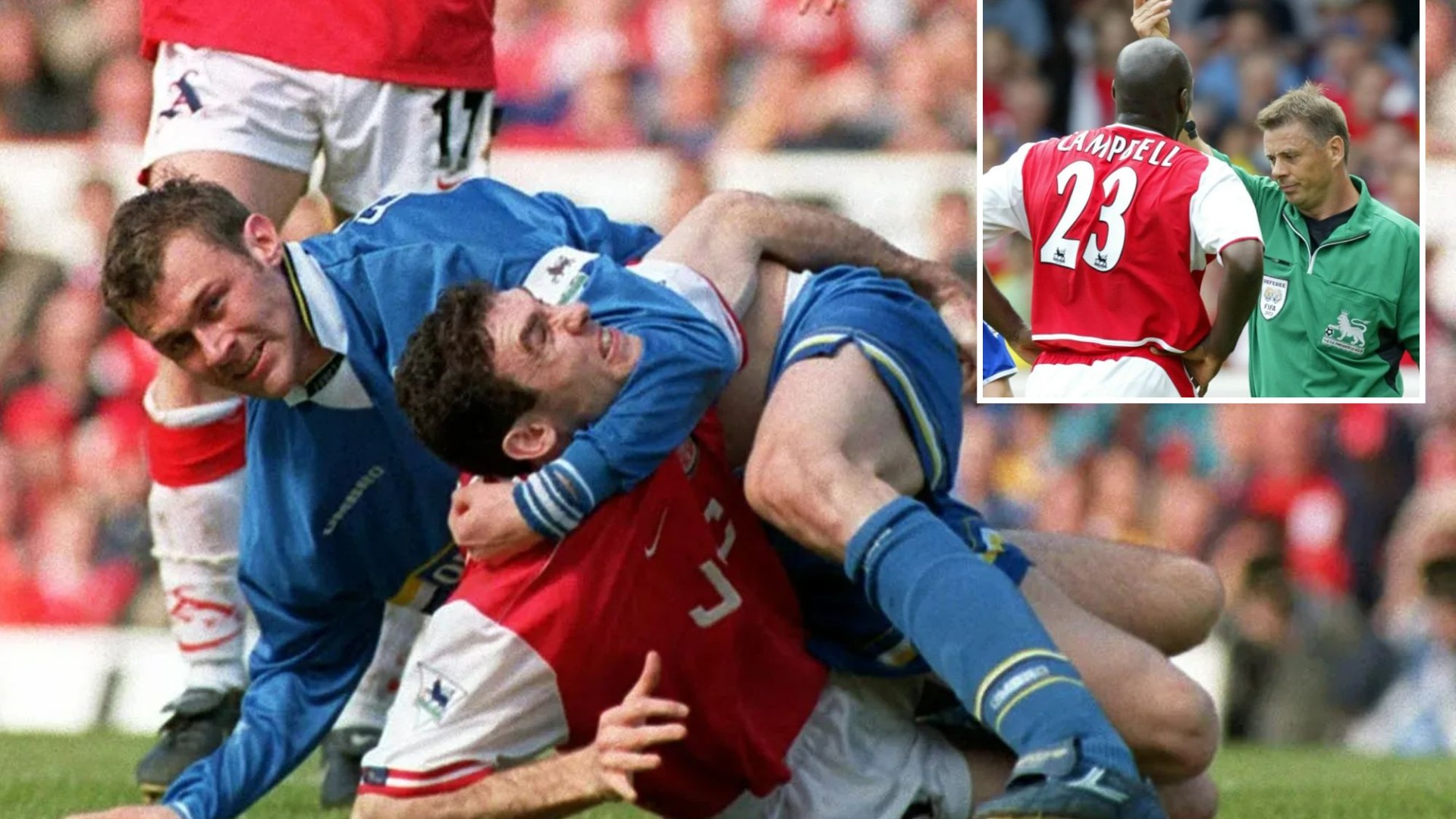
Former Premier League referee Mark Halsey recalls a particularly memorable encounter between Arsenal and Everton at Highbury in 2003. This match, part of Arsenal’s “Invincibles” season, saw Halsey issue two red cards, to Sol Campbell and Li Tie. This incident marked the second time Halsey had dismissed Campbell in five months. The first instance occurred during a crucial title match against Manchester United, where Campbell elbowed Ole Gunnar Solskjaer, a decision upheld despite Arsenal’s appeals. The second red card, for a professional foul on Thomas Gravesen, resulted in Campbell missing the FA Cup final, though Arsenal ultimately emerged victorious. This match stands as one of only three Premier League fixtures between Arsenal and Everton where two players from each team received red cards.
The historical physicality of both teams is reflected in the disciplinary records of their players. Patrick Vieira and Duncan Ferguson, both known for their tough tackling and aggressive play, share the top spot for red cards among players from the two clubs, with eight each. Halsey notes the challenge of refereeing players like Vieira and Ferguson, emphasizing the need for constant communication to manage their on-field intensity. This aggressive approach was cultivated by managers like David Moyes at Everton, who valued the physical presence of players like Ferguson, transforming Goodison Park into a formidable fortress.
Moyes’ tactical approach prioritized intensity and physicality, contributing to Everton’s tough home record. This style of play resonated with players like Joseph Yobo, whose sending off in a match against Newcastle Moyes later acknowledged as justified. Interestingly, current Arsenal manager Mikel Arteta played under Moyes at Everton. While known for his on-field complaints as a player, Arteta has adopted a similar approach as a manager, fostering a passionate and physical style of play reminiscent of both Moyes’ Everton and the Arsenal team of the early 2000s featuring Campbell. While some of Arsenal’s red cards under Arteta have been controversial, the underlying passion and intensity are undeniable.
Beyond their shared history of on-field aggression, Arsenal have also developed a reputation for proficiency in set-pieces, particularly corner kicks. Since the start of the previous season, the Gunners have scored an impressive 22 goals from corners, significantly more than their closest rivals, Manchester City and Liverpool. This aerial dominance, orchestrated by players like Declan Rice and Bukayo Saka, has become a key weapon in Arsenal’s attacking arsenal. Their set-piece prowess has drawn comparisons to Tony Pulis’ Stoke City, a team known for its effective use of set-pieces to challenge larger clubs. Opponents are now faced with the task of devising strategies to neutralize Arsenal’s threat from corners.
Several methods can be employed to mitigate Arsenal’s corner kick threat. Zonal marking, man-to-man marking, a combination of both, and employing a sweeper are all viable options. Zonal marking assigns players to specific areas of the box, allowing them to focus on clearing any incoming deliveries. Man-to-man marking involves assigning each defender to a specific attacker, aiming to prevent them from reaching the ball. A hybrid approach combines zonal and man-to-man marking, offering greater flexibility and coverage. Finally, utilizing a sweeper positioned near the penalty spot provides an additional layer of defense, focusing solely on clearing any loose balls or missed headers. The choice of strategy depends on the opponent’s strengths and weaknesses, as well as the specific game situation.