

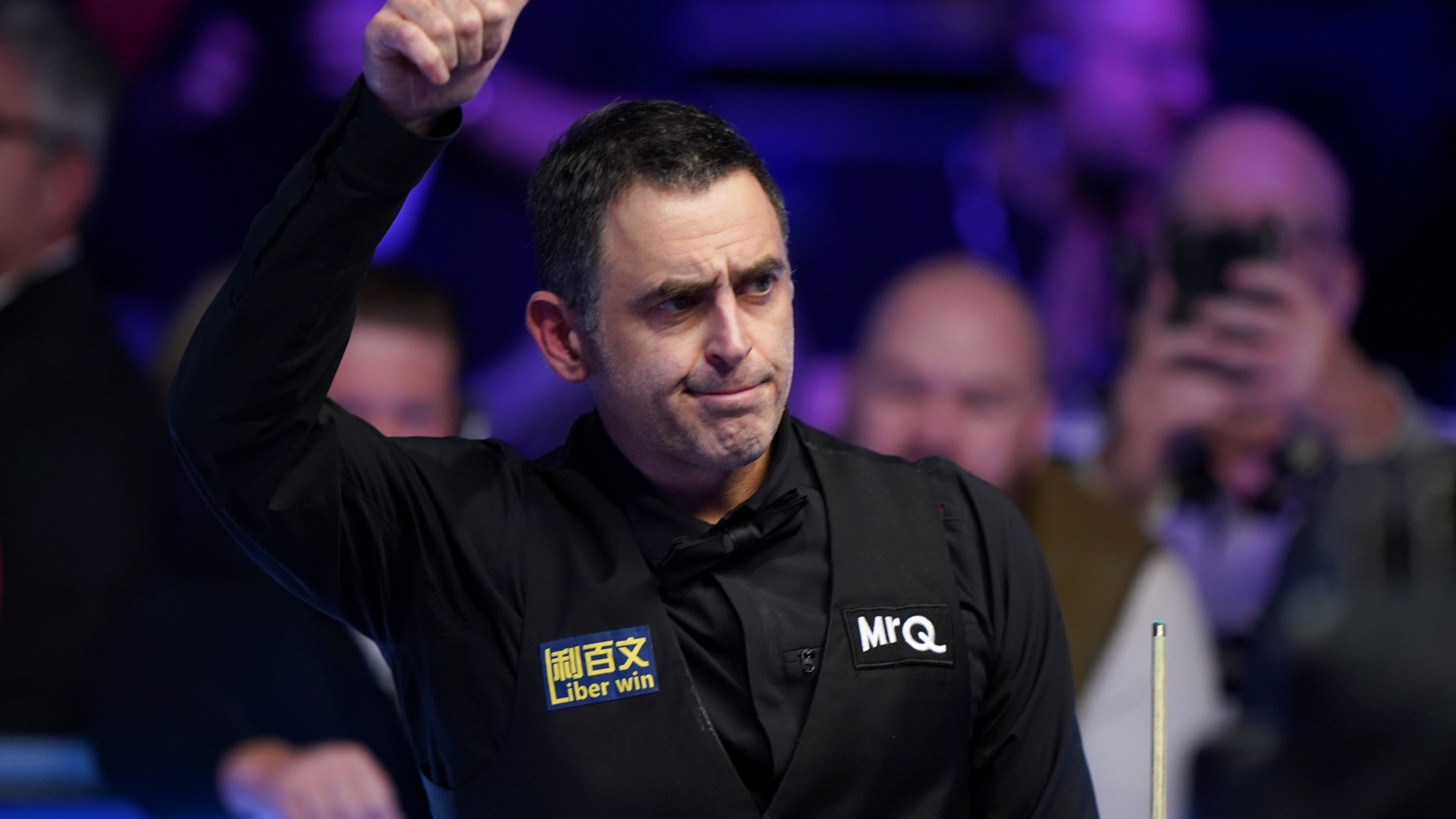
Ronnie O’Sullivan, the snooker legend known as “The Rocket,” approaches 2025 with a relaxed attitude, devoid of specific New Year’s resolutions. Instead of meticulously planning his year, he prioritizes overall well-being, aiming to maintain good health and happiness. His focus lies in physical fitness, incorporating gym workouts and a recently resumed running regimen after a year-long hiatus due to knee issues. He believes this physical activity benefits not only his body but also his mental state. This laid-back approach contrasts with the demanding schedule that awaits him upon his return from a series of lucrative exhibitions in the Far East.
O’Sullivan’s immediate future involves a challenging transition from a leisurely holiday period to the high-stakes environment of professional snooker. He acknowledges the less-than-ideal circumstances surrounding his Masters title defense, scheduled for January 12th against long-time rival John Higgins. Having spent the festive season traveling across Saudi Arabia, Macau, and China, he anticipates jet lag upon his return to the UK just days before the tournament. This contrasts sharply with his well-prepared state leading up to the previous Masters, where victories at the Shanghai Masters and the UK Championship provided ample competitive practice. This year, his limited match play since August presents a potential obstacle.
Despite these challenges, O’Sullivan maintains a long-term perspective, recognizing that success might not come immediately in 2025, and possibly not even in the following year. His philosophy centers around enjoying the game, embracing the process, and allowing results to unfold naturally. This relaxed approach underscores his maturity and his shift in priorities towards overall life satisfaction rather than solely chasing immediate victories. This understanding comes with years of experience and numerous achievements in the sport, allowing him to adopt a more philosophical perspective.
O’Sullivan’s pre-Masters itinerary, filled with exhibition matches across Asia, showcases his marketability and global appeal. These exhibitions, while financially rewarding, contribute to the less-than-optimal preparation he admits to ahead of the Masters. The contrast between the relaxed, lucrative exhibition circuit and the intense pressure of a major tournament like the Masters highlights the diverse demands placed on a top-tier snooker player. This packed schedule underscores the constant balancing act required of professional athletes, juggling financial opportunities with competitive commitments.
The seven-time world champion openly addresses the subpar backstage facilities at Alexandra Palace, the Masters venue, further highlighting the less-than-perfect lead-up to his title defense. This criticism adds another layer to the challenges O’Sullivan faces, suggesting not just a lack of optimal preparation but also a less-than-ideal competitive environment. It speaks to his outspoken nature and willingness to address issues within the sport, even as he navigates his own preparation hurdles. His comments shed light on the backstage realities of professional snooker and the potential impact on players’ performance.
O’Sullivan’s commitment to fitness reveals a dedication to physical and mental well-being that underpins his approach to the sport. Recognizing the importance of both physical and mental health, he prioritizes gym workouts and running to maintain peak condition. This commitment suggests a holistic approach to his career, understanding that longevity in a demanding sport like snooker requires more than just technical skill. It reflects a conscious effort to manage the pressures and demands of professional sport, prioritizing long-term health and well-being over short-term gains. This dedication to fitness likely contributes to his ability to compete at the highest level despite the rigorous travel and competition schedule.