


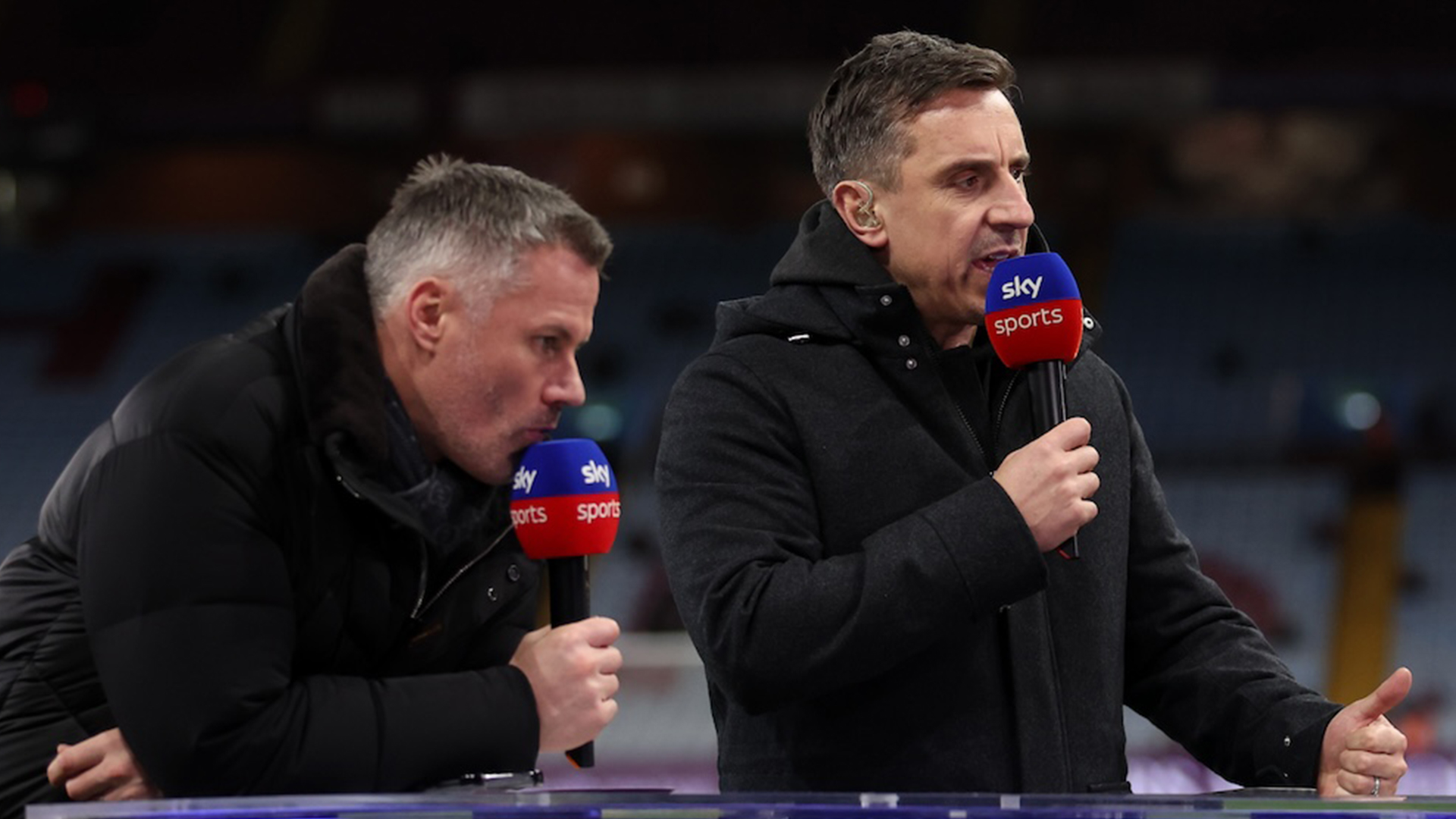
Gary Neville and Jamie Carragher, renowned football pundits, have identified a tactical flaw in Manchester United’s approach under manager Ruben Amorim, specifically concerning the right wing-back position. Their analysis reveals a stark contrast in attacking output depending on who occupies this role. When Diogo Dalot or Noussair Mazraoui, both considered more defensive-minded full-backs, are deployed as right wing-backs, Manchester United struggles to score from open play. This observation was highlighted during a recent match against Newcastle, which United lost 2-0, failing to register a single shot on target. The lack of attacking threat from the right flank when Dalot or Mazraoui are present has become a recurring theme, raising concerns about Amorim’s tactical choices.
The crux of the issue, according to Carragher, lies in the “urgency” with which these players approach the attacking side of the game. Dalot and Mazraoui, by nature, prioritize defensive solidity, often neglecting to push forward with the same vigor as their more attack-minded counterparts. This reluctance to join the attack hinders United’s ability to create scoring chances from open play, leaving the team reliant on set pieces or individual brilliance. Carragher presented data demonstrating this disparity, showing that United failed to score from open play in a significant number of minutes when Dalot or Mazraoui were at right-wing back, further solidifying the argument.
Conversely, when Amad Diallo or Antony, players with a more natural attacking instinct, feature in the right wing-back position, Manchester United’s attacking output increases dramatically. Their willingness to overlap, dribble at defenders, and deliver crosses into the box adds a different dimension to the team’s play. This increased offensive threat is reflected in the number of goals created from open play when Diallo or Antony occupy the right flank. The stark contrast in performance between these two sets of players highlights the importance of selecting personnel suited to the specific tactical demands of the wing-back role.
While acknowledging the validity of Carragher’s observations, both pundits agree that Amorim should not abandon his preferred system. Carragher argues that Amorim was appointed for a reason – to implement the tactical approach that brought him success at Sporting Lisbon. Changing systems now would undermine the very foundation upon which Amorim was hired. However, he also acknowledges that persisting with this system, while addressing the right wing-back issue, might require enduring further short-term struggles. This suggests a belief that Amorim can eventually find a way to integrate his preferred system while maximizing the team’s attacking potential.
Neville echoes Carragher’s sentiment, emphasizing the significance of the data presented. The stark difference in goals scored from open play depending on the right wing-back selection underscores the need for Amorim to address this tactical weakness. The continued reliance on Dalot and Mazraoui in this role, despite their limitations going forward, suggests a potential oversight on Amorim’s part. Failing to adapt and find a more effective solution could hinder United’s progress and prolong their attacking struggles.
The specific match against Newcastle further exemplified this issue. United’s attack looked toothless without Bruno Fernandes, but the underlying problem with the right wing-back position exacerbated their offensive woes. Despite having ten shots, none were on target, highlighting the team’s inability to create quality chances. The performance against Newcastle, and the broader trend observed by Neville and Carragher, underscores the urgent need for Amorim to either find a way to make Dalot and Mazraoui more effective going forward or to prioritize more attack-minded players in this crucial position. The absence of goals from open play when these two are selected is a clear indicator of a tactical deficiency that must be addressed for Manchester United to improve their attacking performance.