


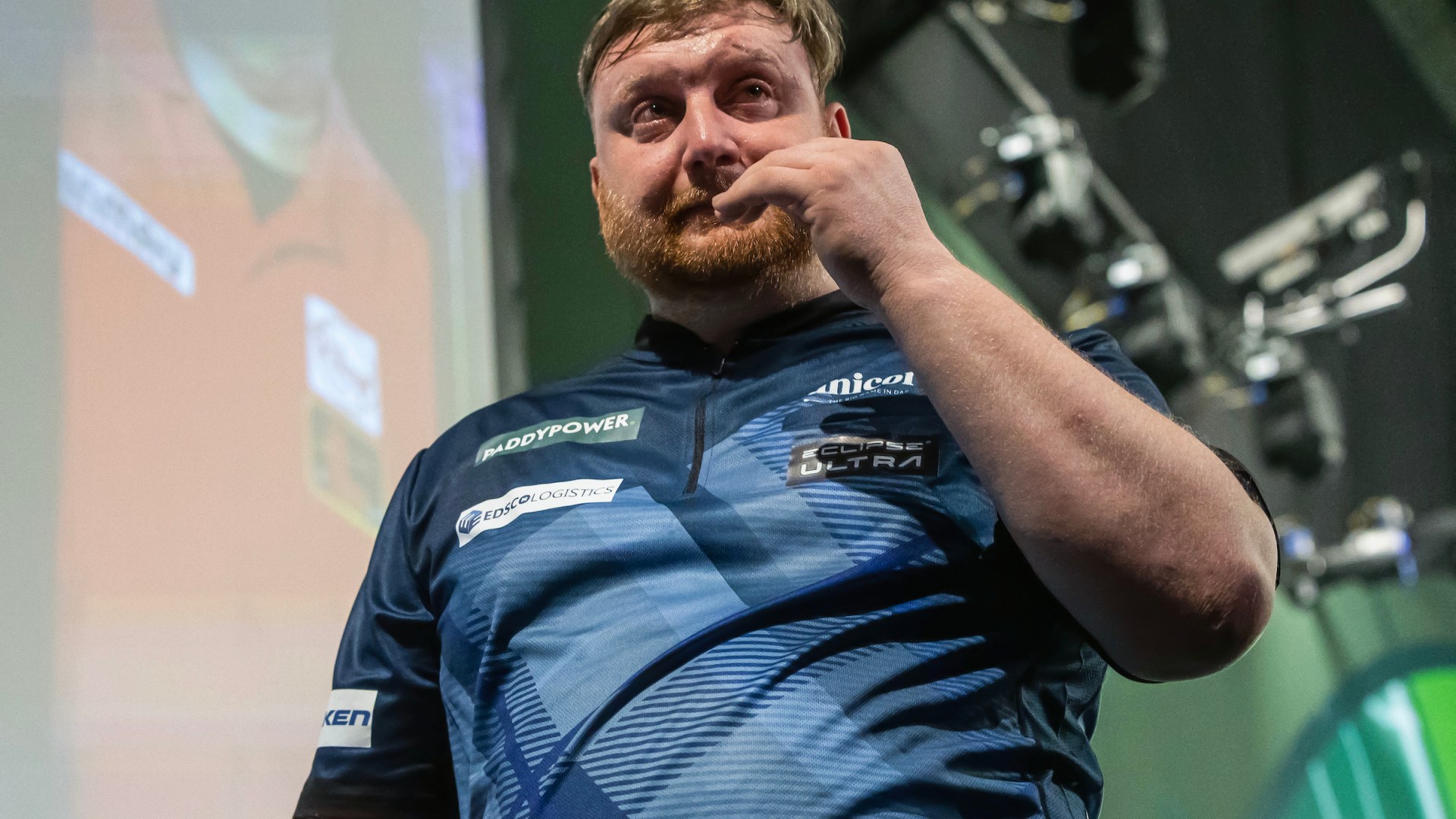
Cameron Menzies’s first-round exit from the PDC World Darts Championship was a heartbreaking spectacle, marked by tears, visible distress, and an alarmingly poor performance. The Scottish plumber, partner of darts sensation Fallon Sherrock, crumbled under pressure against American qualifier Leonard Gates, losing 3-1. The normally expressive Menzies, known for wearing his heart on his sleeve, appeared overwhelmed by the occasion, struggling mentally and emotionally as his game unravelled before a 3,300-strong crowd at Alexandra Palace. His inability to hit doubles, missing 27 out of 32 attempts, compounded his distress, leading to a visible decline in his composure. The scene was so concerning that observers feared he might withdraw from the match.
Adding to Menzies’s ordeal was the unsportsmanlike behavior of some spectators who, rather than offering support, chose to ironically cheer his throws, exacerbating his visible distress. This behavior bordered on bullying and cast a shadow over what should have been a celebratory sporting event. The incident raises questions about the responsibility of the crowd to maintain respect for players, especially those clearly struggling with the pressure of competition.
Glen Durrant, a seasoned darts professional and three-time Lakeside world champion, offered his perspective on Menzies’s performance, noting the stark contrast between his dominant displays on the practice floor and his struggles on the big stage. Durrant attributed Menzies’s difficulties to the unique pressures of televised competition and stressed the need for the Scotsman to analyze his performance and develop coping strategies for handling the emotional and mental demands of playing under intense scrutiny. He emphasized that Menzies possesses exceptional talent and encouraged him to focus on finding solutions rather than dwelling on the disappointment.
While acknowledging the excitement surrounding a major tournament, Durrant pinpointed Menzies’s abysmal double-hitting percentage as his ultimate downfall. Menzies’s 16% success rate on doubles proved insurmountable, effectively sealing his fate in the match.
In contrast to Menzies’s emotional turmoil, Leonard Gates, a 54-year-old Texas lorry driver, reveled in his victory, celebrating with an on-stage dance after securing the winning dart. Despite his triumph, Gates displayed empathy for his opponent, acknowledging Menzies’s struggles and offering words of encouragement. He expressed a desire for his opponent to perform at their best and hoped that Menzies could channel his emotional energy positively, using it to improve his game and showcase his talent in future competitions.
Gates, demonstrating sportsmanship and compassion, revealed that he had spoken to Menzies during the match, urging him to block out the negativity and concentrate on his game. He encouraged Menzies to view the experience as a learning opportunity and utilize the energy of the moment constructively. Gates expressed hope that his words would bolster Menzies’s confidence and assist him in navigating future high-pressure situations. He recognized the need for Menzies to identify and address the root causes of his struggles, seeking further support if necessary.
This first-round clash at the PDC World Darts Championship served as a stark reminder of the immense pressure faced by professional athletes and the varying ways in which they cope. While Gates celebrated his advancement to the second round, where he faced Nathan Aspinall, Menzies’s tearful exit underscored the emotional toll that high-stakes competition can take. The incident highlighted the importance of mental fortitude in professional sports and the crucial role of supportive environments, both on and off the stage. The contrasting emotions on display served as a microcosm of the human drama inherent in competitive sports.