



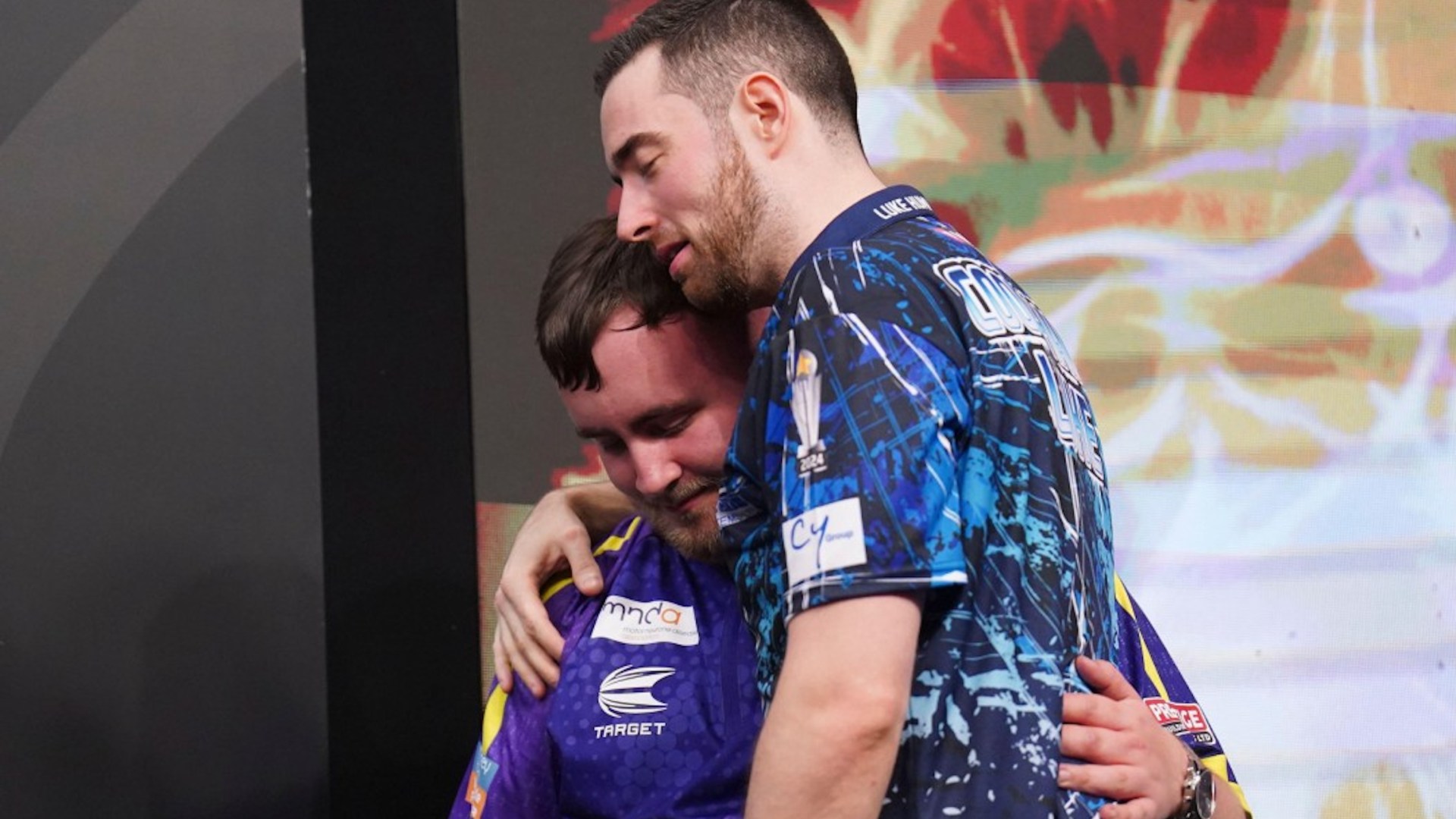
Luke Humphries, the reigning World Darts Championship title holder, envisions a decade of dominance alongside his friend and rival, Luke Littler. At 29, Humphries is poised to become only the fourth player in history to successfully defend the Sid Waddell Trophy, joining the ranks of darting legends Phil Taylor, Adrian Lewis, and Gary Anderson. A victory in the upcoming championship would also propel his annual earnings to over £2 million, a remarkable feat in the sport.
Humphries believes his relationship with the 17-year-old Littler is unique in darts history. Rather than a rivalry marked by animosity, theirs is a supportive bond, akin to that of brothers. They’ve risen through the ranks concurrently, pushing each other to greater heights. Humphries likens their dynamic to a “new era” in darts, contrasting it with the traditional passing of the torch from one dominant player to the next, as seen with Taylor and Van Gerwen, or Bristow and Taylor. They envision a future where they share the spoils and forge their individual legacies together.
This collaborative spirit is evident in their on-stage demeanor. They eschew trash talk, opting instead for fist bumps and hugs, highlighting the respect and camaraderie that underpins their competitive fire. Humphries acknowledges a sense of responsibility towards Littler, having known him since he was a young boy. He marvels at Littler’s composure and skill at such a young age and views their shared journey to the top echelons of the sport as a privilege.
The “Lukes of Hazard,” as they have been dubbed, have already demonstrated their shared dominance, dividing the major titles between them in the past year: Humphries claimed the World Championship and the Players Championship, while Littler secured the Premier League title. This distribution of victories underscores their balanced rivalry and suggests a potential for prolonged competition at the highest level.
Humphries, aware of the looming possibility of facing Littler in the World Championship semi-finals, acknowledges the dynamism inherent in their competitive landscape. He understands that their current trajectories could diverge, with one surging ahead or falling behind. However, he remains confident in their current battle for trophies and anticipates its continuation. He particularly recognizes the threat posed by Littler’s youth and potential for further development, prompting Humphries to maintain a high level of performance to keep pace.
Humphries and Littler’s story is a testament to the evolving nature of sporting rivalries. Their mutual respect, shared journey, and combined dominance signify a departure from the traditional narratives of cutthroat competition. Their “bromance,” as Humphries describes it, offers a refreshing perspective on the power of positive relationships within a high-pressure environment, promising an exciting and potentially transformative era for the sport of darts. Their story is not just about individual ambition but also about the shared pursuit of excellence, making their future contests all the more compelling.