

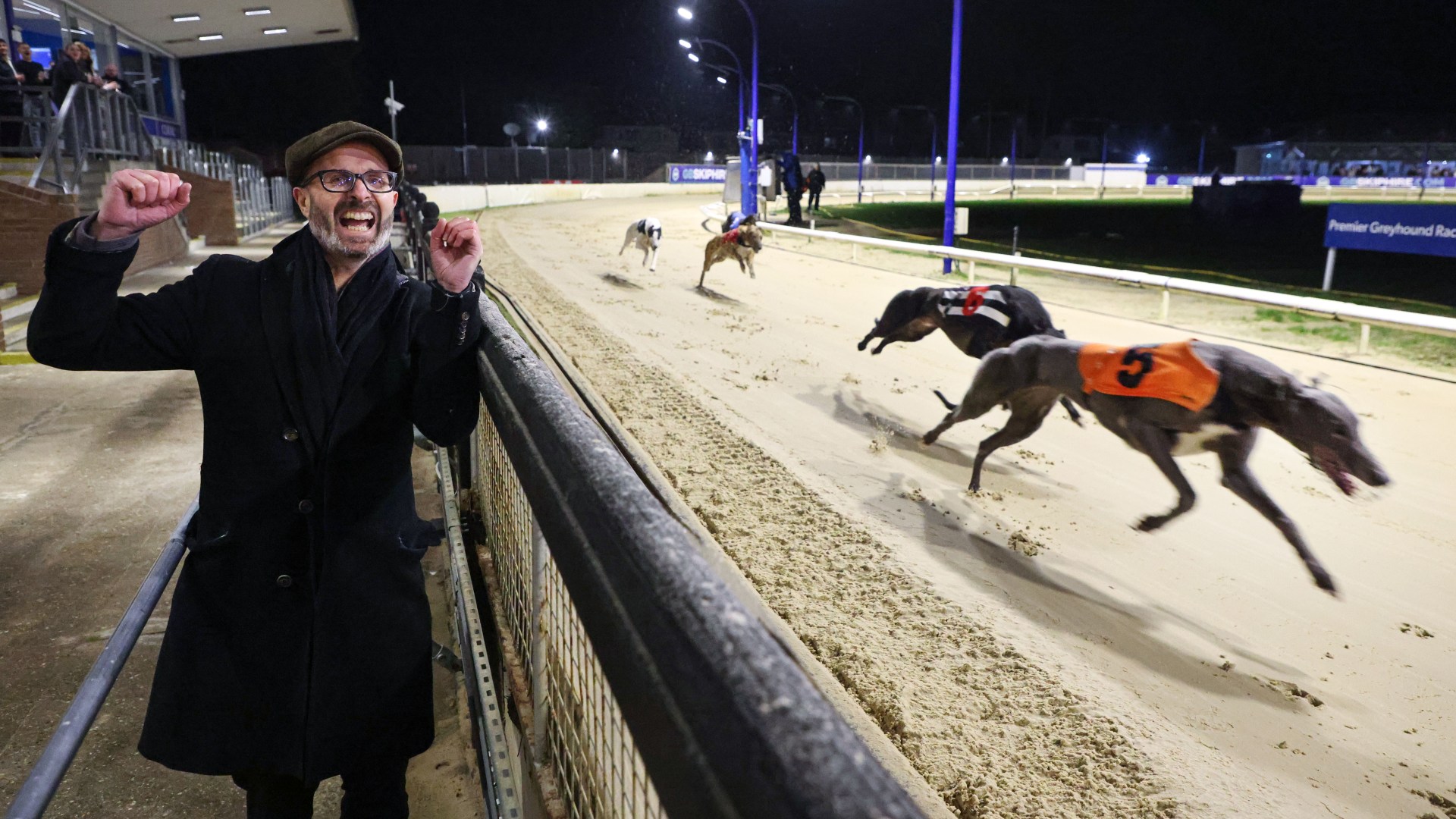
The enduring allure of greyhound racing persists despite a declining trend in the sport. Romford Greyhound Stadium, nestled in a London suburb, stands as a testament to this resilience, its history intertwined with British culture, from Shakespearean verses to Britpop album covers. On a chilly Wednesday evening, the stadium bustles with a diverse crowd, from executive chauffeurs to families on a budget, all drawn to the thrill of the race and the affordable entertainment it offers. The atmosphere is lively, filled with friendly banter, the clinking of beer glasses, and the collective roar of the crowd as the dogs sprint around the track.
Despite the closure of other London tracks like Crayford, Romford remains a beacon for greyhound racing enthusiasts. While some lament the sport’s decline, attributing it to factors like falling attendances and the rise of off-track betting, others see a bright future. Regulars like builder James Harbour, a 35-year veteran of Romford, emphasize the sport’s working-class roots and the unique camaraderie it fosters. Newcomers like Nikita Sheridan, celebrating her husband’s birthday, are pleasantly surprised by the affordability and excitement of a night at the dogs.
The history of greyhound racing in Britain is rich and storied. From its origins in the 1920s, with canine superstar Mick The Miller capturing the nation’s attention, to its heyday in the mid-20th century, when tens of millions of spectators flocked to tracks across the country, the sport has held a special place in British society. Iconic venues like White City, once hosting Olympic events and even World Cup football matches, served as testament to the sport’s immense popularity. Royal patronage, from the Queen Mother to Prince Philip, further cemented its status.
However, the rise of off-track betting shops in the 1960s marked a turning point. Attendance began to dwindle, and prime urban real estate occupied by greyhound tracks became increasingly attractive to developers. Tracks were demolished, replaced by office buildings and housing developments, leaving only remnants of a bygone era, such as the art deco facade of Walthamstow Stadium. The closure of Crayford, attributed to declining attendance and a shortage of racing dogs, further underscores the challenges facing the sport.
Despite these challenges, the Greyhound Board of Great Britain (GBGB) remains optimistic about the future of greyhound racing. With 800,000 annual attendees, the sport still ranks among the top ten spectator sports in the country. Traditional heartlands like Wolverhampton, Nottingham, and Newcastle continue to draw crowds, and the industry contributes significantly to the economy, supporting thousands of jobs and generating millions in tax revenue. Moreover, the GBGB emphasizes its commitment to animal welfare, investing heavily in the care of racing greyhounds.
The enduring appeal of Romford lies in its authenticity and affordability. It’s a place where families can enjoy a night out without breaking the bank, where seasoned punters can share their expertise with newcomers, and where the thrill of the chase transcends social barriers. As the greyhounds burst from the starting boxes, the roar of the crowd echoes through the stand, a testament to the enduring spirit of a sport that has weathered many storms. While the future of greyhound racing may be uncertain, the passion of its devotees and the unique atmosphere of venues like Romford suggest that there’s still life in the old dogs yet.