


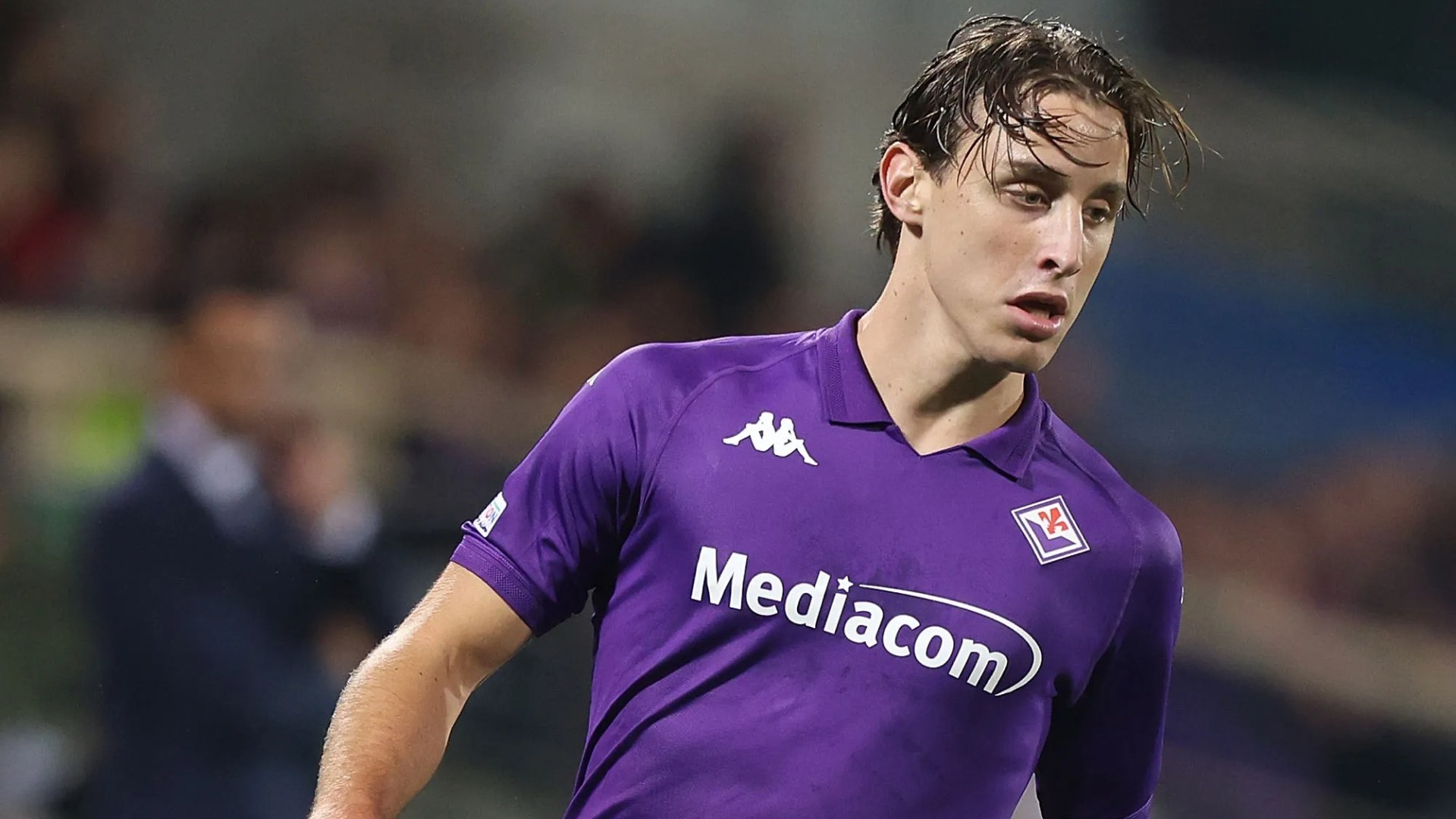
Edoardo Bove, the 22-year-old Fiorentina midfielder on loan from Roma, suffered a sudden cardiac arrest during a Serie A match against Inter Milan. The incident occurred in the 15th minute, with Bove collapsing on the field after initially appearing to bend down to tie his laces. Medical teams from both clubs swiftly attended to him, forming a protective barrier around the player while he received treatment. Bove was then transported by ambulance to Careggi hospital, and the match was subsequently abandoned.
Following the terrifying incident, Fiorentina general manager Alessandro Ferrari provided a reassuring update, confirming that Bove’s condition was improving and he had been moved from intensive care to a standard hospital unit. The next step in his recovery involves the implantation of an implantable cardioverter defibrillator (ICD), a device designed to monitor and correct irregular heart rhythms. This device is the same one used by Manchester United’s Christian Eriksen and Girona’s Daley Blind, both of whom experienced similar cardiac events during professional matches.
The ICD, connected to the heart by wires, delivers an electric pulse to restore normal heart rhythm in the event of an arrhythmia. This device is crucial for preventing future cardiac episodes, but unfortunately, it presents a significant hurdle for Bove’s continued career in Italian football. Serie A regulations, along with broader Italian sporting rules, prohibit players with implanted defibrillators from participating in competitive matches, regardless of the level of play. This restriction effectively bars Bove from playing for both Fiorentina and his parent club, Roma, within Italy.
While Bove’s Italian career is likely over due to these regulations, his playing future is not necessarily extinguished. He may find opportunities to continue his professional career in leagues abroad where such restrictions are not in place. Christian Eriksen, facing a similar situation after his cardiac arrest during Euro 2020, provides a compelling precedent. Eriksen, also fitted with an ICD, left Inter Milan due to Italian regulations but successfully resumed his career, first with Brentford and subsequently with Manchester United, demonstrating that a return to top-level football is possible.
Bove’s case highlights the conflict between player safety and restrictive regulations. While the rules are designed to protect athletes from further health risks, they also have the unintended consequence of potentially ending careers prematurely. This raises questions about the balance between risk mitigation and allowing athletes to continue pursuing their professional passions, particularly when medical advancements like the ICD can effectively manage the underlying condition. The situation calls for a broader discussion about the adaptability of sporting regulations to incorporate evolving medical technologies and allow athletes like Bove to continue playing professionally, albeit potentially in different leagues.
The incident also underscores the inherent risks associated with professional sports, even for young and seemingly healthy athletes. Bove’s sudden cardiac arrest serves as a stark reminder of the unpredictable nature of these events and the importance of immediate medical attention. The prompt response of the medical teams present at the match was crucial in stabilizing Bove and ensuring his positive recovery trajectory. While the future of his career in Italy remains uncertain, the focus remains on his continued health and well-being as he navigates this challenging period. The hope remains that he, like Eriksen, can find a path back to professional football, wherever that may be.