


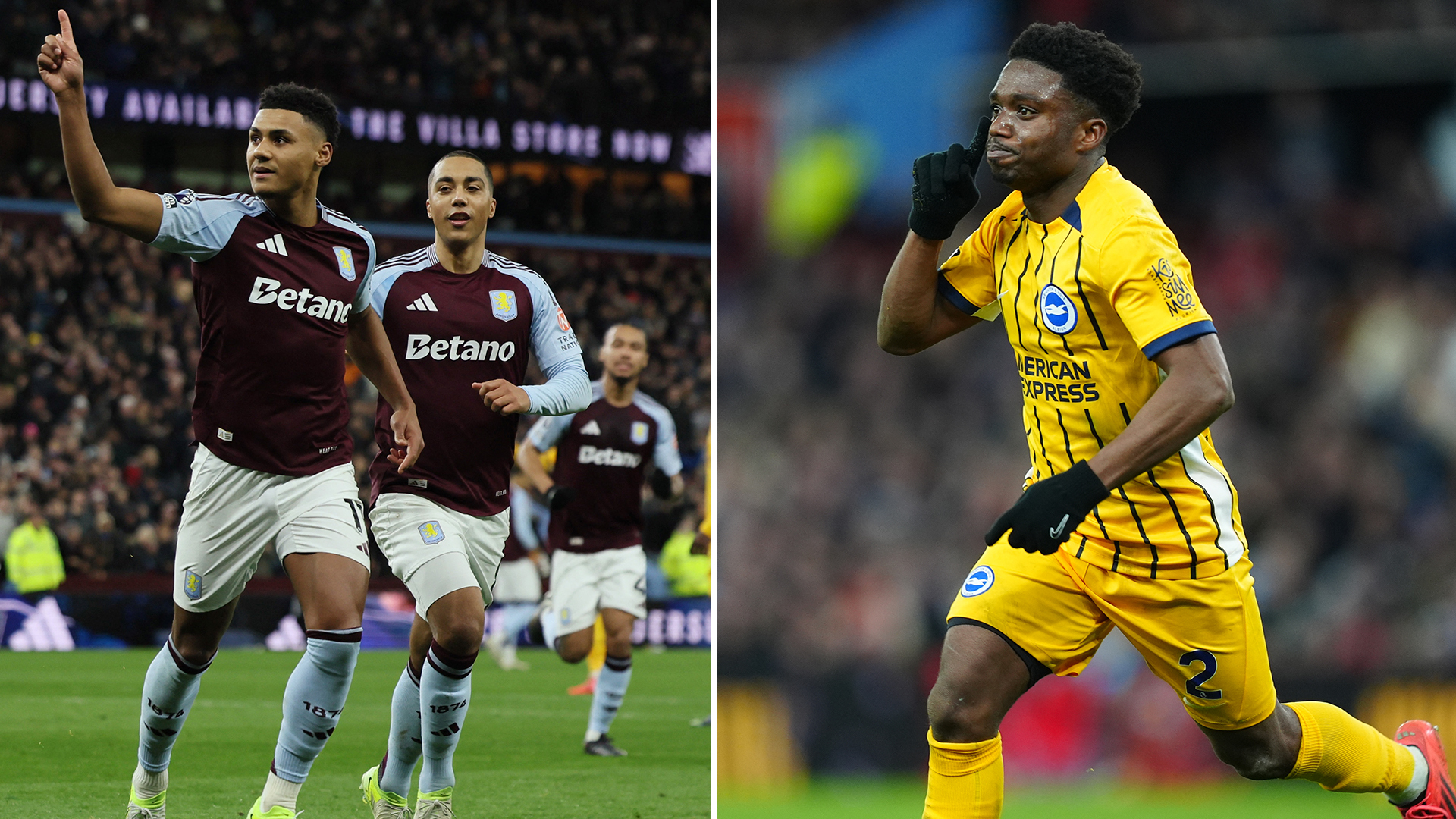
The Premier League clash between Aston Villa and Brighton & Hove Albion ended in a 2-2 draw, a result punctuated by thrilling action, controversial VAR interventions, and a late equalizer that spoiled Ollie Watkins’ birthday celebrations. The match was a whirlwind of physicality and contentious decisions, beginning with a head clash between Joao Pedro and Boubacar Kamara that left Pedro looking like “Rab C. Nesbitt” after receiving on-field treatment for a split eye. This set the tone for a game riddled with collisions and players hitting the turf, a frenetic pace maintained throughout the 90 minutes.
Brighton drew first blood in the 12th minute through a moment of individual brilliance from Simon Adingra. A long ball from Lewis Dunk bypassed the Villa defense, allowing Joao Pedro to muscle past Ezri Konsa and Pau Torres. The ball fell kindly to Adingra, who cut inside onto his right foot and curled a stunning shot beyond the reach of Emi Martinez, nestling the ball into the far corner. Villa’s woes deepened with an injury to Pau Torres, who was forced off with a damaged ankle, replaced by Tyrone Mings. Despite Martinez denying Enciso with a superb save and a subsequent header from Jan Paul van Hecke going wide, the narrative shifted dramatically towards the contentious use of VAR.
The controversy centered on two penalty appeals by Aston Villa, both initially waved away by referee Craig Pawson. The first incident involved a potential clip on Morgan Rogers by Van Hecke, which, despite Villa’s protests, VAR deemed not a clear and obvious error by the referee, upholding the on-field decision. Minutes later, another incident in the Brighton box involving Rogers and Joao Pedro prompted a VAR review. This time, after a lengthy delay, Pawson was directed to the pitchside monitor. After further deliberation, he reversed his initial decision, awarding Villa a penalty for a foul on Rogers. Watkins converted the penalty, equalizing the score and marking his 29th birthday with a goal.
The first half, extended by a considerable 12 minutes of stoppage time due to the earlier head injury and VAR reviews, ended with the score level. Aston Villa, fueled by the momentum of their penalty, took the lead early in the second half. A poorly cleared corner allowed Watkins to loft the ball over the Brighton defense to Rogers, who controlled it on his chest before firing a powerful shot past Verbruggen. The goal injected new energy into the Villains, seemingly putting them on course for a victory.
Despite trailing, Brighton refused to surrender. Their persistence was rewarded with a stunning late equalizer, a moment of individual brilliance that mirrored their opening goal. A slick interchange between Pedro and Mitoma created space for Tariq Lamptey on the edge of the box. Lamptey, receiving the pass from Pedro, unleashed a powerful low drive that beat Martinez, securing a hard-fought point for the Seagulls and silencing the home crowd. The late goal underscored Brighton’s resilience and ability to create opportunities even when under pressure.
The match ultimately highlighted the ongoing debate surrounding VAR’s implementation. Unai Emery, Villa’s manager, had preemptively voiced concerns about the “political” influence affecting VAR decisions, arguing for its increased and more consistent use. The two penalty incidents, one upheld and the other overturned by VAR, served to illustrate the inconsistencies and ambiguities surrounding its application, adding to the already heated atmosphere of the match. While the draw was a fair reflection of the end-to-end action, the officiating controversies left a lingering question mark over the game’s narrative. The final result saw Aston Villa maintain their strong start to the season, while Brighton, despite remaining winless in seven games, showcased their resilience and attacking prowess.