
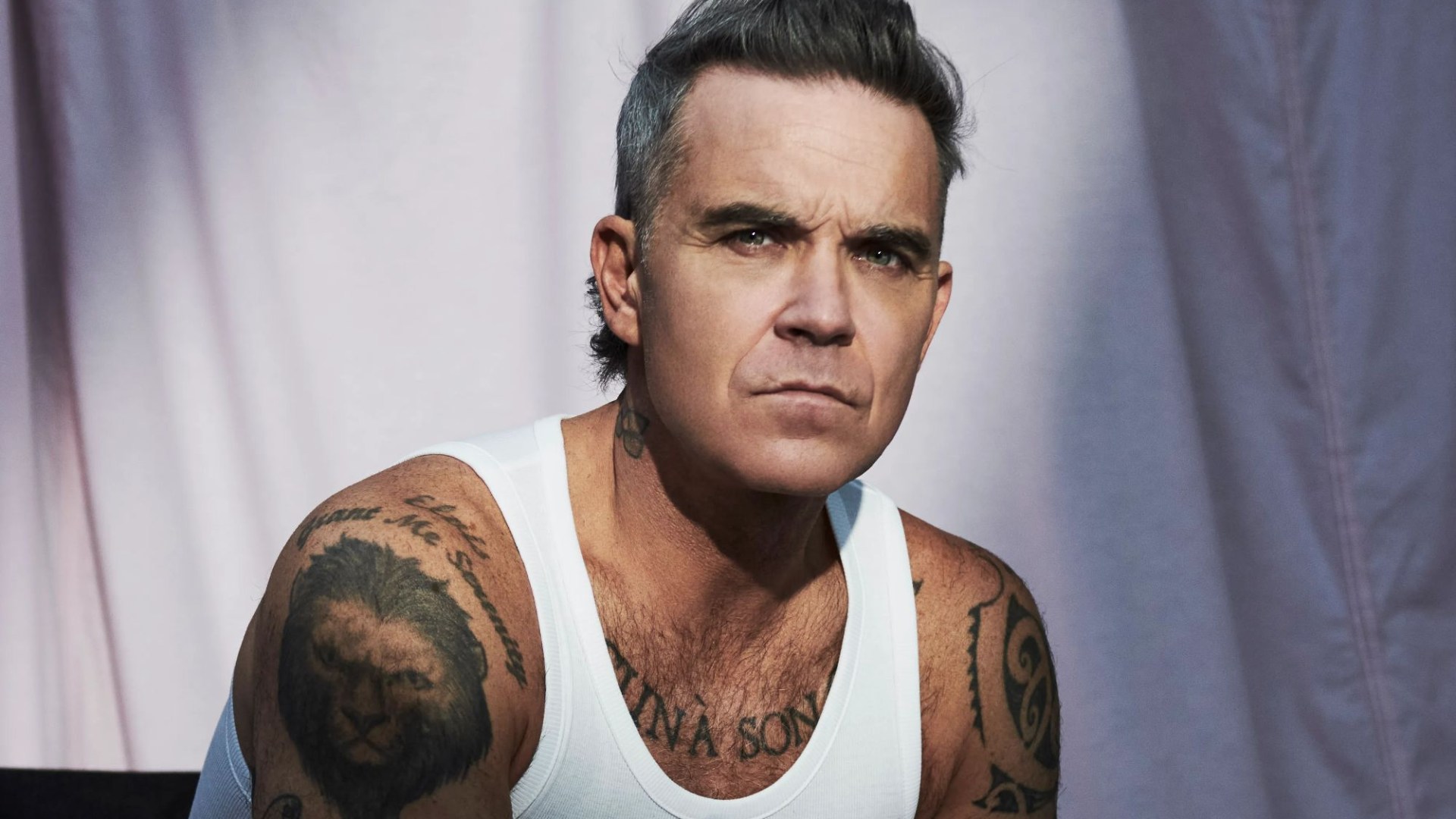
Robbie Williams, the pop icon who catapulted to fame at the tender age of 16, is contemplating a return to the classroom to pursue his GCSEs, a venture that would require him to juggle his studies with a demanding world tour and awards season commitments. This academic aspiration stems from a desire to establish a university, a goal currently unattainable due to his lack of formal qualifications. Williams candidly admits to receiving primarily D grades and failing the rest, acknowledging his absence from many exams. He envisions this educational pursuit as a potential television project, showcasing his return to school in an age-appropriate manner. Underlying this academic ambition is Williams’ longstanding struggle with undiagnosed learning disabilities, including dyslexia, dyscalculia, and ADHD. Growing up in an era lacking awareness of these conditions, he internalized a sense of intellectual inadequacy, a perception he now seeks to challenge.
Despite lacking traditional academic credentials, Robbie Williams possesses an undeniable brilliance and artistic talent that shines through his various endeavors. His recent solo art exhibition at the prestigious Moco gallery in Amsterdam, following a successful exhibition at Sotheby’s, underscores his artistic prowess. Simultaneously, his musical talent is acknowledged with a Golden Globe nomination for “Forbidden Road,” the original song from his biopic, “Better Man.” This nomination, a testament to his songwriting ability, offers a sense of validation and reinforces his artistic credibility. He acknowledges the significance of awards, admitting that while he previously held a cynical view, the personal importance of this nomination has shifted his perspective.
“Better Man,” the highly anticipated biopic, received critical acclaim after its premiere at the Telluride Film Festival. Directed by Michael Gracey, known for “The Greatest Showman,” the film employs a unique narrative approach, presenting Williams’ life story through the lens of a CGI chimpanzee. This unconventional portrayal chronicles his meteoric rise from Take That to solo stardom, delving into the complexities of his journey, including struggles with addiction and his tumultuous romantic life. The film sensitively addresses his past relationship with All Saints singer Nicole Appleton, portraying the aftermath of her abortion, a decision reportedly influenced by her record label. Williams’ thoughtful approach included sharing the script with Appleton beforehand to ensure her comfort with the portrayal.
The film’s narrative also touches upon Williams’ complex relationship with former Take That bandmate Gary Barlow. Their tumultuous history, marked by a highly publicized falling out after Williams’ departure from the band, is addressed in the film. While acknowledging the potential for the film to trigger difficult emotions for Barlow, Williams emphasizes the importance of authentic storytelling. He expresses guilt over potentially causing discomfort but underscores the necessity of truthfully portraying his own experiences. Despite attempts to soften the portrayal of Barlow, the film still captures the dynamics of their past relationship, which remains a sensitive topic. A planned screening of the film for the former bandmates saw only Mark Owen in attendance, highlighting the lingering complexities within the group.
Beyond the spotlight, Robbie Williams has evolved significantly from his younger, more volatile self. Two decades of sobriety, a loving marriage to Ayda Field, therapy, and fatherhood have contributed to his personal growth. His genuine kindness is evident in numerous anecdotes, including a spontaneous gift sent to a fan and his supportive relationship with fellow singer Liam Payne. The tragic death of Payne deeply affected Williams, serving as a stark reminder of his own past struggles with addiction. This loss has spurred Williams to consider focusing on mental health initiatives within the entertainment industry, recognizing a need for greater support and resources for those navigating similar challenges.
Williams envisions collaborating with industry peers to address mental health concerns, emphasizing the importance of preventative measures and early intervention. He contrasts the existing focus on safeguarding large institutions with the greater need for support at the grassroots level, where aspiring artists are often more vulnerable. He feels a responsibility to contribute to positive change, drawing from his own experiences and recognizing the critical need for mental health support within the entertainment industry. His personal transformation and commitment to helping others suggest a genuine desire to make a meaningful impact, leveraging his platform and influence to address a crucial issue.