


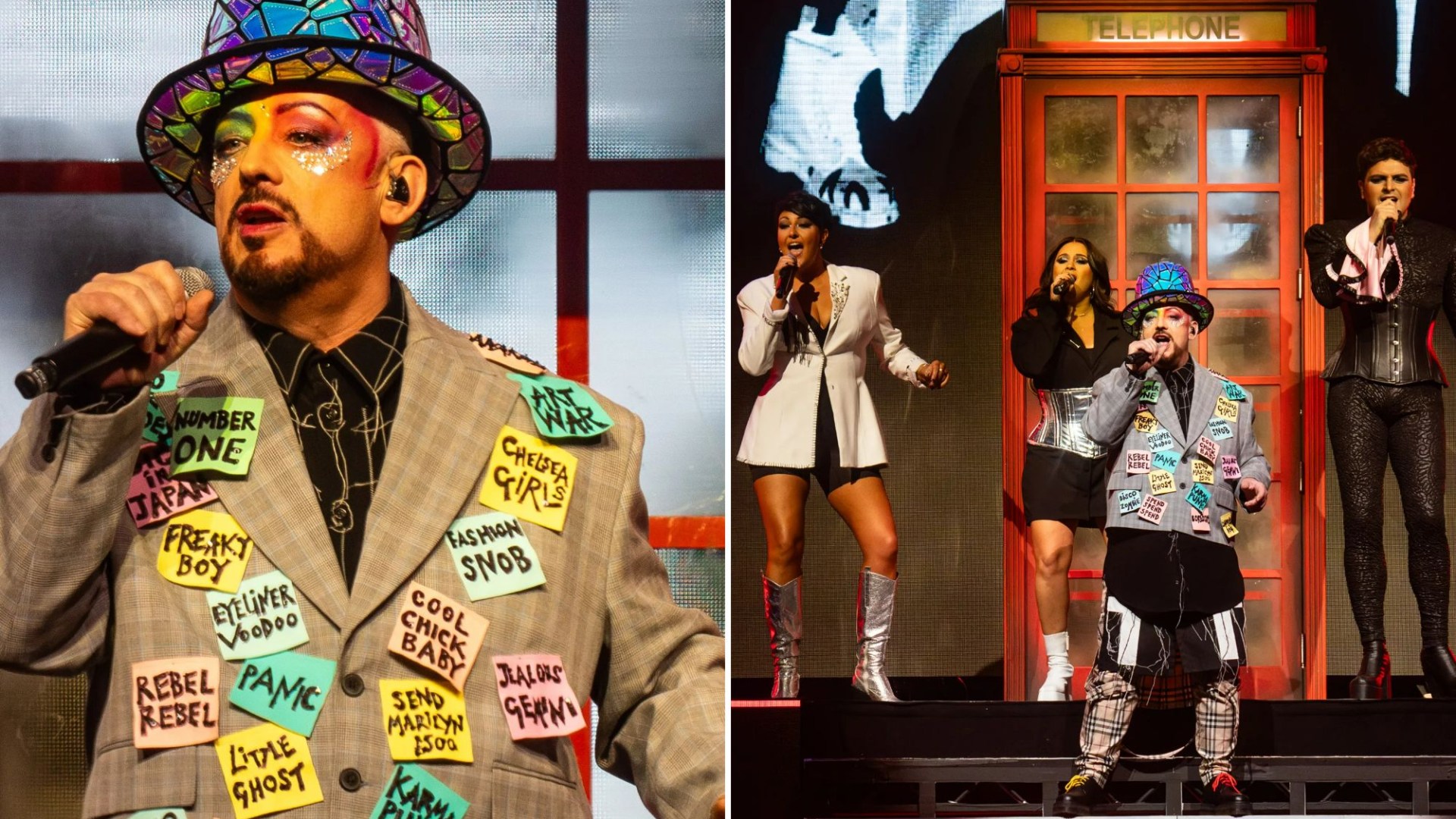
Boy George and Culture Club’s recent nine-date UK tour, culminating at the O2 Arena, has sparked a wave of critical commentary, primarily focused on the iconic frontman’s vocal performance. While the tour’s elaborate production, including dynamic backing dancers and captivating special effects, garnered considerable praise, Boy George’s voice became the focal point of criticism, described as weak, often inaudible, and occasionally off-key. Critics noted the backing singers’ prominent role, suggesting they were frequently required to compensate for the singer’s vocal shortcomings, at times even taking over entirely. This vocal fragility overshadowed some of Culture Club’s most beloved hits, diminishing their impact and leaving a sense of the singer merely going through the motions.
Despite the vocal criticisms, Boy George’s stage presence remained undeniably captivating. He retained his signature flamboyant style, adorned in extravagant costumes featuring mirrored hats, vibrant coats, and quirky jackets embellished with multicolored post-it notes. However, reviewers observed a disconnect between his visual dynamism and his apparent lack of engagement with the performance. He seemed more animated during interludes when he reminisced about his early life, sharing anecdotes about squatting and pre-fame Naomi Campbell’s appearance in early Culture Club videos, rather than when he was actually singing. This perceived detachment further fueled the impression that his heart may no longer be fully invested in performing.
The concerns about Boy George’s vocal abilities are not new. His recent Broadway debut as Harold Zidler in Moulin Rouge, while capturing the necessary campy energy, also drew criticism for a perceived lack of engagement and vocal power. This recurring theme suggests a decline in his vocal prowess, a stark contrast to the powerhouse vocals that propelled him to stardom in the 1980s. The contrast between his visually striking stage presence and the diminished vocal capacity creates a complex and somewhat melancholic picture of an artist grappling with the passage of time and its impact on his performance.
Despite these challenges, Boy George, at 63, shows no signs of retiring. Culture Club is set to embark on a tour of Australia and New Zealand next year, followed by European festival dates in the summer. This unwavering commitment to performing suggests a deep-seated passion for his craft, even as his vocal abilities face scrutiny. His enduring appeal as a global queer icon, solidified over four decades in the music industry, continues to draw audiences. Millions are expected to witness his dynamic stage presence, a testament to his lasting influence on pop music.
Culture Club emerged from the vibrant 1980s new romantic movement, a scene that significantly shaped both music and fashion. Their breakthrough hit, “Do You Really Want to Hurt Me,” reached number one in the UK in 1982, launching a string of successes, including six more UK Top Five hits and six US Top 10 hits, notably the transatlantic chart-topper “Karma Chameleon.” Their second album, “Colour by Numbers,” achieved global sales exceeding 10 million copies, solidifying their place in music history. From his humble beginnings in Eltham, a London suburb, Boy George’s androgynous look and distinctive style became emblematic of the era, influencing countless artists and fans.
Boy George’s enduring impact on British music was recognized in 2015 with an Ivor Novello Award for Outstanding Services to British Music. His return to the public eye in 2022, through his participation in “I’m a Celebrity,” brought his financial struggles to light, revealing a million-pound debt within his showbiz firm, reportedly stemming from money owed by former bandmate and ex-boyfriend Jon Moss. This financial strain led to the sale of his £17 million Hampstead mansion. Despite these personal and professional challenges, Boy George’s enduring stage presence and his ongoing commitment to performing demonstrate a resilience and passion for music that continue to resonate with audiences worldwide.