



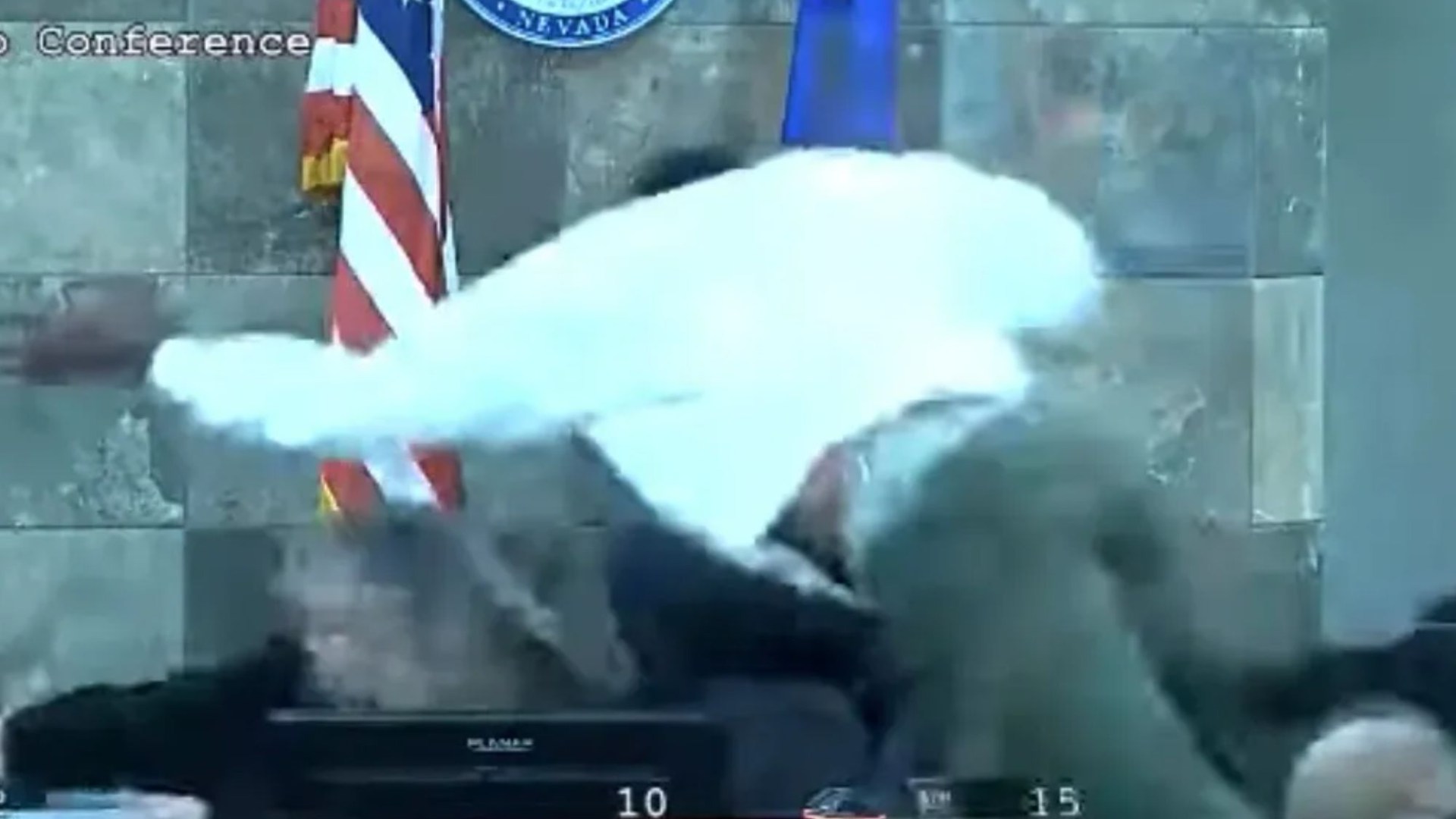
The courtroom erupted in chaos on a fateful January day when Deobra Delone Redden, a 31-year-old felon facing an attempted battery charge, launched an astonishing attack on Judge Mary Kay Holthus during his trial. Redden, dubbed the “flying felon” after a video of the incident went viral, vaulted over the courtroom bench and lunged at the 62-year-old judge. The shocking assault, captured on the court’s live feed, depicted Redden grappling with Judge Holthus before court officials and security intervened, subduing the assailant after a brief struggle. The attack left the judge with minor injuries, though she courageously returned to her duties the following day. The incident immediately sparked outrage and raised questions about courtroom security protocols.
Following the attack, Redden’s subsequent court appearances were markedly different. He was heavily restrained, appearing in shackles, orange mitts, and a full-face spit hood, a stark contrast to his relatively unrestrained state during the initial incident. Initially, Redden pleaded not guilty by reason of insanity to attempted murder of a victim 60 years of age or older. However, he later changed his plea to guilty but mentally ill on six counts, including the attempted murder charge. This plea acknowledged his guilt while also asserting that his mental state played a role in the crime.
Redden’s sentencing hearing took place amidst heightened security and public scrutiny. Judge Susan Johnson, presiding over the sentencing, delivered a stern judgment, declaring Redden guilty but mentally ill. She characterized his actions not only as an assault on Judge Holthus but as an attack on the entire judiciary, underscoring the gravity of disrupting the court’s proceedings and threatening the safety of its officers. The judge meticulously outlined the charges against Redden, emphasizing the severity of the attempted murder charge, particularly given the victim’s age.
Judge Johnson sentenced Redden to a substantial prison term of 26 to 65 years. The judge firmly rejected a plea from Redden’s attorney for a concurrent sentence, opting instead for a consecutive sentence that significantly extended the time Redden would spend behind bars. Furthermore, the court ordered Redden to pay over $61,000 in restitution to Judge Holthus, acknowledging the physical and emotional harm inflicted upon the victim. With credit for time already served, Redden’s earliest possible parole date would fall sometime in the 2050s.
During the sentencing, Redden addressed the court, attempting to portray himself as misunderstood and troubled. He claimed he was “not a bad guy, not an evil person” and expressed confusion over the prosecution’s focus on his character. He alluded to lifelong struggles, suggesting that his past experiences contributed to his actions. However, Judge Johnson challenged the extent to which Redden’s mental illness influenced his behavior, citing expert opinions that affirmed his understanding of right and wrong at the time of the attack.
The Redden case serves as a stark reminder of the potential dangers inherent in courtroom settings and the importance of robust security measures. The incident prompted a review of safety protocols within the Clark County District Court, aiming to prevent similar occurrences. The case also highlights the complexities of the criminal justice system when mental illness is a factor. While Redden’s mental state was acknowledged during sentencing, it did not absolve him of responsibility for his actions, demonstrating the delicate balance between acknowledging mental health concerns and upholding accountability for criminal behavior.