



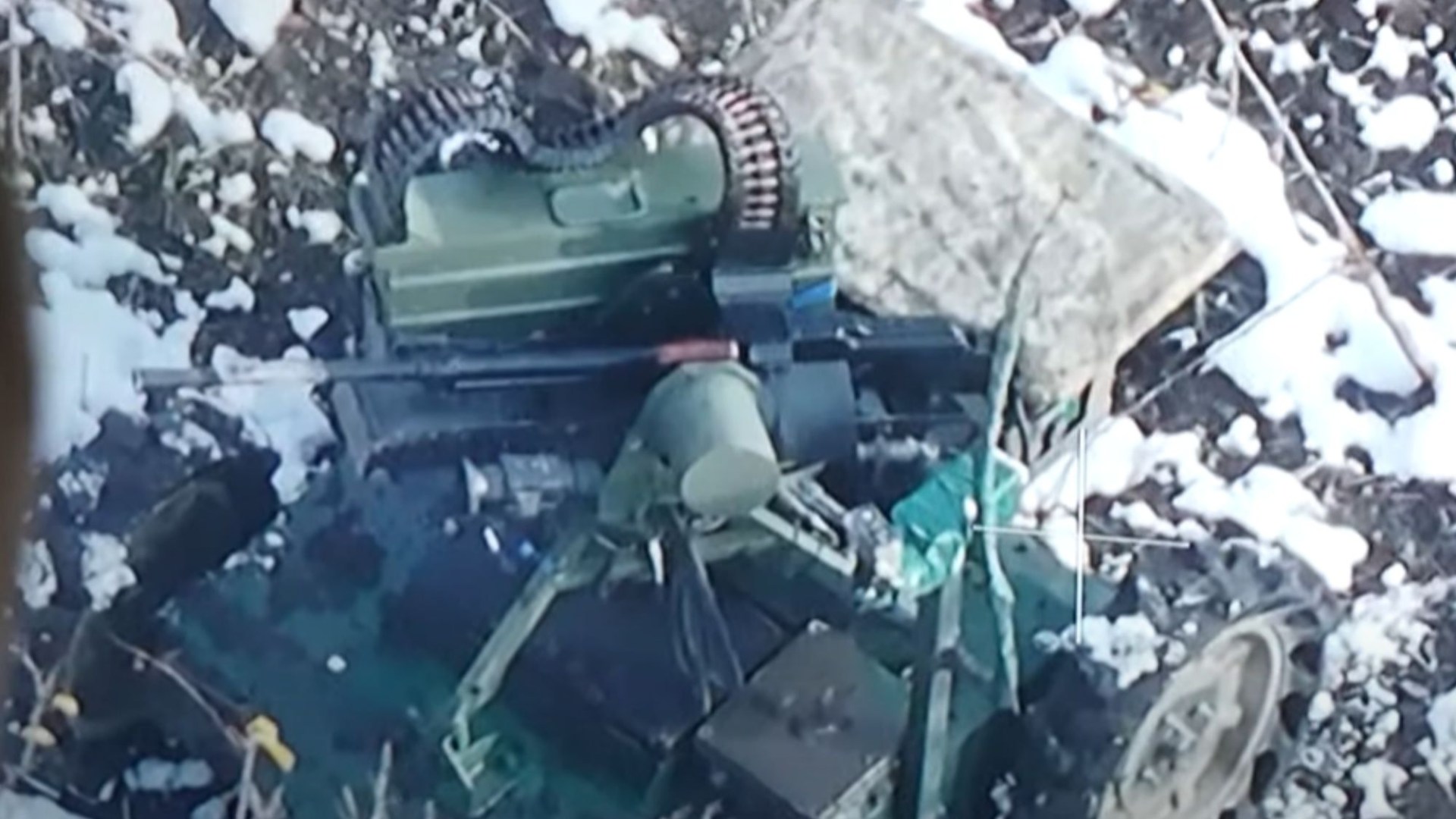
The Ukrainian military has unveiled its groundbreaking, fully robotic combat force, marking a significant leap in the integration of autonomous technology into warfare. Dramatic footage showcases these unmanned ground vehicles (UGVs) in action on the snowy frontlines near Kharkiv, engaging Russian troops in a new type of mechanized assault. This robotic force comprises a diverse array of UGVs, ranging from mine-clearing robots to kamikaze drones and mobile turrets, each tailored to specific battlefield roles. The video captures these robots navigating the treacherous terrain of no man’s land, advancing on enemy positions under the remote control of Ukrainian operators located miles away. This deployment signifies a paradigm shift in military strategy, potentially reducing human casualties and augmenting combat effectiveness.
The footage offers a glimpse into the diverse capabilities of this robotic force. A larger UGV, equipped with a formidable machine gun turret and robust four-wheel drive, is observed firing upon Russian positions before skillfully evading a retaliatory rocket. Smaller, faster robots, including kamikaze drones, are also seen in action. One such drone races across the snow before detonating near a treeline, showcasing the expendable nature of these units and their potential for disruptive attacks. The strategic advantage of these robots lies in their ability to undertake dangerous missions without risking human life, acting as a force multiplier for the Ukrainian military.
The human element remains crucial in this robotic offensive. Pilots, operating from secure control centers and underground bunkers, guide the robots using headsets, handheld controllers, and sophisticated software. These operators act as the brains of the operation, strategically maneuvering the UGVs and engaging enemy targets with precision. The robots are supported by a network of unmanned aerial vehicles (UAVs), including surveillance drones, heavy-lift “bomber” drones, and first-person view drones, providing a comprehensive aerial perspective of the battlefield and enhancing situational awareness. This coordinated use of ground and air-based robotic systems signifies a significant advance in integrated warfare.
Colonel Maksym Golubok, Chief of Staff of the Charter Brigade, emphasizes the strategic importance of robotic systems in minimizing human casualties. He highlights the brigade’s commitment to innovation, continuously seeking and implementing novel engineering solutions to push the boundaries of robotic warfare. The ultimate goal is to replace soldiers in hazardous battlefield situations whenever possible, leveraging technology to protect human lives. This approach represents a significant shift in military doctrine, prioritizing the preservation of human resources while maximizing operational efficiency.
Ukraine’s robotic arsenal extends beyond the ground, encompassing both air and sea domains. Recent reports have documented the effectiveness of “Sea Baby” marine drones in targeting Russian helicopters and warplanes in the Kerch Bay. These maritime drones, along with other innovations like the “Honey Badger” kamikaze drone used to destroy bridges and disrupt enemy movements, and the thermite-deploying “dragon drone” capable of incinerating targets, demonstrate Ukraine’s commitment to leveraging cutting-edge technology in its defense. This multi-domain robotic capability provides a significant asymmetric advantage against a more conventionally equipped adversary.
The Ukrainian military’s embrace of robotic technology extends to emerging concepts like robotic dogs, designed for reconnaissance, ammunition delivery, and casualty evacuation. These versatile platforms, capable of navigating challenging terrain and carrying substantial payloads, underscore the ongoing evolution of robotic warfare. The integration of these diverse robotic systems, combined with the expertise of human operators and a rapidly adapting tactical approach, positions Ukraine at the forefront of a new era in military technology. The ongoing conflict serves as a testing ground for these innovative systems, offering valuable insights into their effectiveness and potential for future military applications.