

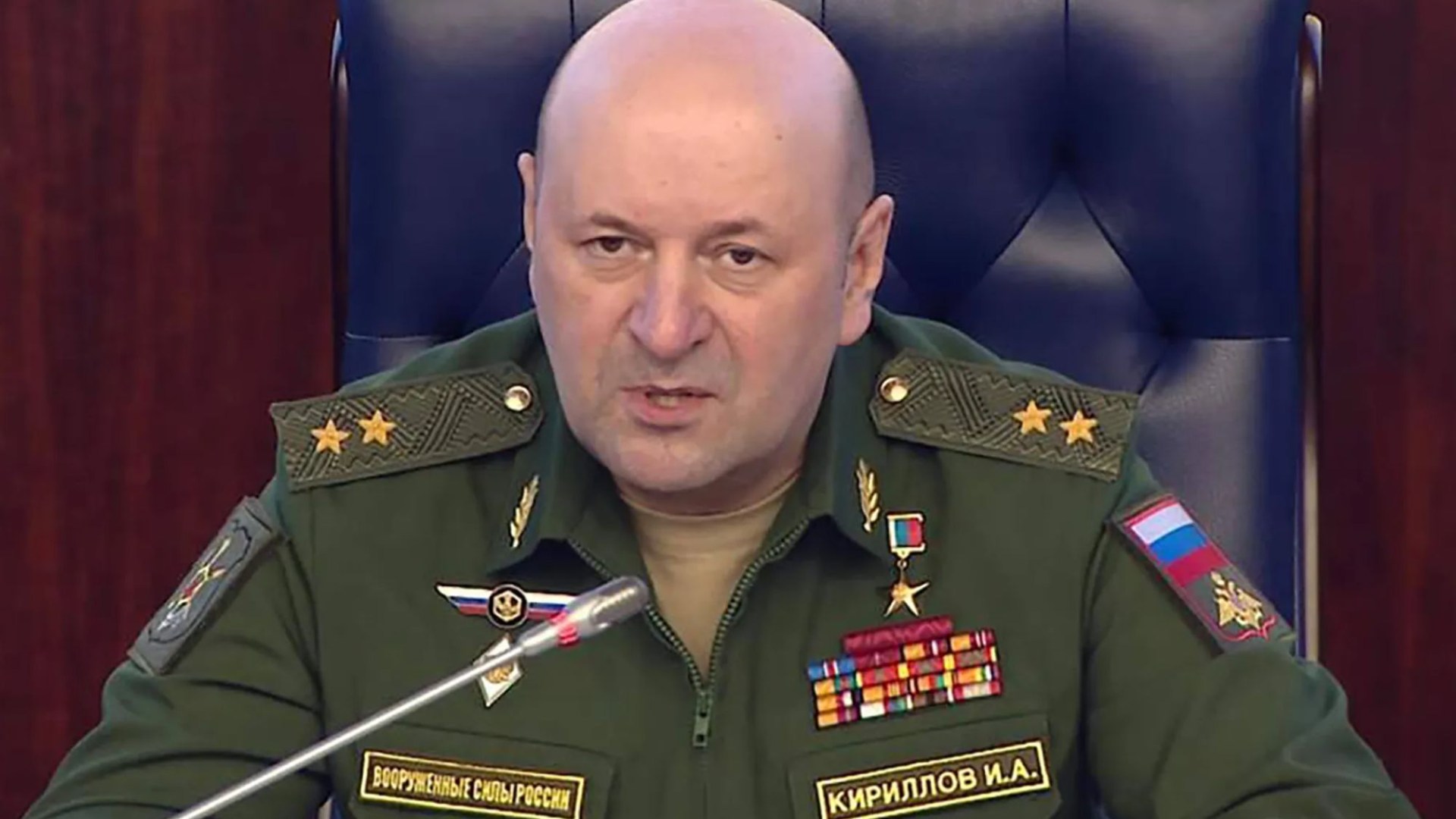
Lieutenant General Igor Kirillov, head of Russia’s Nuclear, Biological, Chemical Defence Forces (NBC), was assassinated outside his Moscow apartment in a targeted attack involving an explosive device concealed within an electric scooter. The incident occurred just a day after Kyiv charged Kirillov with war crimes, accusing him of orchestrating the use of banned chemical weapons against Ukrainian soldiers. While Ukraine officially denies involvement, a source within the Ukrainian security service (SBU) claimed responsibility, labeling Kirillov a war criminal and a legitimate target.
Security expert Will Geddes suggests the attack likely involved a period of covert surveillance to ascertain Kirillov’s routines. This “pattern of life” analysis would have enabled the assassins to identify the opportune moment to strike. The choice of an electric scooter as the delivery mechanism for the explosives was likely strategic. Geddes posits that a component like the lithium-ion battery could be replaced with a concealed explosive device, leaving the scooter outwardly appearing innocuous. This would allow the device to be placed in a public area without arousing suspicion.
The detonation was likely triggered remotely, possibly by an individual with a direct line of sight on Kirillov or via a camera strategically positioned to monitor the building’s entrance. Law enforcement officials reportedly suspect a camera may have been placed in a nearby vehicle. The blast, estimated to involve around 200 grams of TNT, was powerful enough to rip doors and windows from the building’s facade. This incident marks a rare assassination of a high-ranking official within Moscow, signifying a bold and significant escalation.
Kirillov’s role within the Russian military extended beyond his command of the NBC forces. He was instrumental in developing the TOS-2 Tosochka heavy flamethrower system, a weapon system that has garnered attention for its destructive potential. Additionally, Kirillov served as a prominent voice for Kremlin disinformation campaigns, disseminating false narratives to obscure Russia’s actions in Ukraine. Among these claims were allegations of American biolabs developing weaponized insects to spread disease among Russian troops.
Kirillov’s career spanned several decades, starting with his education at the Kostroma Higher Military Command School of Chemical Defence. He served in various capacities within Russia’s chemical defence forces, eventually ascending to the chief position in 2017. His involvement in deploying chemical weapons in Ukraine, resulting in the hospitalization of thousands of Ukrainian soldiers, led to his designation as a war criminal by Ukrainian authorities. Furthermore, his role in spreading disinformation earned him sanctions from the UK government, which labeled him a mouthpiece for Kremlin propaganda.
The assassination of Kirillov represents a significant blow to the Russian military and a daring operation within the heart of Moscow. While official confirmation of the perpetrators and the precise methods employed remains elusive, expert analysis suggests a sophisticated and meticulously planned attack. The use of an everyday object like an electric scooter, combined with covert surveillance and remote detonation, highlights the evolving nature of modern assassinations and the increasing challenges faced by security forces. The incident is likely to further escalate tensions between Russia and Ukraine and raise concerns about the vulnerability of high-profile individuals, even within heavily secured environments.