


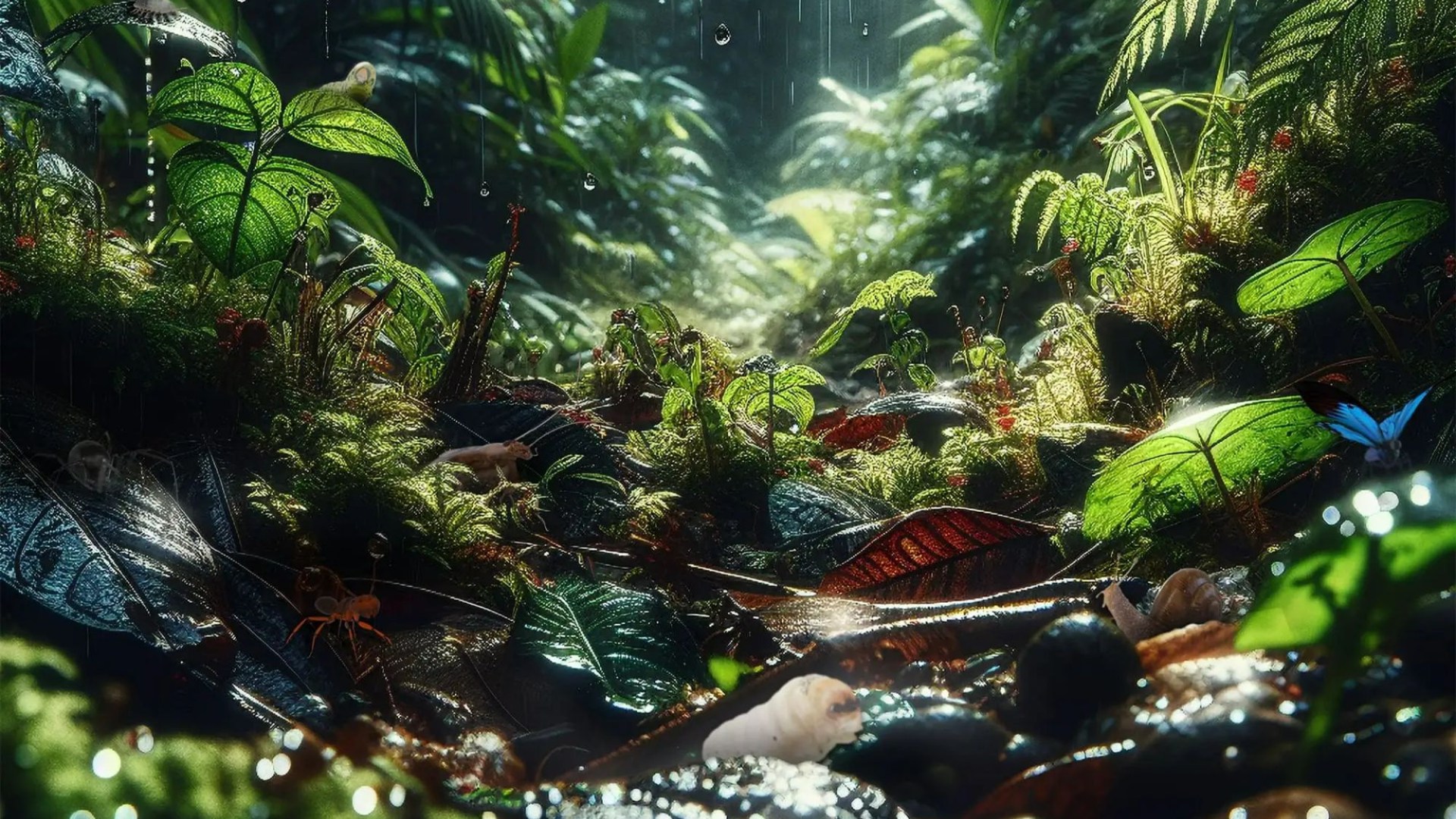
This article presents a series of visual puzzles designed to test observation skills, cognitive abilities, and provide a dose of entertainment. The central challenge revolves around an image depicting a jungle scene teeming with hidden insects. Readers are tasked with identifying all 12 bugs within a tight 17-second timeframe, a feat that reportedly takes the average person considerably longer. The difficulty stems from the insects’ camouflage and the dense jungle backdrop. To aid those struggling, the article offers clues, suggesting minimizing distractions, systematically scanning the image in sections, and familiarizing oneself with the types of bugs to look for: two spiders, a bee, a moth, a stick insect, a woodlouse, a caterpillar, a roach, an ant, a grub, a snail, and a butterfly. Some insects, like the butterfly, bee, and moth, are intentionally more conspicuous. The article posits that engaging with such visual puzzles can enhance cognitive functions like problem-solving, memory, creativity, and focus, while also offering a form of stress relief.
Beyond the insect challenge, the article extends to other visual puzzles. One involves spotting a cat concealed among a group of foxes, encouraging readers to apply the same observation techniques learned from the insect puzzle. The challenge lies in the similar orange hues of both animals, requiring careful scrutiny to discern the feline intruder. The article then shifts to a festive theme, presenting a winter scene and challenging readers to locate a hidden elf within 11 seconds. The clue provided directs attention to the area surrounding an ice rink. A final puzzle involves finding a Christmas bauble hidden amidst a collection of sports balls, again emphasizing the importance of meticulous observation within a limited timeframe. The bauble’s white color and strategic placement make it particularly elusive against the vibrant backdrop of the sports balls.
These puzzles serve as engaging exercises in visual perception, challenging individuals to hone their observational skills and cognitive abilities. The time constraints introduce an element of pressure, encouraging quicker thinking and efficient scanning strategies. The diverse themes, from insects and animals to festive elements, cater to a broad range of interests and add to the entertainment value. The article implicitly highlights the importance of focused attention and systematic observation in navigating complex visual environments, skills applicable beyond the realm of puzzles.
The structure of the article progressively introduces new challenges, maintaining reader engagement and offering a variety of visual stimuli. The inclusion of clues and tips acknowledges the difficulty of the puzzles while also providing guidance for those who may struggle. The emphasis on time limits adds a competitive element, encouraging readers to test their speed and accuracy. The diverse range of visual puzzles, from insect identification to holiday-themed searches, ensures a broad appeal and caters to different visual preferences. The article effectively combines entertainment with cognitive stimulation, making it a lighthearted yet enriching experience for readers.
The underlying theme of the article transcends mere entertainment; it subtly underscores the importance of observation in daily life. The ability to discern details, recognize patterns, and process visual information efficiently are crucial skills in various contexts, from navigating traffic to interpreting complex data. The puzzles presented serve as microcosms of real-world scenarios, where attention to detail can be paramount. By engaging with these visual challenges, readers are not only sharpening their observational skills but also enhancing their overall cognitive function, improving their ability to process information quickly and accurately.
The article’s presentation format, incorporating images and time limits, effectively captures reader attention and encourages active participation. The visual nature of the puzzles makes them accessible to a wide audience, regardless of age or background. The inclusion of solutions allows for immediate feedback and a sense of accomplishment upon successful completion. The article’s overall tone is light and engaging, striking a balance between challenge and entertainment. The focus on visual perception and cognitive skills makes it a valuable exercise for mental agility and a fun way to test one’s observational prowess. The diverse themes and escalating difficulty of the puzzles ensure that readers remain engaged and motivated to test their limits. The article ultimately serves as a reminder of the importance of observation and the rewards of engaging with stimulating visual challenges.