


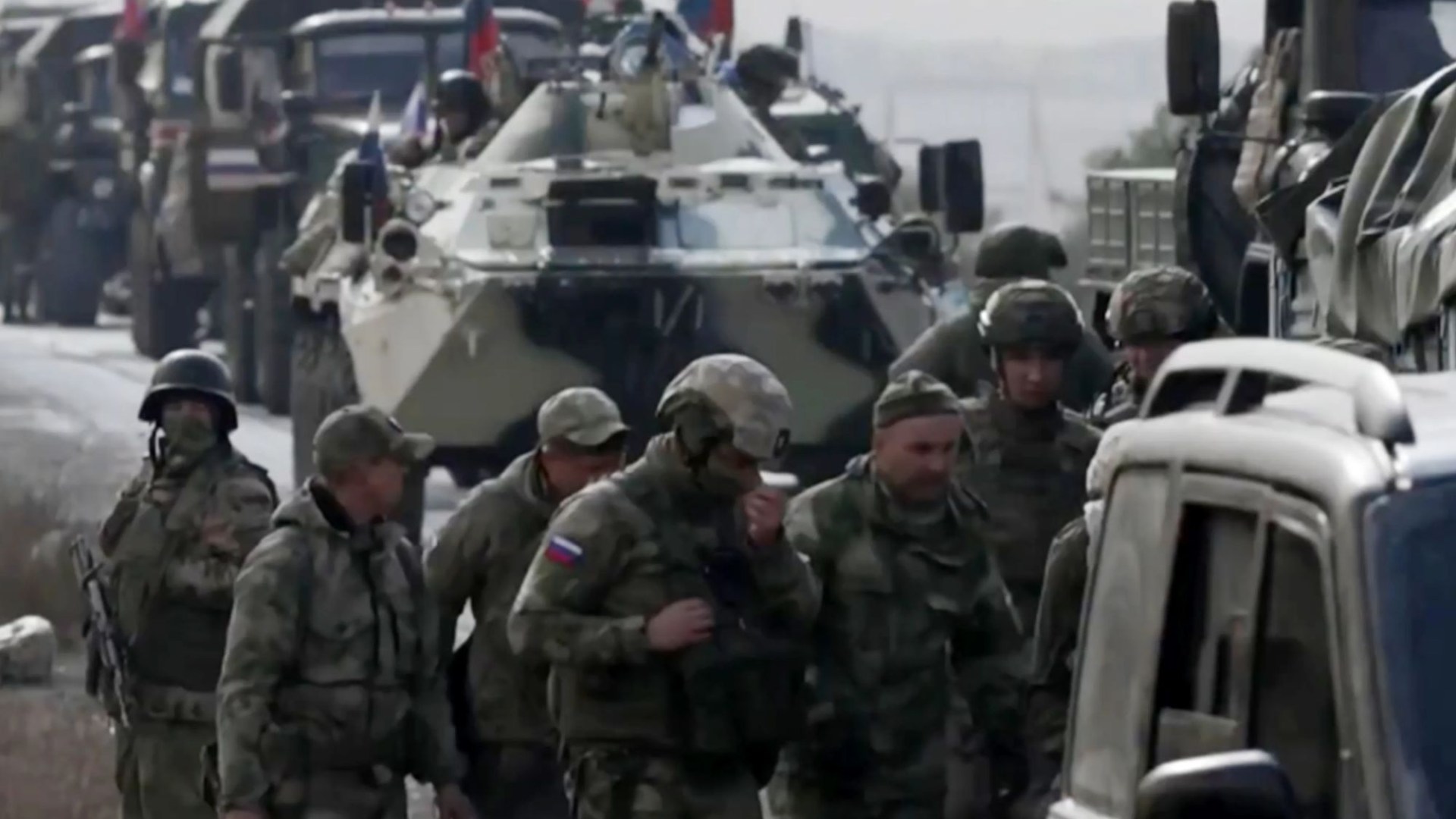
The swift ousting of Syrian President Bashar al-Assad after a decade-long civil war marked a significant turning point in the region, prompting the withdrawal of Russian troops who had been instrumental in propping up his regime. Moscow’s intervention in 2015, deploying ground troops, fighter jets, and weaponry, had bolstered Assad’s forces and played a crucial role in his survival against rebel forces. However, with Assad’s sudden downfall, Russia initiated a rapid withdrawal, signaling the end of its direct military involvement in the conflict. While maintaining an airbase and naval facility, the bulk of Russian forces were seen departing in convoys, leaving behind a complex legacy of bloodshed and geopolitical upheaval.
The withdrawal of Russian troops was documented by various sources, including footage from Channel 4 showing convoys of military vehicles exiting Syria and satellite imagery revealing the dismantling of military equipment at the Khmeimim airbase. The images depicted the dismantling of attack helicopters and air defense units, alongside large cargo planes preparing for transport. This rapid exit underscored the unexpected nature of Assad’s fall and the Kremlin’s prioritization of securing its remaining assets in the region. The withdrawal was met with jubilation by some Syrians, who viewed the Russian presence as a symbol of oppression and destruction.
The downfall of Assad, after years of brutal conflict, represented a significant victory for rebel forces and a dramatic shift in the Syrian political landscape. His reign, marked by authoritarianism, suppression of dissent, and accusations of widespread human rights abuses, came to an abrupt end with a swift rebel offensive that captured Damascus, forcing Assad to flee to Russia under the protection of his long-time ally, Vladimir Putin. The rapid collapse of his regime highlighted the changing dynamics of the conflict, with Russia seemingly unwilling to further invest in a lost cause.
Assad’s rise to power followed a tragic family event, the death of his older brother, Bassel, in a car accident. Initially hailed as a potential reformer, Assad quickly consolidated power and suppressed opposition, turning his rule into a kleptocracy marked by corruption and human rights violations. The Syrian Civil War, sparked by the Arab Spring uprisings, plunged the country into chaos and became a proxy battleground for international powers. Assad, supported by Russia and Iran, positioned himself as a bulwark against terrorism, while simultaneously exacerbating the conflict by releasing extremist prisoners.
The final chapter of Assad’s rule unfolded with surprising speed. A rebel offensive, capitalizing on weakened Syrian defenses and the distraction of Russia’s involvement in Ukraine and Iran’s regional commitments, swiftly captured key cities, including Damascus. Assad’s escape to Moscow, shrouded in rumors of a staged plane crash, signaled the definitive end of his regime. The swift transition of power left a vacuum that opposition forces sought to fill, announcing plans for a transitional government and marking a new chapter in Syria’s tumultuous history.
The withdrawal of Russian troops and the fall of Assad represent a significant geopolitical shift, with ripple effects throughout the region. Russia’s decision to withdraw indicates a reassessment of its commitments in the Middle East, prioritizing the security of its remaining assets and avoiding further entanglement in a costly conflict. The future of Syria remains uncertain, with the opposition forces facing the challenge of establishing stability and rebuilding a nation shattered by years of war. The international community will play a crucial role in shaping the post-Assad era, addressing the humanitarian crisis, and facilitating a peaceful transition towards a more democratic future.