



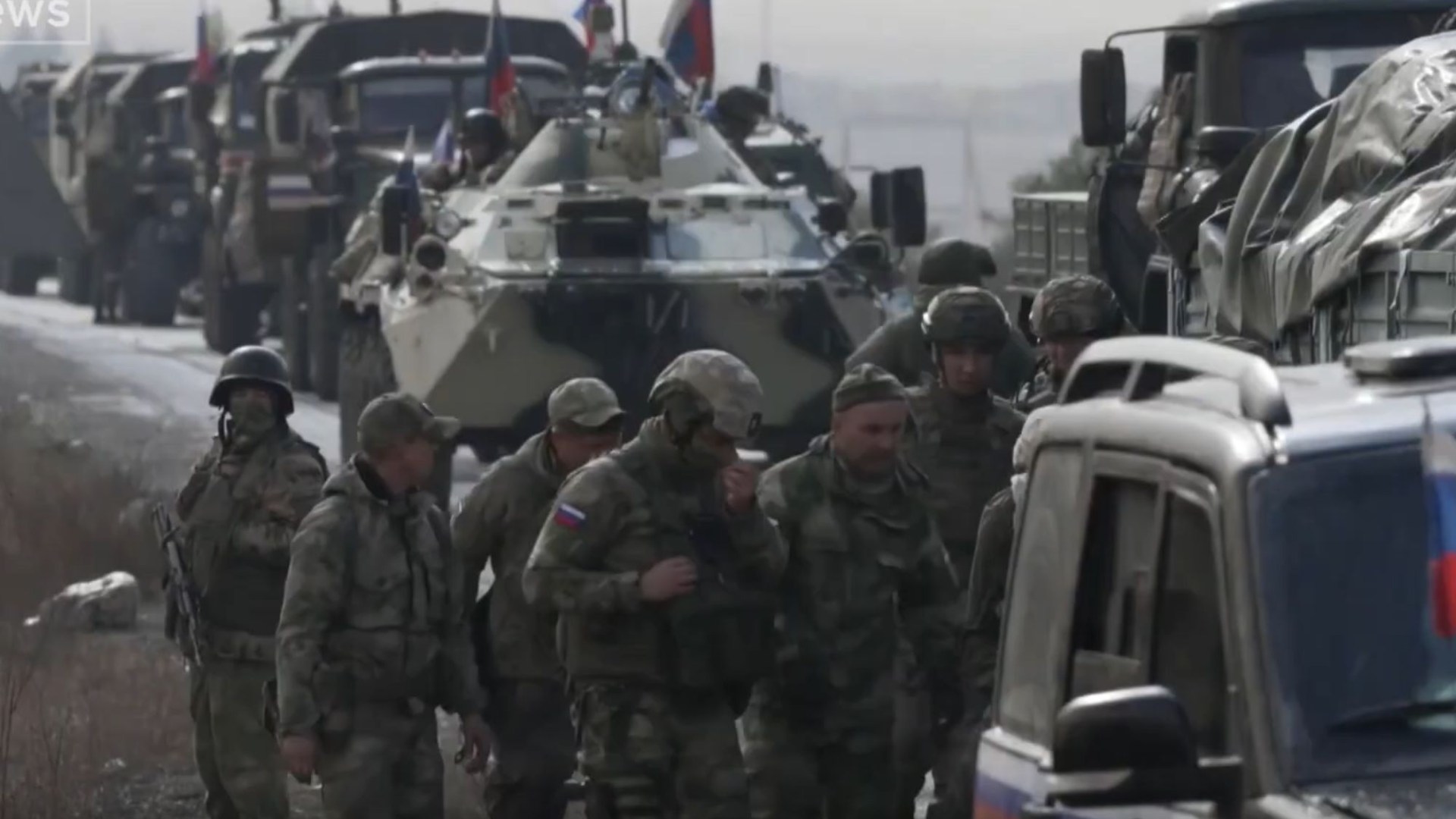
The abrupt end of Bashar al-Assad’s decade-long reign in Syria has sent ripples across the geopolitical landscape, marked by the hasty retreat of Russian forces who had propped up his regime. Footage and satellite imagery depict a frantic exodus of Russian troops and military equipment, signaling a significant shift in power dynamics within the war-torn nation. The fall of Damascus to rebel forces has forced Assad to seek refuge in Russia, leaving behind a devastated country grappling with the aftermath of years of brutal conflict. The swift collapse of his regime underscores the fragility of power built on repression and the unpredictable nature of protracted conflicts.
The withdrawal of Russian forces, long Assad’s staunch allies, is a dramatic turnaround from their initial intervention in 2015. What began as a deployment of ground troops, fighter jets, and weaponry to bolster Assad’s faltering grip on power has culminated in a hurried evacuation, with soldiers crammed into trucks bearing the Russian flag, fleeing a country they once sought to control. This retreat symbolizes not only a strategic setback for Russia but also a symbolic victory for the Syrian people who endured years of suffering under Assad’s rule and Russian military intervention. The imagery of Russian helicopters being dismantled and air defense units being packed for transport paints a picture of a hasty and perhaps unplanned departure.
Assad’s flight to Russia, where he has been granted asylum by his long-time ally Vladimir Putin, marks the end of a dynastic dictatorship that has gripped Syria for decades. His departure comes after a surprise offensive by rebel forces, who exploited weakened Syrian defenses and capitalized on Russia’s preoccupation with the ongoing conflict in Ukraine. The swiftness of the rebel advance underscores the vulnerability of Assad’s regime, which had become increasingly reliant on external support. His escape leaves a power vacuum in Syria, with rebel forces now controlling key cities and initiating the process of forming a transitional government.
The toppling of Assad’s regime has profound implications for the future of Syria. While celebrations erupt in the streets, the country faces a daunting task of rebuilding after years of devastating war. The conflict has decimated infrastructure, fractured society, and displaced millions, leaving deep scars that will take time and resources to heal. The transition to a new government will be fraught with challenges, including the need to establish stability, address the humanitarian crisis, and pave the way for a more democratic and inclusive future.
The rapid unraveling of Assad’s regime and Russia’s subsequent withdrawal also raises questions about the broader geopolitical landscape. The vacuum created by Assad’s departure could potentially lead to increased instability in the region, with various factions vying for influence. The withdrawal of Russian forces may also embolden other actors in the region and reshape alliances in unpredictable ways. The long-term consequences of this dramatic shift in power remain to be seen.
The fall of Assad’s regime serves as a stark reminder of the human cost of protracted conflicts and the fragility of power built on repression. While the immediate focus is on the transition to a new government and the immense task of rebuilding, the international community must also reflect on the lessons learned from the Syrian conflict. This includes the need for more effective diplomatic efforts to prevent and resolve conflicts, as well as the importance of holding those responsible for human rights abuses accountable. The future of Syria hinges on the ability of its people, with the support of the international community, to forge a path towards peace, stability, and a more just society.