

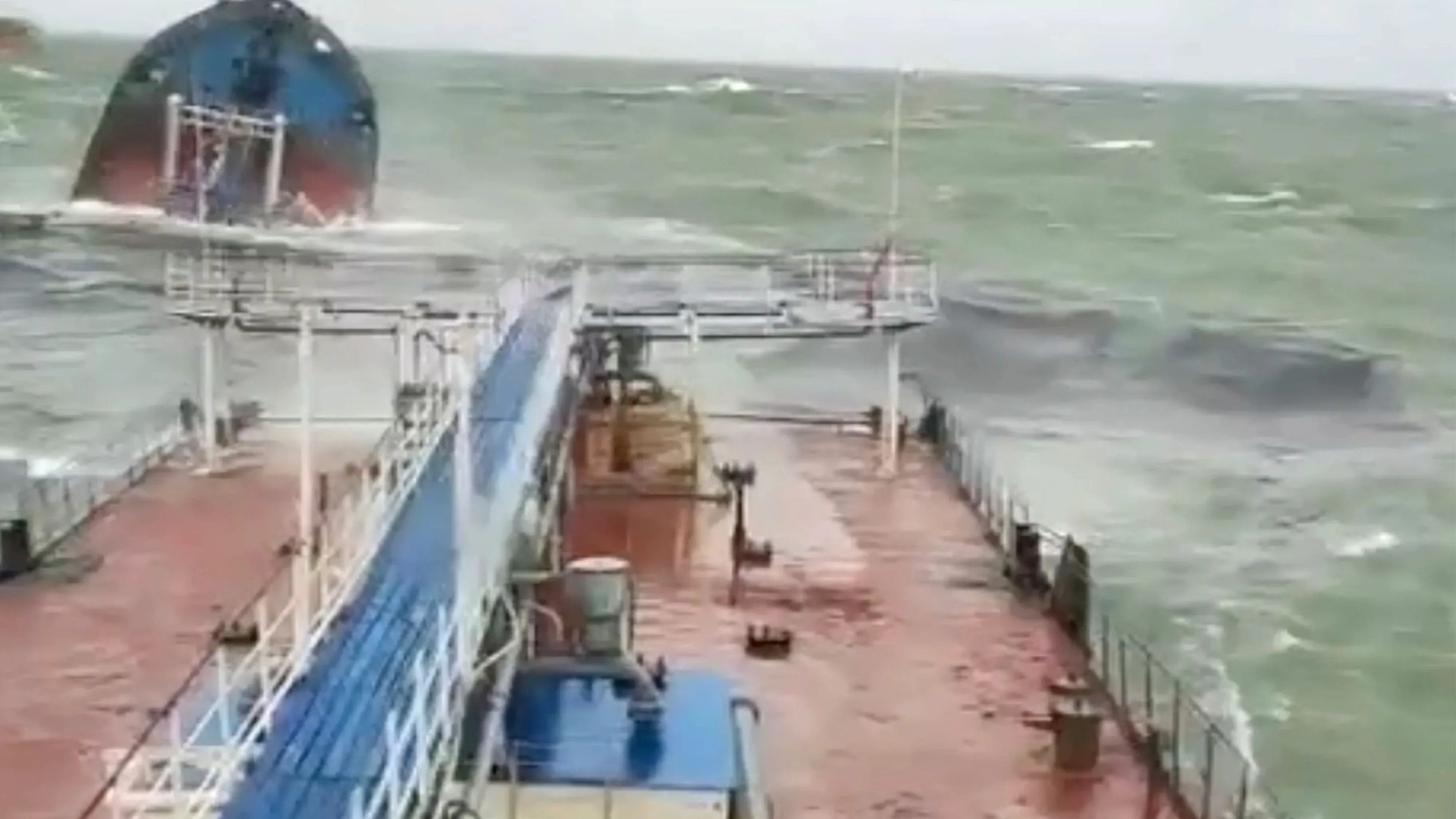
The Kerch Strait, a vital waterway connecting the Black Sea and the Sea of Azov, became the scene of a maritime disaster involving two Russian oil tankers, the Volgoneft-212 and Volgoneft-239. Amidst stormy weather conditions, both vessels suffered catastrophic damage, with the Volgoneft-212 dramatically splitting in two. Disturbing footage captured the vessel’s bow section, upturned and rapidly sinking, a stark testament to the force of the storm. Initial reports suggested 27 crew members were stranded across both tankers, sparking a frantic rescue operation in challenging sea conditions. Russian authorities immediately launched investigations into potential safety violations, with the incident raising concerns about the structural integrity of the aging vessels and the potential environmental impact of an oil spill.
The Volgoneft-212, carrying 13 crew members, and the Volgoneft-239, with 14 sailors on board, were both reportedly river-sea type ships that had undergone significant modifications in the 1990s. These modifications involved cutting the vessels in half and re-joining them to meet specific class standards. However, concerns arose regarding the long-term maintenance and structural integrity of these modified ships. It is suggested that the turbulent sea conditions, combined with the vessels’ inherent vulnerabilities, may have contributed to the catastrophic failure of the welded seams, leading to the splitting of the Volgoneft-212 and substantial damage to the Volgoneft-239.
The immediate aftermath of the incident saw a large-scale rescue operation unfold. Russian Mi-8 helicopters and a rescue tug were dispatched to the scene, several miles off the Crimean peninsula, to evacuate the stranded crew members. While ten sailors were successfully rescued, the fate of the remaining crew, particularly four reported to be in the hold of the Volgoneft-212 when it broke apart, remained uncertain. The search and rescue efforts continued against the backdrop of a potential environmental disaster, as both vessels were carrying approximately 4,000 tons of fuel oil each, some of which had already leaked into the sea, creating visible oil slicks.
The incident prompted a swift response from the Russian Emergencies Ministry, which confirmed the sinking of the Volgoneft-212 and the precarious state of the drifting Volgoneft-239. Over fifty specialists and eleven pieces of equipment were deployed to manage the unfolding crisis and mitigate the environmental consequences of the oil spill. While the investigation into the cause of the incident was in its initial stages, preliminary reports pointed to the impact of powerful waves causing structural failure. Although the incident occurred in a region recently targeted by Ukrainian marine drone attacks, initial assessments did not link the disaster to the ongoing conflict.
The sinking of the Volgoneft-212 and the severe damage to the Volgoneft-239 underscore the inherent risks associated with maritime operations, particularly in challenging weather conditions. The incident highlights the critical importance of stringent safety regulations, proper vessel maintenance, and robust emergency response capabilities. Furthermore, the potential environmental consequences of the oil spill emphasize the need for effective pollution control measures and the urgent necessity of addressing the long-term impacts on the delicate marine ecosystem of the Black Sea.
This incident serves as a stark reminder of the vulnerability of even large vessels to the forces of nature and the potential for catastrophic consequences when structural integrity is compromised. The investigation into the incident will undoubtedly focus on the role of the vessels’ modifications, their maintenance history, and the decision-making processes leading up to their deployment in challenging sea conditions. The findings will be crucial in preventing similar incidents in the future and ensuring the safety of maritime operations in this strategically important region. The incident also reinforces the importance of international cooperation in maritime safety and environmental protection, particularly in shared waterways like the Black Sea.