

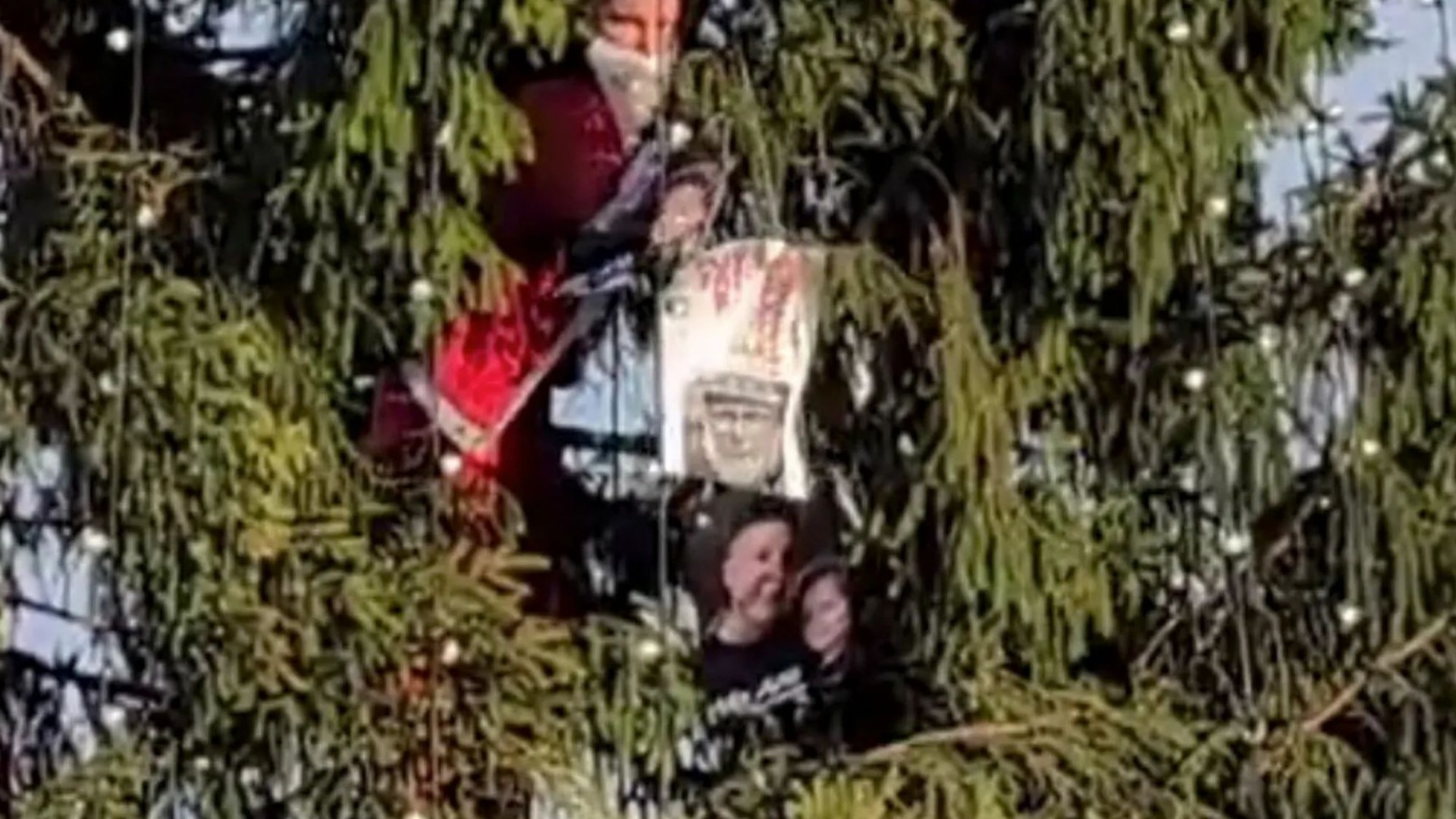
The festive tranquility of Trafalgar Square was disrupted on a December day when a protester, garbed as Santa Claus, scaled the towering Christmas tree, a symbol of holiday cheer and international goodwill. Two Metropolitan Police officers were observed attempting to persuade the individual to descend, their presence a stark contrast to the festive atmosphere typically pervading the square. The incident quickly garnered attention, with images and videos circulating on social media, capturing the unusual sight of Santa Claus perched precariously amidst the branches of the iconic tree. The protest unfolded against the backdrop of the bustling square, a popular destination for tourists and locals alike during the Christmas season.
Responsibility for the demonstration was claimed by Fathers4Justice, a campaign group advocating for reforms in legislation pertaining to fathers’ rights. The organization’s statement, disseminated via social media platform X (formerly Twitter), confirmed their involvement and highlighted their message: “Put the father back into Xmas.” The protester’s attire and positioning atop the Christmas tree served as a symbolic representation of their cause, juxtaposing the festive imagery with the serious issue of fathers’ rights and their perceived marginalization within families and society. The incident effectively brought the group’s concerns to the forefront of public attention, leveraging the symbolic significance of both Santa Claus and the Christmas tree.
Further emphasizing their message, the protester brandished a newspaper featuring a prominent image of Prime Minister Sir Keir Starmer. The headline, emblazoned in bold red letters, reiterated the group’s core message: “Put the father back into Xmas.” This visual element underscored the campaign’s intention to directly address the political establishment and demand legislative changes. By incorporating the Prime Minister’s image, the protest aimed to hold him and his government accountable for addressing the concerns of fathers regarding access to their children and involvement in their lives.
The Trafalgar Square Christmas tree, an annual gift from Norway, carries a rich history and symbolic weight. Donated as a gesture of gratitude for British support during World War II, the tradition has continued uninterrupted since 1947. The towering Norwegian spruce, typically between 50 and 60 years old and exceeding 20 meters in height, undergoes a meticulous selection and transportation process. Chosen from the forests surrounding Oslo, it is often felled months or even years in advance. Its journey involves a 550-mile voyage across the North Sea, followed by storage in a secret location until its grand unveiling in early December. A specialized rigging team then erects the magnificent fir in its designated spot, where it stands as a beacon of holiday spirit until its removal around Twelfth Night in early January.
The protest, staged against the backdrop of this symbolic tree, highlighted the stark contrast between the festive atmosphere and the serious issues raised by Fathers4Justice. The group’s choice of location amplified their message, leveraging the tree’s prominence and historical significance to draw attention to their cause. The timing of the protest, during the peak of the Christmas season, further magnified its impact, ensuring widespread media coverage and public discussion. By disrupting the traditional holiday scene, Fathers4Justice effectively brought the issue of fathers’ rights into the public discourse, prompting reflection on the complexities of family dynamics and the role of fathers within them.
This incident, while disruptive, underscored the power of symbolic action in raising awareness about social issues. The juxtaposition of the festive imagery with the protester’s demands created a compelling narrative that captured public attention. While the methods employed by Fathers4Justice may be controversial, the protest served as a stark reminder that even amidst holiday cheer, serious issues persist and deserve attention. The incident prompted wider conversations about the challenges faced by fathers in navigating family law and the ongoing need for dialogue and potential legislative reforms to address their concerns.